Introduction
There is something genuinely satisfying about washing your own car on a bright Saturday morning. The warm water, the foam building up on a dusty hood, the shine that emerges as you rinse it all away — it is almost meditative. But here is the honest truth that most car owners never stop to consider: the soap you use matters more than the sponge, the bucket, or even the technique. And finding the best homemade car soap does not require spending a fortune at the auto parts store.
If you have been searching for the best homemade car soap, you are already ahead of most drivers on your street. Thousands of car enthusiasts, weekend detailers, and eco-conscious vehicle owners are switching to DIY car wash solutions every year. The reasons are straightforward — they are cheaper, customizable, gentler on painted surfaces, and surprisingly powerful. You control every ingredient that touches your car’s finish, which means no mystery chemicals, no harsh surfactants, and no unnecessary residue left behind on your clear coat.
This complete guide will walk you through everything you need — why best homemade car soap formulas work so well, which ingredients to use, which combinations to avoid, and five proven recipes that car enthusiasts actually rely on. Whether you drive a brand-new SUV, a classic vintage car, or a daily commuter, these DIY car wash solutions will leave your vehicle sparkling clean without stripping the wax or damaging the protective coating on your paint.
Let us dive straight in.
Why the Best Homemade Car Soap Beats Many Store Brands
Before we get into the recipes, it is worth understanding why using the best homemade car soap often delivers better results than many commercial products — or at least holds its own against them.
1. Real and Significant Cost Savings
Commercial car shampoos can cost anywhere from $12 to $45 per bottle, and if you wash your car weekly or bi-weekly throughout the year, that adds up quickly. A well-crafted best homemade car soap recipe uses everyday ingredients like castile soap, glycerin, or diluted dish detergent — all of which cost a fraction of branded products and are available in bulk. Over a single year, you could save well over $100 without any compromise in cleanliness or shine.
2. Full Ingredient Transparency
Many commercial car soaps contain sulfates, synthetic fragrances, and chemical preservatives that can strip your wax coating over time. When you make your own best homemade car soap, you choose every single component. This matters especially if your vehicle has a wax coating, paint sealant, or ceramic coating that you want to preserve for as long as possible.
3. Environmentally Responsible Cleaning
Most store-bought car soaps rely on surfactants and synthetic compounds that do not break down readily in the environment. Many best homemade car soap formulas use plant-derived ingredients — such as castile soap made from olive oil — that are fully biodegradable, better for your garden, your driveway, and the nearby storm drain system.
4. Tailored to Your Vehicle’s Needs
Have a matte finish? You need a soap that cleans without adding sheen or altering the texture. Own an older vehicle with lightly oxidized paint? You might want a mild abrasive element in your formula. The best homemade car soap can be adjusted for your exact vehicle type. That level of personalization simply does not exist with most off-the-shelf car care products.
What Makes a Formula the Best Homemade Car Soap?
Not all DIY car wash solutions are created equal. When evaluating any homemade car wash recipe — including the ones in this guide — here are the criteria it should meet:
- pH balanced — Ideally between 6 and 8. This range cleans effectively without stripping wax, dulling clear coat, or leaving mineral deposits.
- Strong lubrication — The soap needs enough slip to let your wash mitt glide over paint without creating micro-scratches or swirl marks.
- Good foaming ability — A proper lather helps lift dirt away from paint before your cloth even makes contact, dramatically reducing the risk of scratching.
- Clean rinsability — It should rinse away fully without leaving streaks, film, or a soapy haze over your windows and paint.
- Paint-surface compatibility — Especially important if your vehicle has a specialty finish like matte paint, satin clear coat, or vinyl wrap.
Keep these five criteria in mind as you try each of the recipes below. The best homemade car soap is not the one with the most ingredients — it is the one that meets all five of these standards for your specific vehicle.
Essential Ingredients in the Best Homemade Car Soap
Understanding your ingredients is the real foundation of an effective DIY car wash soap. Here are the core components that appear in the recipes below, along with what each one contributes to the formula.
Castile Soap
Castile soap is made from vegetable oils — traditionally olive oil — and is one of the most widely used bases for any homemade car wash recipe. It is mild, nearly pH neutral, naturally derived, and produces a satisfying lather that clings to dirt. Dr. Bronner’s unscented baby castile soap is the most commonly recommended variety for automotive use.
Dish Soap (With Caution)
Plain dish soap can clean your car effectively, but it is designed to cut through heavy grease — which also means it will strip your wax and sealants if used too liberally. A small, heavily diluted amount of dish soap has a place in certain best homemade car soap formulas, specifically for pre-wax preparation washes when you want to remove the old wax layer anyway.
Baking Soda
A natural mild abrasive and deodorizer, baking soda adds gentle scrubbing power to a DIY car shampoo formula. It helps loosen stubborn road grime and light surface oxidation without scratching. Use it sparingly — excess baking soda shifts the pH of your solution.
Glycerin
Adding glycerin to your car soap formula dramatically improves lubrication. It helps your wash mitt glide across paint with minimal friction, which directly lowers the risk of swirl marks and fine scratches — especially on dark-colored vehicles where every scratch is most visible.
White Vinegar (Diluted)
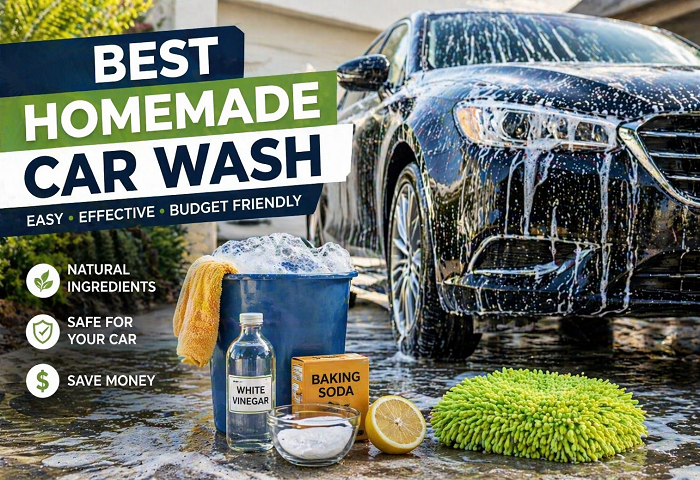
Diluted white vinegar helps dissolve mineral deposits and water spots from hard water. It is mildly acidic, so it must be balanced with other ingredients and never used undiluted or on bare metal. Used correctly, it adds real cleaning power to an eco-friendly car washing formula.
Essential Oils (Optional)
A few drops of lemon, orange, or eucalyptus essential oil can add a pleasant scent and a small amount of natural degreasing power. Citrus oils in particular help cut through traffic film. This is entirely optional but elevates the washing experience noticeably.
Distilled Water
Hard tap water contains calcium and magnesium minerals that leave spots on your finish when they dry. Using distilled water — both in your soap mixture and for the final rinse — gives you a dramatically cleaner, spot-free result. This small detail separates a good wash from a great one.
5 Best Homemade Car Soap Recipes That Actually Work
Here are five proven formulas — ranging from everyday maintenance to deep pre-wax cleaning — that represent the genuine best homemade car soap options for different situations and vehicle types.
Recipe 1: The Classic Everyday Formula
Best for: Regular maintenance washes on waxed or sealed vehicles
Ingredients:
- 2 tablespoons of unscented castile soap
- 1 tablespoon of glycerin
- 1 gallon of warm distilled water
Instructions: Fill a clean bucket with one gallon of warm water. Add the castile soap and glycerin. Stir gently — avoid hard shaking, which creates excessive foam before you even start. Apply using a soft microfiber wash mitt using straight-line strokes from top to bottom. Always rinse the car thoroughly before washing to remove loose grit and debris.
Why it works: This is the best homemade car soap for weekly or bi-weekly use. Castile soap cleans efficiently without stripping wax, while glycerin delivers the lubrication your paint surface needs. It rinses away cleanly every single time and leaves no residue.
Recipe 2: Deep Clean Pre-Wax Formula
Best for: Heavily soiled cars, post-road-trip cleaning, or preparing for a fresh wax application
Ingredients:
- 1 tablespoon of castile soap
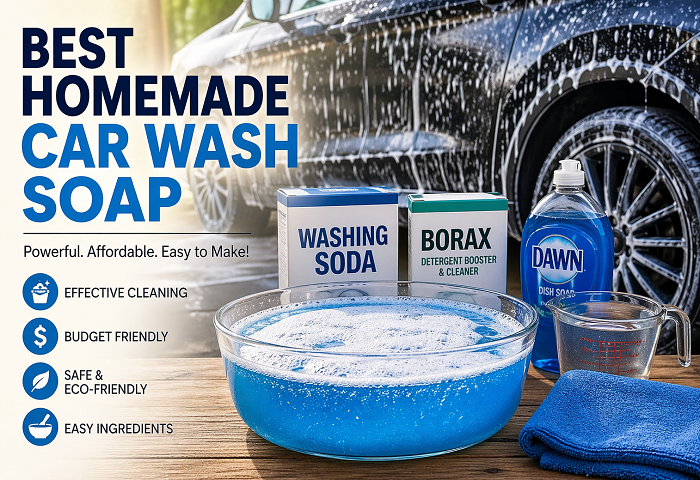
- 1 teaspoon of original blue Dawn dish soap
- 1 tablespoon of baking soda
- 1 gallon of warm water
Instructions: Combine all ingredients in a bucket of warm water. Mix gently and use immediately. Because this best homemade car soap recipe includes dish soap, it will strip existing wax — which is entirely intentional here. Reserve this formula strictly for times when you plan to apply fresh wax or sealant right after washing.
Why it works: The castile soap and dish soap combine into a powerful cleaning partnership. The baking soda adds a subtle abrasive quality that lifts embedded road grime and traffic film from the surface. Do not use this formula more than once every few months, and always follow it with wax or paint protection.
Recipe 3: Eco-Friendly Natural Car Cleaner
Best for: Environmentally aware car owners washing near gardens, lawns, or storm drains
Ingredients:
- 3 tablespoons of castile soap
- 2 tablespoons of white vinegar (diluted)
- 1 tablespoon of glycerin
- 1.5 gallons of distilled water
Instructions: Combine all ingredients in a large bucket and stir gently. Apply using a soft microfiber cloth or wash mitt. Finish with a pure distilled water rinse for a spot-free result. Avoid applying this near bare, uncoated metal trim pieces — diluted vinegar can cause mild oxidation over time on unprotected metal surfaces.
Why it works: As the best homemade car soap for eco-conscious washing, this formula is fully biodegradable and highly effective. Castile soap handles the bulk of the cleaning, while diluted vinegar tackles mineral deposits and water spots that regular soap cannot address. The distilled water rinse eliminates spotting entirely.
Recipe 4: Luxury Shine Car Shampoo
Best for: Detailing enthusiasts who want a clean result with added visual depth and gloss
Ingredients:
- 2 tablespoons of castile soap
- 1 tablespoon of glycerin
- 1 teaspoon of baby shampoo
- 5 drops of lemon essential oil
- 1 gallon of warm distilled water
Instructions: Add all ingredients to a bucket of warm distilled water. Mix gently. This best homemade car soap formula produces a rich, pleasant-smelling lather that feels luxurious to work with. Apply using a premium microfiber wash mitt. The lemon essential oil contributes light degreasing power and leaves a fresh scent after drying.
Why it works: Baby shampoo is specifically formulated to be pH balanced and extraordinarily gentle — qualities that translate beautifully to automotive clear coat care. Combined with castile soap, glycerin, and essential oil, this recipe creates a smooth, indulgent washing experience without sacrificing any cleaning performance.
Recipe 5: Waterless Spray Formula
Best for: Quick touch-ups, light dust removal, and car owners without driveway or hose access
Ingredients:
- 1 cup of distilled water
- 1 tablespoon of castile soap
- 1 tablespoon of glycerin
- 1 tablespoon of isopropyl alcohol (70%)
- 5 drops of essential oil (optional)
Instructions: Combine all ingredients in a clean spray bottle. Shake gently before each use. Spray one panel at a time and immediately wipe with a clean, damp microfiber cloth. Follow with a dry microfiber cloth to buff to a shine. This best homemade car soap spray is strictly for lightly dusty vehicles — never use a waterless formula on heavily soiled or muddy paint.
Why it works: The alcohol cuts through light surface contamination and evaporates quickly. Glycerin leaves a subtle protective sheen between washes. Keep a bottle in your glove compartment for quick parking lot clean-ups, fresh bird dropping removal, or dusty mornings between full wash sessions.
Mistakes to Avoid When Using the Best Homemade Car Soap
Even the most carefully crafted homemade car soap can cause problems if applied with poor technique. These are the most common errors car owners make and exactly how to avoid every one of them.
Over-soaping the bucket — More soap never means more cleaning power. Excess soap creates difficult rinsing, soapy residue, and a film that clouds your finish and windows. Always measure carefully and follow each recipe exactly.
Using straight dish soap — Full-strength dish soap removes wax, breaks down sealants, and can degrade vinyl materials. Even the best formula that calls for dish soap dilutes it significantly. Never apply dish soap undiluted to any painted surface.
Washing in direct sunlight — Soap dries extremely fast on hot paint and glass, leaving water spots and streaks that are surprisingly difficult to remove afterward. Always wash in shade, in a garage, or during the cooler morning or evening hours.
Using the same cloth for wheels and body panels — Brake dust, metal particles, and road tar from your wheels will contaminate and scratch your paint if you reuse the same wash mitt. Always keep completely separate cloths for wheels and bodywork.
Skipping the pre-rinse — Before any soap formula touches your car’s surface, rinse the entire vehicle with clean water to remove loose grit and debris. Skipping this single step turns those particles into tiny abrasives under your wash mitt — causing the very scratches you are trying to avoid.
Step-by-Step Wash Guide Using the Best Homemade Car Soap
Using your homemade car wash soap correctly comes down to following a reliable process each time you wash.
Step 1 — Fill one bucket with your chosen soap formula and a second bucket with clean rinse water. Gather two fresh microfiber wash mitts and two clean drying towels.
Step 2 — Pre-rinse the entire car from roof to bumper with clean water. This step is non-negotiable.
Step 3 — Begin washing from the roof and work downward: hood, trunk, windows, doors, lower body panels, and finally wheels. Use straight-line strokes only. Rinse your mitt in the clean bucket between every panel.
Step 4 — Rinse the car thoroughly from top to bottom. Make sure no soap residue remains on any surface, including door jambs and mirror backs.
Step 5 — Dry immediately using a clean microfiber drying towel. Blot rather than drag across the surface. Finish with distilled water if your area has hard tap water.
Step 6 — Apply wax, detail spray, or sealant if your formula stripped the existing protection layer during the wash.
How Often Should You Use the Best Homemade Car Soap?
Car care professionals generally recommend washing your vehicle every two weeks under typical driving conditions. In areas with heavy road salt exposure, pollen seasons, frequent bird activity, or construction dust, a weekly wash with your preferred best homemade car soap recipe is appropriate and will significantly extend the life of your paint.
Because most best homemade car soap recipes are built on castile soap rather than harsh synthetic detergents, you can wash more frequently without worrying about wax stripping or clear coat degradation — a major advantage over many commercial car wash products that are more aggressive than they need to be.
Frequently Asked Questions About the Best Homemade Car Soap
Can I use regular hand soap instead of castile soap? Regular hand soap can work in a pinch but is not ideal. Hand soaps often contain moisturizers and additives that leave residue on paint. The recipes in this guide specifically use castile soap because it is clean-rinsing and paint-safe.
Is the best homemade car soap safe for ceramic coatings? Yes — as long as you use a pH neutral recipe like Recipe 1 or Recipe 4. Avoid vinegar-based or dish-soap-heavy formulas on ceramic-coated vehicles, as these can degrade the coating over time.
Will homemade car soap remove tree sap and tar? Light tree sap and fresh tar may respond to the deep clean formula (Recipe 2). For heavy, dried sap or tar, a dedicated automotive tar remover is more appropriate before washing.
Can I store my homemade car soap between washes? Yes — most formulas (excluding baking soda recipes) can be stored in a sealed container or spray bottle for up to two weeks. Shake before each use. The waterless spray (Recipe 5) stores well for up to one month.
Final Thoughts
You do not need an expensive branded product to maintain a flawless, protected, and head-turning finish on your vehicle. The best homemade car soap recipes in this guide use simple, affordable, and readily available ingredients to deliver thorough, paint-safe results every time.
Start with Recipe 1 — the Classic Everyday Formula — if you are brand new to making your own car care products. It is gentle, effective, and nearly impossible to get wrong. As you grow comfortable with the process, branch out into the other formulas based on what your specific situation calls for. The deep clean formula is your best friend before a wax job. The waterless spray keeps things sharp between full washes. The eco-friendly recipe means you can wash guilt-free near your garden or lawn.
The simple truth is this: the best homemade car soap is the one that fits your vehicle, your environment, and your washing routine. Try one of these recipes on your next wash day, use the correct two-bucket technique, and your car’s paint will thank you for years to come.