Introduction
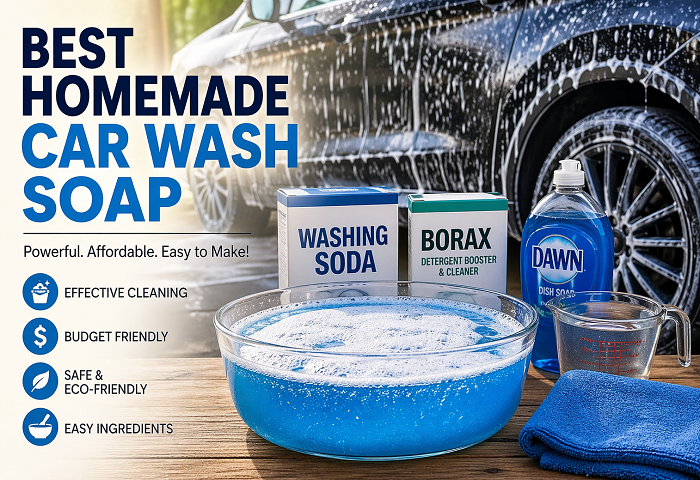
Have you ever run out of car wash soap right before a weekend wash session? Or maybe you looked at the price tag of a commercial car shampoo and thought, there has to be a better way. You are not alone. Thousands of car owners are discovering that the best homemade car wash soap can be made right in their own kitchen using everyday household products — and the results are surprisingly impressive.
Making your own DIY car wash solution is not just about saving a few dollars. It gives you full control over what goes onto your vehicle’s paint, helps you avoid harsh chemicals that can strip away your protective wax coat, and is far kinder to the environment. Whether you drive a daily commuter, a weekend cruiser, or a beloved classic, there is a recipe in this guide that will work perfectly for your needs.
In this comprehensive guide, we will walk you through the best homemade car wash soap formulas, explain exactly which household ingredients are safe to use, share step-by-step mixing instructions, and give you pro tips to get a streak-free, showroom-quality finish every single time.
Why Make Your Own Homemade Car Wash Soap?
Before diving into the recipes, it helps to understand why so many car enthusiasts prefer making their own wash solution over buying store-bought products.
Cost Savings: Commercial car shampoos can cost anywhere from $10 to $40 per bottle. The best homemade car wash soap can be made for a fraction of that cost using products you already have at home — like dish soap, baby shampoo, or liquid hand soap.
Paint Protection: Many cheap commercial products contain harsh surfactants that aggressively strip wax and protective sealants from your paint. A well-made best homemade car wash soap formula can be tailored to clean effectively while preserving your existing paint protection.
Eco-Friendly Washing: Store-bought car wash products often contain phosphates, synthetic dyes, and non-biodegradable chemicals that pollute stormwater drains. DIY wash soap recipes using natural ingredients are much gentler on the environment.
Customization: When you mix your own solution, you can adjust the formula depending on your car’s specific needs — adding glycerin for extra paint lubricity, or boosting cleaning power for heavily soiled vehicles.
Convenience: You never have to make a special trip to the store. The ingredients for the best homemade car wash soap are almost always already sitting in your bathroom or under your kitchen sink.
What to Know Before You Mix: Key Ingredients Explained
Understanding your ingredients is the foundation of making a great best homemade car wash soap. Here is a breakdown of what works, what to avoid, and why.
Safe Ingredients for Your DIY Wash Soap
Baby Shampoo is widely considered one of the best bases for the best homemade car wash soap. It is pH-balanced, gentle, and produces a good lather without stripping wax or protective coatings. Baby shampoo has excellent lubricity, meaning it cushions the wash mitt against the paint surface and reduces the risk of fine scratches and swirl marks during washing.
Liquid Dish Soap such as Dawn is powerful and cuts through road grime, tar, and greasy deposits quickly. However, dish soap is a strong degreaser, which means it will remove wax and paint sealants along with the dirt. It is best used when you plan to re-wax your car immediately afterward, or when you want to strip old wax before applying a fresh protective coat. Always dilute dish soap generously — about one ounce per gallon of water is the standard recommendation.
Liquid Hand Soap sits somewhere between baby shampoo and dish soap in terms of cleaning strength. It is mild, produces a decent lather, and is generally safe for painted surfaces when properly diluted. It works well for light-duty washes on well-maintained vehicles.
Baking Soda acts as a gentle abrasive and deodorizer. When added in small amounts to your wash mix, it can help lift road grime and stuck-on debris. Use it sparingly — scrubbing too hard with baking soda on soft modern clearcoats can cause micro-scratches.
White Vinegar is a natural acidic cleaner that excels at removing hard water spots, mineral deposits, and light surface staining from windows and glass panels. A 50/50 mixture of white vinegar and water makes an excellent glass-cleaning spray for windshields. Avoid using it on bare paint or polished aluminum, as prolonged contact can cause surface etching.
Vegetable Glycerin is a secret weapon in advanced wash soap recipes. Adding just a teaspoon of glycerin per gallon of wash water dramatically increases the slickness of the solution, reducing paint marring and producing a gorgeous, streak-free finish.
Distilled Water is worth using instead of tap water, particularly for your final rinse. Hard tap water contains calcium and magnesium minerals that leave white spots and streaks as they dry on paint. Distilled or deionized water evaporates cleanly and leaves zero residue.
Ingredients to Avoid
Never use laundry detergent, bleach, or dishwasher detergent on your car. These products are formulated for machines and contain caustic chemicals, enzymes, and optical brighteners that can permanently damage automotive paint, strip rubber seals, and dull plastic trim. Even small amounts can cause irreversible harm, especially to clearcoated and ceramic-coated finishes.
5 Best Homemade Car Wash Soap Recipes
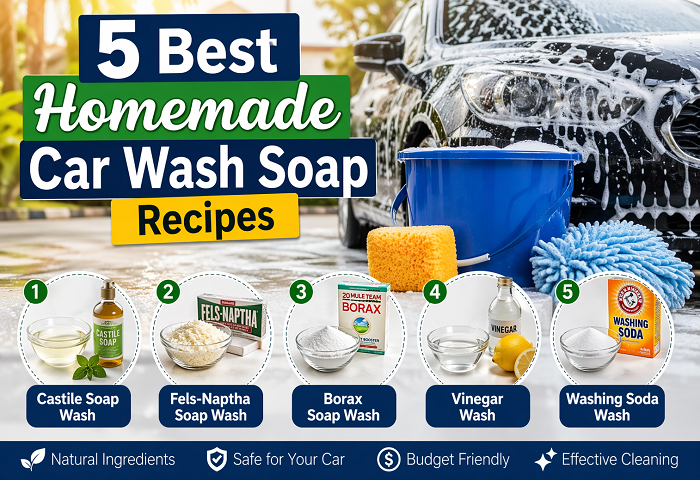
Here are the top five best homemade car wash soap formulas, ranked from gentlest to most powerful, so you can pick the right one for your car and situation.
Recipe 1: The Gentle Baby Shampoo Wash (Best for Regular Use)
This is arguably the best homemade car wash soap for everyday maintenance washing. It is safe for waxed, sealed, and even ceramic-coated paint surfaces.
Ingredients:
- 1 gallon of warm water
- 2 tablespoons of baby shampoo
- 1 teaspoon of vegetable glycerin (optional but recommended)
Instructions:
- Fill a clean five-gallon wash bucket halfway with warm water.
- Add two tablespoons of baby shampoo.
- Add one teaspoon of glycerin if available.
- Gently stir the mixture — do not shake it aggressively or you will create excess foam.
- Use a soft microfiber wash mitt to apply the best homemade car wash soap to your vehicle, working from the roof down to the lower panels.
- Rinse thoroughly with clean water and dry immediately with a microfiber drying towel.
Best For: Weekly washes on well-maintained cars with existing wax or sealant protection.
Recipe 2: The Deep-Clean Dish Soap Formula (Best for Stripping Old Wax)
If your car has a build-up of old wax, road film, or industrial fallout and you want a clean slate before applying a fresh protective coat, this best homemade car wash soap variant is ideal.
Ingredients:
- 1 gallon of warm water
- 1 ounce (about 2 tablespoons) of liquid dish soap (Dawn or similar)
- 1 tablespoon of baking soda
Instructions:
- Fill your wash bucket with one gallon of warm water.
- Add one ounce of dish soap.
- Stir in one tablespoon of baking soda.
- Mix gently until the baking soda is fully dissolved.
- Wash the vehicle panel by panel, rinsing each section before moving on.
- After washing, rinse the entire car thoroughly with clean water.
- Follow up immediately with a fresh coat of wax or sealant, as this formula will strip existing protection.
Best For: Pre-wax prep, heavy contamination removal, off-road vehicles.
Recipe 3: The Liquid Hand Soap Daily Wash
This quick and easy best homemade car wash soap formula uses the liquid hand soap most people already have on their bathroom counters.
Ingredients:
- 1 gallon of warm water
- 2 tablespoons of fragrance-free liquid hand soap
- 1 teaspoon of glycerin (optional)
Instructions:
- Combine all ingredients in a bucket and stir gently to create a light lather.
- Apply with a microfiber wash mitt using the two-bucket method.
- Rinse well and dry with a clean microfiber towel.
Best For: Light dust and everyday grime on city cars and daily drivers.
Recipe 4: The Vinegar and Dish Soap Glass Cleaner
While not a full-car wash formula, this homemade car wash variant is the best recipe specifically for cleaning windows, windshields, and glass surfaces.
Ingredients:
- 1 cup of distilled water
- 1 cup of white vinegar
- 1 teaspoon of liquid dish soap
Instructions:
- Combine all three ingredients in a clean spray bottle and shake gently.
- Spray onto glass surfaces and wipe with a clean microfiber cloth in circular motions.
- Buff dry with a second clean, dry microfiber cloth to eliminate streaks completely.
Best For: Windshields, side windows, rear glass, and exterior mirrors.
Recipe 5: The Heavy-Duty Off-Road Wash
For trucks, SUVs, and adventure vehicles that return from the trails caked in mud, this is the most powerful version of the best homemade car wash soap on our list.
Ingredients:
- 1 gallon of warm water
- 3 tablespoons of dish soap
- 2 tablespoons of baking soda
- 1 tablespoon of white vinegar
Instructions:
- Fill your wash bucket with warm water.
- Add all ingredients and stir until fully combined. The vinegar and baking soda will briefly fizz — this is normal and safe.
- Pre-rinse the vehicle with a garden hose or pressure washer to knock off loose mud.
- Apply the best homemade car wash soap with a heavy-duty wash brush or large microfiber mitt.
- Scrub wheel wells, rocker panels, and undercarriage areas thoroughly.
- Rinse from top to bottom with strong, clean water pressure.
- Apply fresh wax once the vehicle is completely dry.
Best For: Off-road trucks, muddy SUVs, farm vehicles, and RVs.
The Two-Bucket Method: The Secret to a Scratch-Free Wash
Knowing how to apply the best homemade car wash soap is just as important as the recipe itself. The two-bucket method is the gold standard technique used by professional detailers, and it is simple to master at home.
Bucket 1: Fill with your freshly mixed wash solution. Bucket 2: Fill with plain, clean water for rinsing your wash mitt.
Each time you finish washing a body panel, dip your wash mitt into Bucket 2 first to rinse out the dirt and grit you just lifted off the paint. Wring it out, then re-dip into Bucket 1 to reload with fresh soapy solution before moving to the next panel.
This prevents dirt particles from being dragged across clean paint sections, which is the number one cause of fine swirl marks and micro-scratches on automotive clearcoat. Adding grit guards to the bottom of each bucket further traps debris away from your mitt.
Pro Tips for Getting the Best Results from Best Homemade Car Wash Soap
Wash in the shade. Direct sunlight causes your best homemade car wash soap to dry on the paint before you can rinse it off, leaving water spots and soapy residue baked onto the surface. Always wash in a shaded area or during the cooler parts of the day — early morning is ideal.
Always rinse before washing. A thorough pre-rinse with a garden hose loosens and removes the top layer of loose dirt and grit before you introduce the wash mitt. This dramatically reduces the risk of scratching your paint.
Work from top to bottom. The lower panels and rocker areas are always dirtiest. Save them for last so you are not dragging lower-panel contamination up onto cleaner upper surfaces.
Dry immediately after rinsing. Even with the best homemade car wash soap and a thorough rinse, water droplets left to air dry will concentrate minerals as they evaporate, leaving white water spots on dark paint. Use a plush microfiber drying towel or a leaf blower to dry the car quickly and completely.
Use microfiber, not sponges. Traditional sponges trap grit against the paint surface as you wipe. Microfiber wash mitts have deep, soft fibers that lift and hold dirt safely away from the paint, making them far safer for modern clearcoated finishes.
Test on a hidden area first. Any time you try a new best homemade car wash soap recipe, test it on a small, inconspicuous area of the paint — like inside a door jamb or under the hood edge — before applying it to the full vehicle. This is especially important on older vehicles, matte finishes, or repainted body panels.
Best Homemade Car Wash Soap vs. Commercial Car Shampoo: Which Is Better?
This is a question many car owners wrestle with, and the answer depends entirely on your priorities and how much you care about your vehicle’s paint finish.
Commercial car shampoos are specifically formulated for automotive paint chemistry. Premium brands include pH balancers, wax conditioners, and high-lubricity polymers that protect the paint while cleaning. If you have a new luxury vehicle, a ceramic coating, or a custom paint job, investing in a quality commercial car shampoo is the right call.
However, the best homemade car wash soap is perfectly capable of cleaning most everyday vehicles safely and effectively. For budget-conscious owners, people who wash their cars frequently, and anyone who prefers natural, eco-friendly products, a DIY wash solution is an excellent choice. The key is choosing the right formula for your paint’s specific condition and needs.
The baby shampoo-based recipe and the glycerin-enhanced formula come closest to replicating the performance of commercial products — and they do so at a tiny fraction of the cost.
Frequently Asked Questions About Best Homemade Car Wash Soap
Can I use regular shampoo as a car wash soap? Yes, but choose a mild, moisturizing shampoo rather than a clarifying or medicated formula. Baby shampoo is the safest choice because it is pH-neutral and free from harsh additives that could harm your paint.
Is the best homemade car wash soap safe for matte paint finishes? Yes, provided you use a completely wax-free, gloss-enhancer-free formula. The basic baby shampoo recipe with no additives works perfectly on matte finishes. Never use dish soap or any recipe containing wax boosters on matte paint, as it will ruin the flat appearance permanently.
How long does the best homemade car wash soap keep in storage? Most recipes should be used fresh. If you mix more than you need, store the remainder in a sealed, clearly labeled plastic container away from direct sunlight. Most formulas remain usable for up to one to two months. Discard if the mixture separates, clouds unusually, or develops an off smell.
Will homemade car wash soap remove bird droppings and tree sap? The heavy-duty dish soap formula can soften and help remove bird droppings and fresh tree sap. For dried, hardened deposits, apply the soapy solution directly to the spot and let it dwell for several minutes before gently agitating with a microfiber cloth. Never scrub dry bird droppings on paint, as they are acidic and can etch the clearcoat when rubbed while dry.
How much soap should I add per wash bucket? As a general starting point, use one to two tablespoons of any mild soap per gallon of water. For dish soap, reduce this to one tablespoon or less. More soap is not better — an overly concentrated wash solution is harder to rinse away completely and can leave a dull, filmy residue.
Final Thoughts: The Best Homemade Car Wash Soap for Every Driver
Making your own car wash soap at home is one of the smartest, simplest ways to save money on vehicle maintenance without sacrificing wash quality. With the right ingredients, the right technique, and a little practice, your results can rival expensive commercial products every single time.
The best homemade car wash soap for most drivers remains the baby shampoo and glycerin formula — it is gentle enough for waxed paint, eco-friendly, produces a beautiful lather, and costs almost nothing to make. For heavier jobs, the dish soap and baking soda combination steps up the cleaning power exactly when you need it most.
Whether you are maintaining a brand-new family car or giving an older vehicle the careful wash it deserves, these recipes have you covered. Grab a bucket, mix up your solution, and give your car the thorough, safe clean it needs — right in your own driveway.