Introduction
Need to find a self service car wash without circling your neighborhood for an hour? This guide explains how to find a self service car wash near you, what to expect at the bay, average prices, step-by-step washing methods, safety checks, and the common mistakes that waste your quarters. You will leave with a clear plan and a cleaner car.
Quick Answer
To find a self service car wash, open Google Maps, search “self service car wash near me,” then sort by rating, distance, and 24-hour access. Confirm the site has open bays (not just a tunnel), pressure wands, foam brushes, and accepted payments like quarters, cards, or app credits.
You can read my complete self-wash overview for a deeper look at how these sites operate before your first visit.
What Is a Self Service Car Wash?
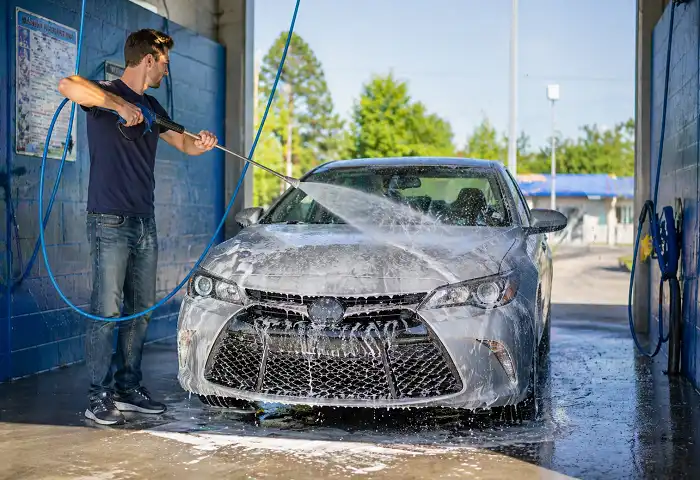
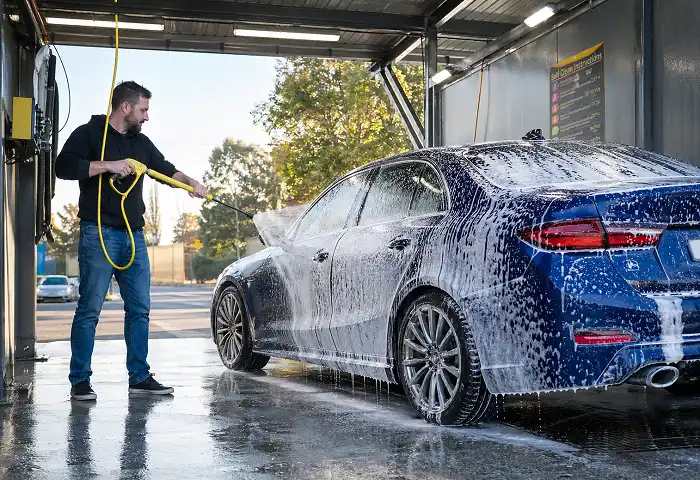
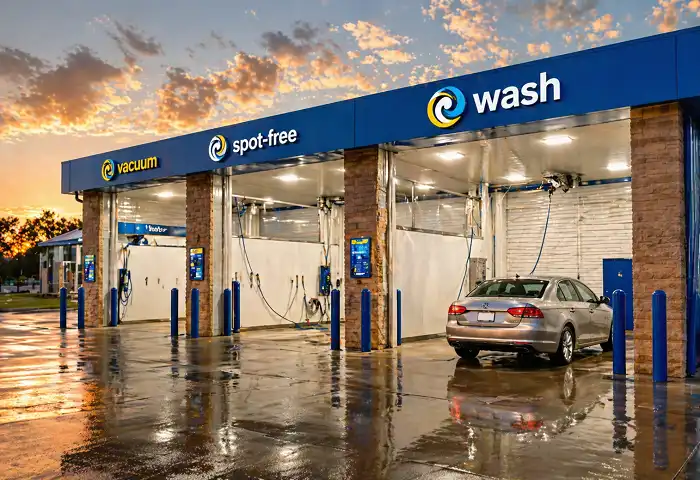
A self service car wash is a coin-operated or card-operated facility where drivers wash their own vehicles inside a covered bay. The site provides a high-pressure wand, foam brush, pre-soak, soap, rinse, wax, and spot-free cycles. You pick the cycle and control the timer.
Each bay charges by the minute. The starting fee runs $2 to $5 for the first three to four minutes, then about $0.25 per added 15 to 20 seconds. A typical wash takes 8 to 12 minutes total.
Drivers who want to find a self service car wash in their area can pick from standalone plazas, gas stations, or storage-site bays. This setup differs from automatic tunnels and touchless drive-throughs.
How to Find a Self Service Car Wash Near You
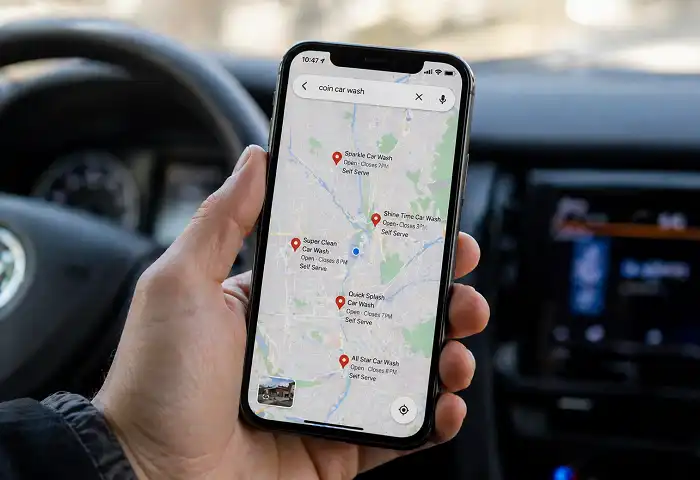
The fastest way to find a self service car wash near you is a map app search, followed by a quick filter for ratings, hours, and bay count. Most owners update their hours on Google Business Profile, so the listing reflects what you will see on site.
1. Search Google Maps With the Right Phrase
Open Google Maps and type “self service car wash” or “coin car wash.” Skip vague terms like “car wash near me,” because that returns automatic tunnels. Sort by distance, then check photos for open-bay layouts and posted price boards. This filter helps you find a self service car wash in under two minutes.
For a closer look at nearby options, my self-serve bays near you guide breaks down how to read a map listing.
2. Use Apple Maps and Yelp as Backups
Apple Maps and Yelp sometimes list small operators that Google misses, especially older sites tied to gas stations or storage facilities. Yelp reviews also flag broken bays, weak water pressure, and short timers, which helps you find a self service car wash that actually works on the first try.
3. Try Wash-Specific Apps
Apps like Washify, ICS Connect, Sparkly, and Everwash power the payment systems at many bays. Their app maps help you find a self service car wash with current pricing and tap-to-pay support. Mobile pay adoption at self-serve sites passed roughly one-third of U.S. operators by 2023, per industry trade reports.
4. Ask in Local Forums
Local Facebook groups, Nextdoor threads, and city subreddits often name the cleanest sites and the ones with strong wand pressure. Truck and motorcycle owners post the most useful tips on how to find a self service car wash with tall bay clearance and good drainage.
5. Drive a Commercial Strip
Many self-serve bays sit behind gas stations, truck stops, and self-storage facilities. A short drive along a commercial corridor often reveals a bay that map apps never indexed. You can also find a self service car wash by spotting painted “Wash Here” signs and posted price boards near the road.
Where to Find a Self Service Car Wash in Your City
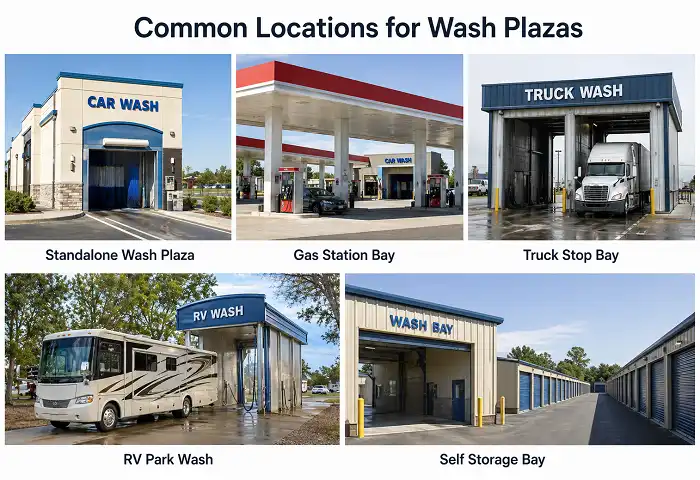
You can find a self service car wash at five common location types: standalone wash plazas, gas stations, truck stops, RV parks, and self-storage facilities. Each layout offers a different experience, and prices shift with the property type.
Standalone plazas keep four to eight bays open 24 hours. Gas station bays usually run two to four bays and close late. Truck stops keep tall bays for vans and lifted trucks. RV parks open seasonally. Self-storage bays serve renters first but accept walk-ins.
If you want to find a self service car wash with the best price, focus on standalone plazas. Their volume keeps per-minute rates lower than gas station bays, which often add a $0.50 to $1.00 surcharge.
When Does a Self Service Car Wash Make Sense?
A self service car wash works best when your car needs hand control, not a conveyor belt. Pick a bay over a tunnel in five clear cases:
- After winter road salt. Salt sticks to wheel wells and undercarriages. A high-pressure wand reaches those spots; a tunnel often misses them.
- Bug-heavy seasons. May through August leaves love bugs and gnats baked into the front bumper. Pre-soak plus a foam brush lifts them without scrubbing paint.
- Trucks, vans, and lifted vehicles. Truck owners often find a self service car wash with 9-foot or taller doors at truck stops.
- Motorcycles and ATVs. Many tunnels refuse two-wheeled vehicles. Riders find a self service car wash welcoming because the bay layout fits a bike.
- Pre-sale detailing. You control soap strength, rinse time, and wax, which improves curb appeal before resale.
Drivers who want a low-cost wash also lean on these bays. My write-up on how to save money on washes covers price comparisons across wash types.
How to Use a Self Service Car Wash Step by Step
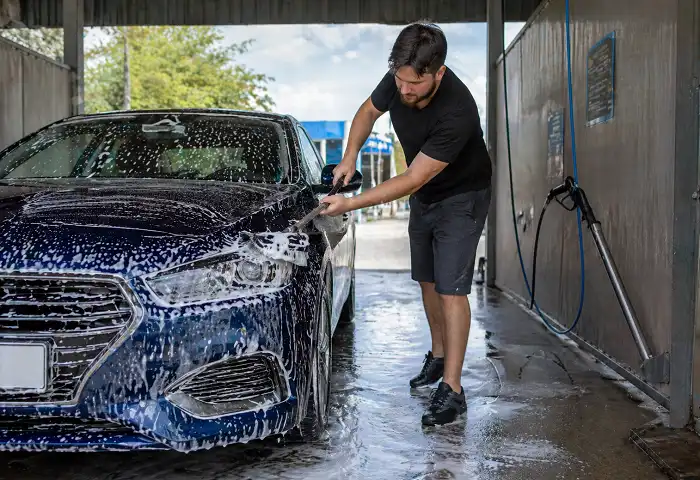
A self service car wash visit follows a fixed order: park, prep, pre-rinse, soap, scrub, rinse, wax, spot-free, and dry. Skip a step and you waste paid minutes or leave streaks.
Step 1: Park and Prep
Pull into the bay, center the car between the painted lines, and roll up every window. Place your microfiber towels, wheel brush, and any extra soap on the bench. Remove floor mats now if you plan to vacuum after.
Step 2: Pre-Rinse the Vehicle
Set the dial to “Rinse” and wash off loose dirt for 60 to 90 seconds. Hold the wand 12 to 18 inches from the paint. Start at the roof and work down. The rinse softens grit so the brush will not scratch the clear coat.
Step 3: Apply Pre-Soak
Switch the dial to “Pre-Soak” or “Bugs and Tar.” This alkaline cycle breaks insect protein and road film. Coat the front bumper, mirrors, and lower panels for 30 to 60 seconds.
Step 4: Foam Brush the Body
Turn the dial to “Foam Brush” and scrub from top to bottom in straight strokes. Avoid circles, since circles drag grit across paint. Skip the wheels with this brush; wheel grit will scratch your clear coat on the next pass.
Step 5: High-Pressure Rinse
Move the dial to “Rinse” again and wash all soap off in 90 seconds. Soap left to dry causes water spots and dull patches. Hit door jambs, mirror bases, and grille slats.
Step 6: Wax Cycle (Optional)
Most bays offer a “Tri-Color Foam Wax” or “Triple Polish” cycle. This adds a thin protective layer for 30 to 45 seconds. If you find a self service car wash with a triple-foam option, run it right after the rinse for the best result.
Step 7: Spot-Free Rinse
The “Spot-Free” cycle uses deionized water that dries without mineral spots. Run it for 45 to 60 seconds at low pressure. Do not towel-dry until after this final rinse.
Step 8: Dry With Microfiber
Drive forward into the drying area, pull out a clean microfiber towel, and pat the panels in straight lines. A 16-by-16 inch towel handles a sedan; an SUV needs two towels.
Step 9: Vacuum the Interior
Walk to the vacuum station, drop in $1 to $2, and vacuum carpets, mats, seats, and the trunk. Most stations run for three to four minutes per dollar.
For a tighter checklist version, my 8-step bay routine walks through this same flow with photos.
How Much Does a Self Service Car Wash Cost?
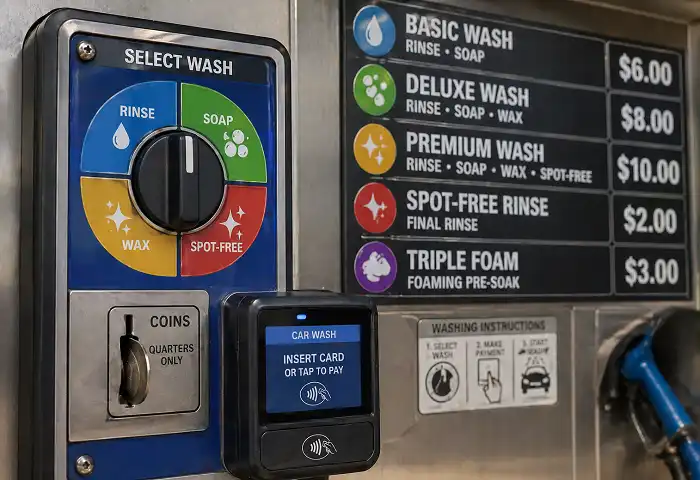
A self service car wash costs $5 to $15 per visit for sedans and SUVs. The starting fee covers the first three to four minutes, then meters add per-minute fees. Larger trucks and minivans run closer to $12 to $18 because they need more rinse time.
| Wash Element | Typical Cost |
|---|---|
| Bay start fee (3–4 min) | $2.00 – $5.00 |
| Added time (per minute) | $0.50 – $1.00 |
| Vacuum station (per 3 min) | $1.00 – $2.00 |
| Fragrance machine | $0.50 – $1.00 |
| Mat cleaner | $1.00 |
Cards and apps now beat coins at most newer sites. Drivers who find a self service car wash with an app wallet save up to 10% through reload bonuses, which keeps the per-wash cost near $4 for weekly users.
Common Mistakes to Avoid
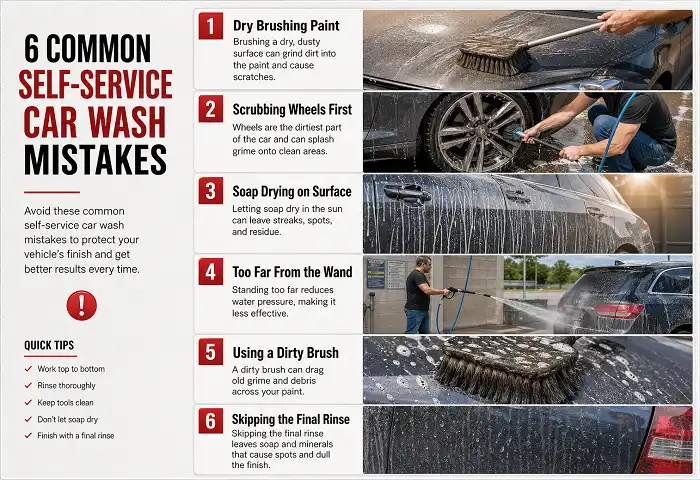
Most wasted quarters at a self service car wash come from six small errors. Avoid these and your wash time drops by two to three minutes.
- Skipping the pre-rinse. Brushing dry paint grinds dirt into the clear coat.
- Using the foam brush on wheels first. Brake dust loads the brush, then scratches paint on the next pass.
- Letting soap dry on the body. Dried soap leaves streaks the spot-free rinse cannot remove.
- Standing too far from the wand. Distance drops impact pressure by half at three feet.
- Aiming the wand at door seals. Direct pressure can rip rubber gaskets and force water inside.
- Running out of time mid-rinse. Add a minute before the wax cycle, not after the wand cuts off.
New drivers often find a self service car wash confusing on the first visit, so a printed list of these errors helps. Stormwater rules also apply. The U.S. EPA notes that runoff from home washing can carry oil and detergents into storm drains, which is one reason commercial bays exist with closed drainage systems.
Safety Tips at the Bay
Safety at a self service car wash centers on slick floors, the high-pressure wand, and weather. The wand outputs 800 to 1,200 PSI, which can break skin at close range.
- Wear closed shoes with rubber soles. Bay floors stay wet and soapy.
- Keep the wand pointed at the car, never at people or pets.
- Hold the wand 12 inches or more from skin, eyes, and rubber seals.
- Cover open windows before you start. A jammed window costs more than the wash.
- In winter, watch for ice near the bay entry. Bay floors freeze fast below 25°F.
- Lock the car between cycles if you walk to the change machine.
When you find a self service car wash with strong lighting, clean drains, and posted safety signage, those small details often signal a well-run site overall.
Troubleshooting Issues at the Bay
A few common bay problems have quick fixes. Use this list before you give up and drive to a second site.
Wand dribbles instead of spraying. The timer ran out. Add money and reset the dial.
Foam brush comes out dirty. Run the brush through the rinse cycle for 20 seconds before you scrub.
Card reader rejects your card. Try a chip insert instead of tap. If it still fails, swap to coins or use the operator app.
No hot water. Cold-water bays save energy but rinse slower in winter. If you cannot find a self service car wash with hot water in your area, add 15 seconds of pre-soak to compensate.
Bay door frozen shut. Many 24-hour sites close one or two bays in deep cold. Move to the next open bay.
Vacuum has no suction. Empty the canister at the side of the unit, or move to the next vacuum head.
If a bay clearly needs repair, leave a short Google review with the bay number. Operators read these and fix issues within a week at busy sites. My write-up on the easy self-serve method covers a few extra fixes for older equipment.
Eco Notes for Each Visit
A commercial self service car wash uses 12 to 18 gallons of water per wash, while a home driveway wash uses 80 to 140 gallons, per data from Penn State Extension water quality programs. Commercial bays send wastewater to sanitary sewers, not storm drains, which keeps oil and brake dust out of local streams.
If you find a self service car wash that recycles its rinse water, your visit also reduces total draw from the municipal supply. Many cities encourage drivers to use commercial bays during drought watches.
Tools to Bring
Most bays supply only the wand and the foam brush. Bringing four small items improves results without raising the price.
- A 16-by-16 inch microfiber towel for drying
- A separate wheel brush with stiff bristles
- A spray bottle of glass cleaner for windows after the rinse
- A trash bag for floor mat debris and old receipts
Pack these in a small caddy and keep it in the trunk. Once you find a self service car wash you trust, your routine drops to under ten minutes per visit. For another nearby option, my manual wash bays nearby post lists alternatives if the closest self-serve site is closed.
A short checklist also helps you find a self service car wash with the right price-to-quality balance, instead of bouncing between sites every weekend.
Final Thoughts
A self service car wash gives you control over soap, pressure, timing, and price, which is hard to match at an automatic tunnel. The skill is mostly about order: pre-rinse, soap, scrub top down, rinse fully, then dry with clean microfiber. Build a short routine and your wash drops below ten minutes start to finish.