Introduction
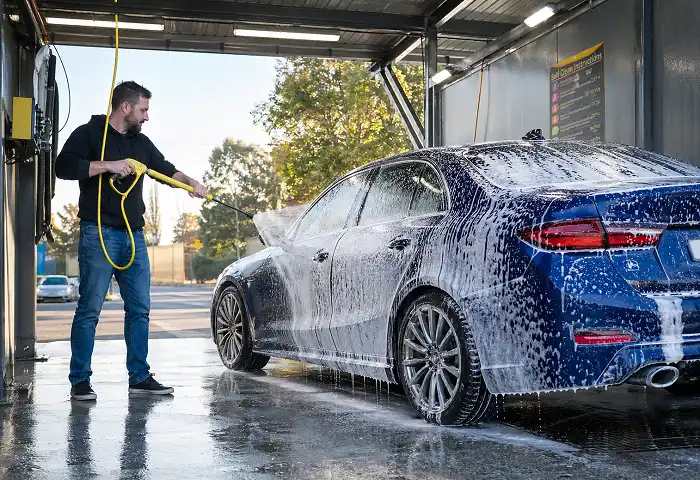
Car wash self clean lets you wash your own car at a coin-operated bay using a high-pressure wand, foam brush, and timed cycles. This guide covers what the process involves, the supplies you need, the exact steps to follow, average costs at most stations, common mistakes to avoid, and safety tips so you can finish a full wash in under 15 minutes.
Quick Answer: A car wash self clean cycle takes 8 to 12 minutes and costs $4 to $10. You insert coins or tap a card, pre-rinse, apply soap, agitate with the foam brush, rinse with the high-pressure wand, then finish with wax and spot-free rinse.
What Is Car Wash Self Clean?
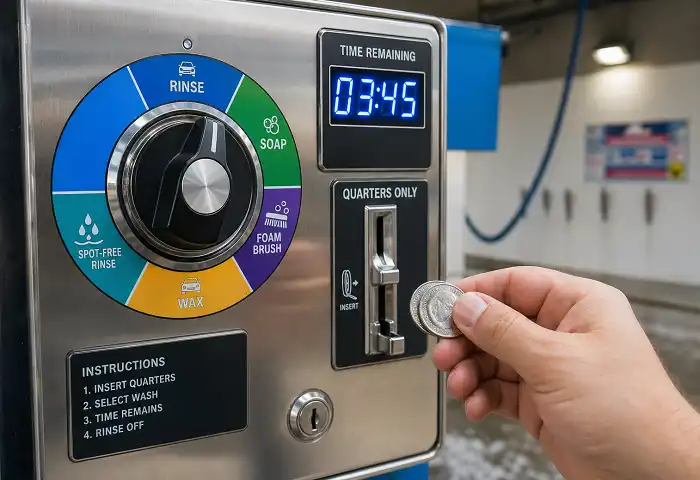
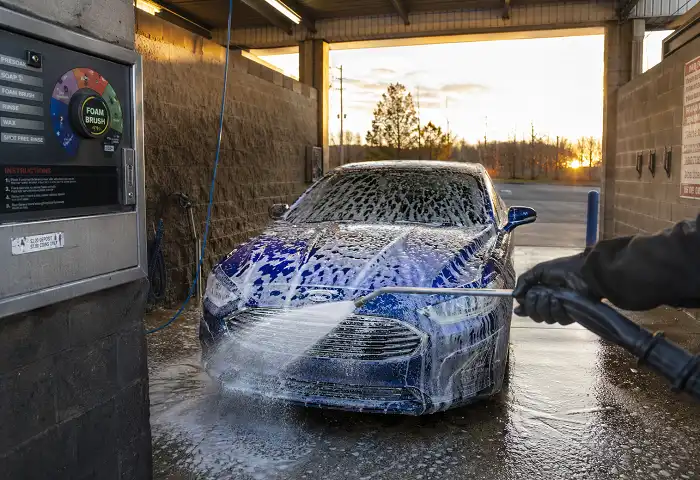
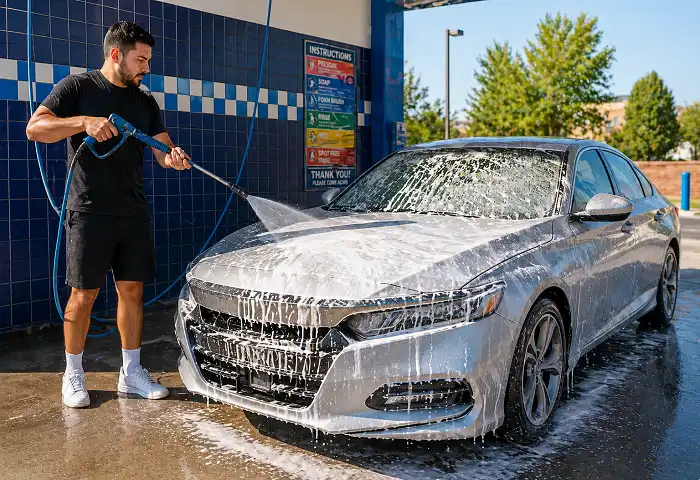
A car wash self clean bay is a covered stall with a coin or card-operated control panel and a swivel wand that delivers timed cycles of soap, rinse, foam brush, and wax. The driver picks the setting, pays per minute, and works at their own pace.
Most stalls run on a 4-minute base. A standard $0.25 coin buys around 25 to 30 seconds depending on the operator. The system charges per minute of trigger time, not per gallon, which gives full control to the driver. If you want a deeper look at how these bays work, this self-serve bay walkthrough breaks down the layout.
A car wash self clean stall sits between a full hand wash at home and an automatic tunnel. You get tunnel-grade water pressure with hand-wash control over chemicals.
When to Use Car Wash Self Clean
Use a car wash self clean bay when your car carries heavy road grime, salt, mud, or pollen that an automatic tunnel cannot reach. The high-pressure wand strips caked dirt from rocker panels and wheel wells.
Self clean bays work well after off-road trips, winter driving in salted states, or 500-mile highway runs that coat the front clip in bug residue. They also help drivers with darker paint who want to skip tunnel brushes, since rotating brushes can leave swirl marks on black, navy, or deep red finishes.
Pick a self clean bay during pollen season in Texas, when yellow dust coats every panel within 24 hours of a wash. The pressurized rinse moves pollen out of door jambs and trim gaps where automatic tunnels cannot reach.
Where to Find Car Wash Self Clean Stations
Car wash self clean stations sit at standalone car wash properties, gas stations, and 24-hour wash centers. Most cities have 5 to 15 locations within a 10-mile radius. A Google Maps search for “self serve car wash” or “coin car wash” returns the closest bays.
Look for stalls with hot water lines, foam brushes, presoak chemicals, and tire cleaner options. Skip locations with broken wands, weak water pressure, dim lighting at night, or poor drainage on the floor. A clean bay with working lights matters as much as the wash chemicals.
Tools and Supplies for Car Wash Self Clean
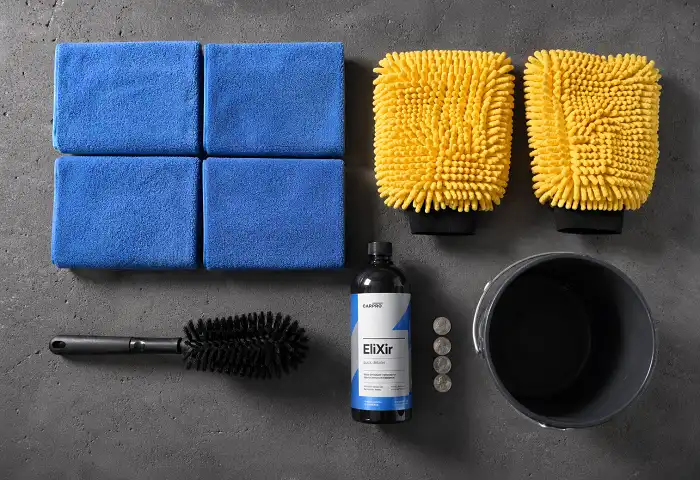
Bring 4 microfiber towels, 1 wheel brush, 2 wash mitts, and a quart of pre-mixed quick detailer. The bay provides soap, foam brush, water, and wax. Your own supplies deliver better results than bay chemicals alone.
Pack quarters or a prepaid wash card with at least $10 loaded. Keep a small 3-gallon bucket for soaking towels between panels. Pull-on rubber boots help if the floor drains slowly. The right car wash soap pick makes a measurable difference in suds and slickness during the foam brush step.
Optional adds for a deeper car wash self clean session: tire dressing, glass cleaner, and a clay bar for stuck contaminants. Skip wheel acid on polished or chrome surfaces, since acid pits the finish within seconds.
Car Wash Self Clean Step-by-Step Guide
Follow these 8 steps to finish a full car wash self clean in 10 to 12 minutes.
Step 1: Park and Prep the Car
Pull into the bay with mirrors folded and the antenna retracted. Roll up all windows and close the sunroof. Remove floor mats, shake them outside the bay, and stack them on the trunk lid. Insert payment and select the first cycle.
Step 2: Pre-Rinse with the High-Pressure Wand
Set the dial to “rinse” or “high-pressure rinse.” Hold the wand 12 to 18 inches from the panel. Spray top down, starting at the roof and working to the rocker panels. Pre-rinsing lifts loose dirt before any soap touches the paint, which prevents grit-on-grit scratching.
Step 3: Apply Soap or Presoak
Switch the dial to “soap” or “presoak.” Coat the car in foam from bottom to top. Bottom-up soap application stops dry streaks on lower panels and gives soap dwell time on the dirtiest sections first. Let the soap sit for 30 to 45 seconds. Soap dwell time activates surfactants that break the bond between dirt and clear coat.
Step 4: Use the Foam Brush
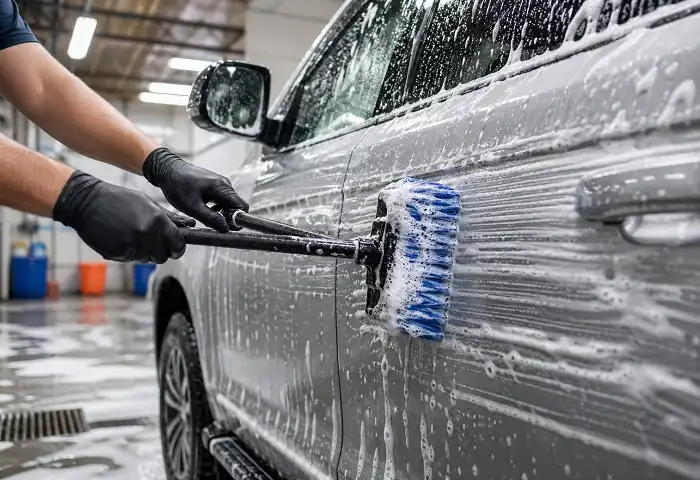
Switch to “foam brush” and run the brush in straight lines, never circles. Start at the roof, then hood, then sides, then rear bumper. Rinse the brush head in water before each new panel to drop trapped grit. Straight-line strokes cut the risk of swirl marks compared to circular motions.
Step 5: Clean the Wheels and Tires
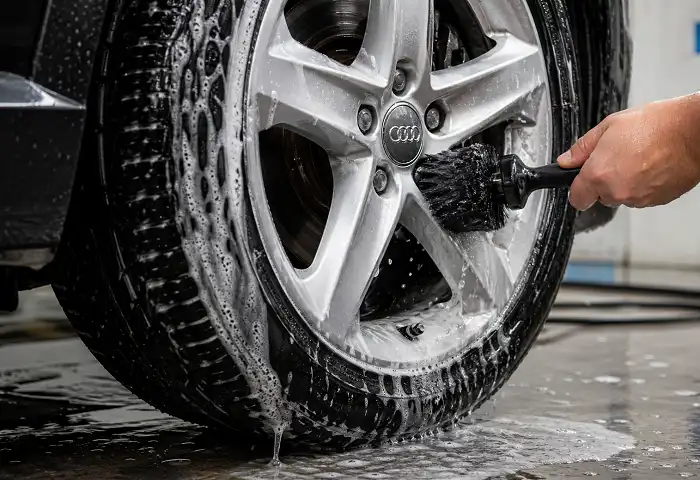
Use your own wheel brush with the bay’s tire cleaner setting. Scrub between spokes, around lug nuts, and along the inner barrel. Brake dust holds iron particles that bake into clear coat if left on the wheel for more than a week. Rinse each wheel before moving to the next so cleaner does not dry on the surface.
Step 6: High-Pressure Rinse Top-Down
Switch back to “rinse.” Spray top to bottom with the wand at a 45-degree angle. Push soap toward the floor drains. Hit door jambs, behind mirrors, and inside fuel doors where soap collects. A clean rinse step removes 95% of soap residue, which prevents streaks during drying.
Step 7: Apply Wax or Sealant
Select “wax” or “tri-foam wax.” Coat the car evenly from roof down. Bay wax adds a 1 to 2 week protection layer with carnauba content around 3 to 5 percent in most stations. Wax is not a substitute for a real paste or spray sealant at home, but it adds short-term hydrophobic protection between deeper details.
Step 8: Spot-Free Rinse and Dry
Finish with “spot-free rinse,” which uses deionized water with mineral content under 10 parts per million. Drive out of the bay and dry with microfiber towels using straight strokes. Spot-free rinse cuts water spots on glass, chrome, and dark paint.
Car Wash Self Clean Cost Breakdown
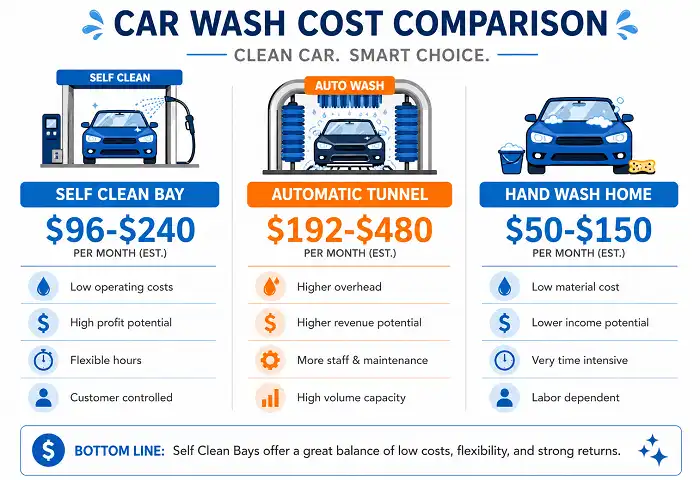
A standard car wash self clean cycle costs $4 to $10 depending on location and time used. Base rate at most bays starts at $2.50 for 4 minutes, with $0.25 added for every 25 to 30 seconds. A full detail run hits 12 to 15 minutes total.
Compare that to automatic tunnels at $8 to $20 per wash, or a hand wash at home using 60 to 80 gallons of water per session. A car wash self clean bay uses 14 to 22 gallons per wash because the high-pressure system delivers 4 gallons per minute at most stations, per EPA water-use guidelines. For more on the math behind these numbers, this DIY wash cost breakdown compares all three options side by side.
Drivers who wash 2 cars per month at a self clean bay spend $96 to $240 per year. The same drivers using full-service tunnels spend $192 to $480.
Common Car Wash Self Clean Problems and Solutions
Weak water pressure means ask the attendant for another bay or wait for the system to cycle. Most pumps need 30 seconds to re-pressurize after the previous user finishes.
Cold water on a “hot” setting points to a heater cycle. Hot water heaters in self clean bays cycle in 30 to 60 seconds. Wait before changing bays.
Foam brush leaving marks comes from grit trapped in the bristles. Rinse the brush head under the high-pressure wand for 5 seconds before use. The bristles flex enough that water clears most particles.
Wax that does not bead points to spot-free rinse stripping older sealant. Reapply spray sealant after the bay wash dries.
Car Wash Self Clean Troubleshooting
If your dial does not switch settings, the timer ran out. Add more coins or tap the card again. If the wand sprays sideways, the nozzle is clogged. Pull the trigger 3 to 4 times in fast bursts to clear the obstruction. If the foam brush drips brown water on first squeeze, the bay needs maintenance, and you should pick another stall before continuing.
If water freezes on glass during winter washes, run the engine with defrost on high for 2 minutes before drying. If door locks freeze, spray a small amount of de-icer on the keyhole and wait 60 seconds. The touchless wash option becomes the better pick when temperatures sit under 25°F and contact methods cause ice buildup.
If the wax cycle leaves visible streaks on the windshield, switch to spot-free rinse for 20 seconds and squeegee the glass before driving away.
Mistakes to Avoid During Car Wash Self Clean
Skipping pre-rinse drags grit across paint and creates swirl marks within 3 to 5 washes. The pre-rinse step is the single most important move in any car wash self clean session.
Using the foam brush in circles cuts micro-scratches into clear coat that show up under direct sunlight. Straight strokes prevent that pattern.
Rinsing bottom-up traps soap on lower panels and forces a second rinse pass that wastes time and money.
Letting soap dry on hot paint creates streaks and mineral spots. Work one panel at a time during summer when bay temperatures climb past 90°F.
Spraying glass at point-blank range can crack window seals on cars older than 8 years. Keep the wand at least 18 inches from any glass surface.
Using wheel acid on chrome or polished aluminum pits the finish within 30 seconds. Read the bottle before reaching for any wheel chemical.
Skipping the wax cycle to save 60 seconds removes the only protection layer between the next wash and 7 to 14 days of road grime. Tips for saving money on washes point to this exact tradeoff.
Car Wash Self Clean Safety Tips
Wear closed-toe shoes, since bay floors stay wet and soapy. Keep the wand pointed at the car, never at people or adjacent bays. The wand outputs 1,200 to 1,500 PSI at the nozzle, enough to break skin at close range, per OSHA pressure-equipment guidance.
Do not spray the engine bay at full pressure. Water at 1,200 PSI shorts electrical connectors, ignition coils, and sensor harnesses. Use low-pressure rinse on the engine if cleaning under the hood, and stay 24 inches away from any wiring.
Watch for slick floors near drains. Keep children and pets in the car with windows up. Lock the doors before stepping out, since a strong spray can trigger door sensors on some newer vehicles.
In hot weather, hydrate before starting. A full car wash self clean session in 95°F bay temperatures pulls 12 to 16 ounces of sweat from the driver in 12 minutes.
Car Wash Self Clean FAQ
How long does a car wash self clean take? A full session runs 10 to 12 minutes, with experienced drivers finishing in under 8.
Can a car wash self clean replace detailing? No. Self clean bays handle weekly maintenance washing. A full detail covers paint correction, interior shampoo, and clay bar work.
Is car wash self clean safe for ceramic coatings? Yes, with one rule: skip the foam brush. Use the high-pressure wand and your own wash mitt instead.
Can I bring my own soap to a car wash self clean bay? Some bays allow it; others post signs banning outside chemicals. Check before unloading a bucket.
Final Thoughts on Car Wash Self Clean
A car wash self clean bay gives the driver direct control over chemicals, water pressure, and time spent on each panel. Most drivers finish in 10 to 12 minutes for under $8 per session. With your own microfiber towels, quick detailer, and a wheel brush, the result rivals a paid hand wash at a fraction of the cost.
The next time your car carries pollen, salt spray, or trail dust that a tunnel cannot touch, run through these 8 steps at the closest bay and check the difference in 15 minutes.