Introduction
Looking for a faster, cheaper self diy car wash that saves you money on weekly cleaning trips? This guide covers how a self diy car wash works, what each bay setting does, the step-by-step washing order, real costs, and the common mistakes drivers make. You finish with a clean vehicle, full control of the wash, and money saved over a tunnel visit.
Quick Answer
A self diy car wash is a coin-operated bay where drivers clean their own vehicle using a pressure wand and adjustable settings. A typical session costs $3 to $8 and runs 4 to 8 minutes. Drivers rotate through soap, rinse, foam brush, and wax stages from a single dial.
I have been washing my own car at coin bays for over a decade in the Frisco area. After testing dozens of locations across Texas, I put this guide together for drivers who want a clean car without paying $20 at a tunnel. For more coin-operated washing options, the linked breakdown covers nearby formats.
What Is a Self Diy Car Wash?
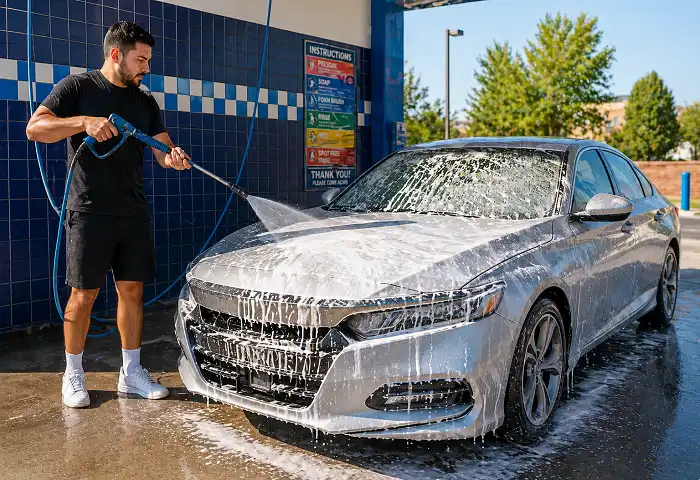
A self diy car wash is a drive-in bay with a high-pressure wand, foam brush, and timed cleaning cycles. The driver operates the equipment and rotates through soap, rinse, and wax stages. Operators charge by the minute through coins, bills, cards, or app payments.
The format differs from a tunnel wash because the driver does the work. Bays sit at gas stations, dedicated lots, and combination sites near interstates. A self diy car wash session lasts 4 to 8 minutes for most sedans.
How Does a Self Diy Car Wash Work?
A self diy car wash works on a timer system controlled by a single dial. After payment, the wand activates for a set period, often 4 minutes at the base rate. The user turns the dial to switch between presoak, soap, foam brush, rinse, wax, and spot-free rinse.
Each setting pulls from a separate chemical tank inside the equipment room. The pressure pump delivers water between 1,000 and 1,200 PSI. According to EPA water conservation guidance, commercial wash bays use less water than driveway washing because they capture and treat runoff.
Where Can You Find a Self Diy Car Wash?
Self diy car wash bays sit in three main locations:
- Gas stations: Many large fuel chains add a single coin-operated bay next to the pumps.
- Dedicated wash lots: Independent operators run 4 to 8 self diy car wash bays on one site.
- Combination sites: A property may include automatic tunnels and self diy car wash bays on the same lot.
Search “manual car wash near me” or check Google Maps for nearby locations. Independent sites often charge less than branded chains. For a full breakdown of bay types, the linked guide covers every format.
When Should You Use a Self Diy Car Wash?
A self diy car wash works best for routine weekly cleaning, light dirt, and seasonal salt removal. The format suits drivers who want soap control and direct contact with stains.
Skip the self diy car wash bay during freezing temperatures, since lines and undercarriage water can freeze. Heavy mud, baked-on bird droppings, or post-construction grime sometimes need a longer presoak. Visit during daylight for safety and better visibility.
How to Use a Self diy Car Wash: Step-by-Step
Here is the start-to-finish workflow I follow every time:
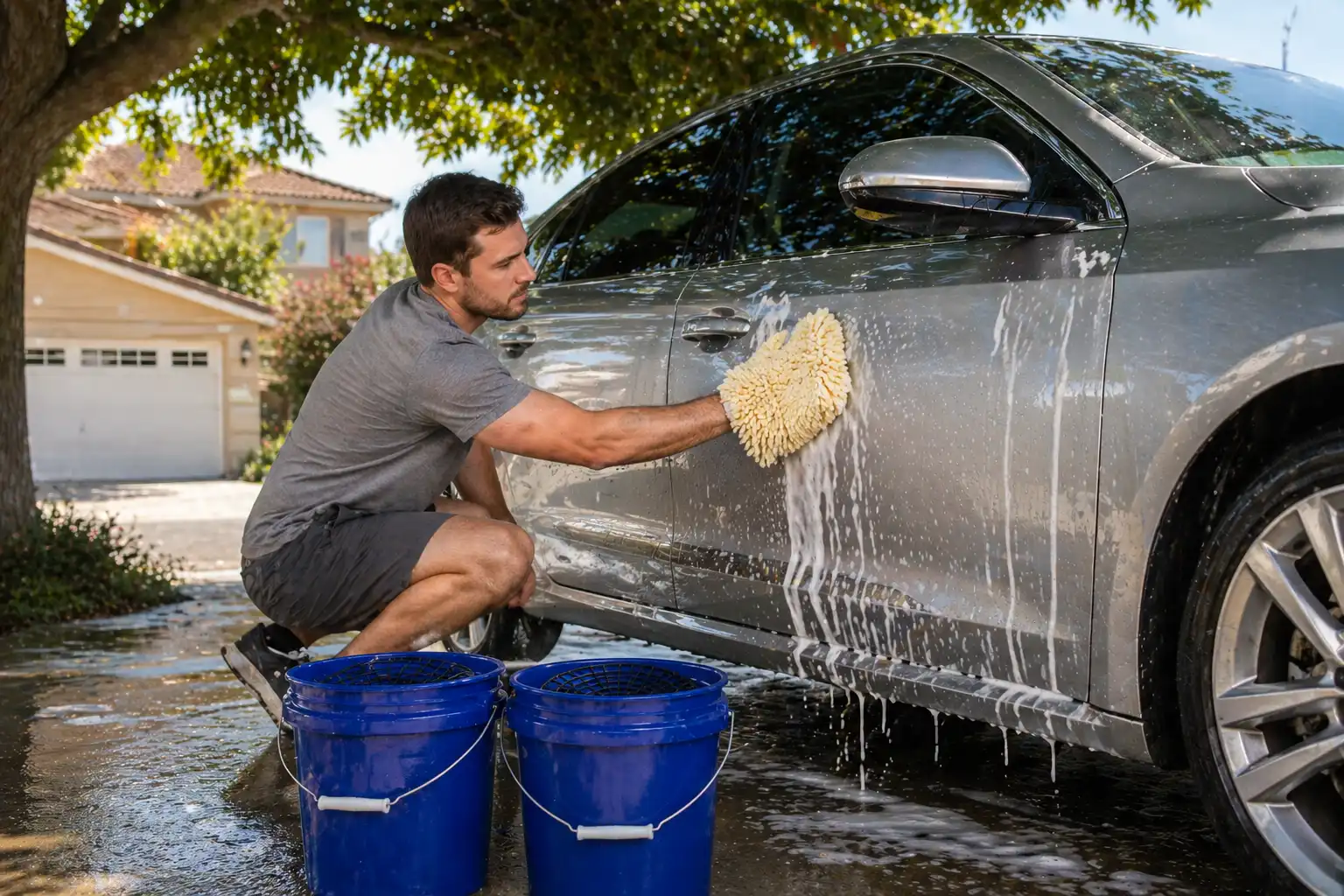
- Pre-rinse: Park, insert payment, and select presoak. Spray loose dirt off the vehicle for 30 seconds.
- Soap cycle: Switch the dial to soap. Coat the entire vehicle from roof to wheels.
- Foam brush: Apply foam brush on flat panels first. Skip the brush on dirty wheels to avoid grit transfer.
- High-pressure rinse: Set the dial to rinse. Work top-down, removing all soap from panels and seams.
- Wax application: Apply wax for 20 to 30 seconds. Coverage matters more than soak time.
- Spot-free rinse: Finish with the spot-free rinse to leave fewer water marks.
- Hand-dry: Pull into a vacuum bay or open spot. Use a microfiber towel within 3 minutes.
A complete self diy car wash run takes 6 to 10 minutes for a sedan and 8 to 12 minutes for an SUV.
Self diy Car Wash Bay Settings Explained
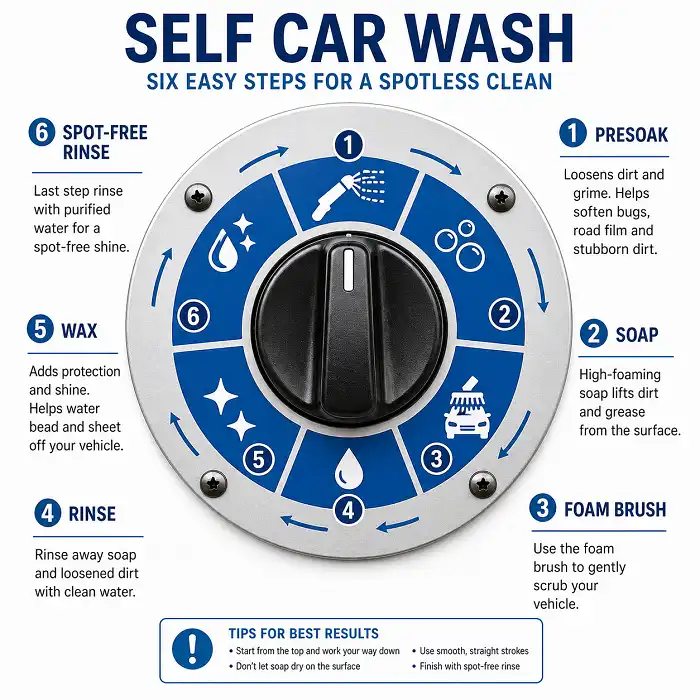
Most self diy car wash dials include 6 standard settings:
- Presoak: Alkaline cleaner for bug splatter and road film.
- Soap: Foaming detergent for general dirt removal.
- Foam brush: Soft bristle brush with diluted soap for flat panels.
- Rinse: Plain water at full pressure.
- Wax: Synthetic polymer for short-term shine.
- Spot-free rinse: Deionized water that dries without leaving spots.
Higher-end bays add tire cleaner, bug remover, and clear coat protectant as separate settings. For save-money tips on weekly cleanings, the linked post covers timing and add-on choices.
How Much Does a Self Diy Car Wash Cost?
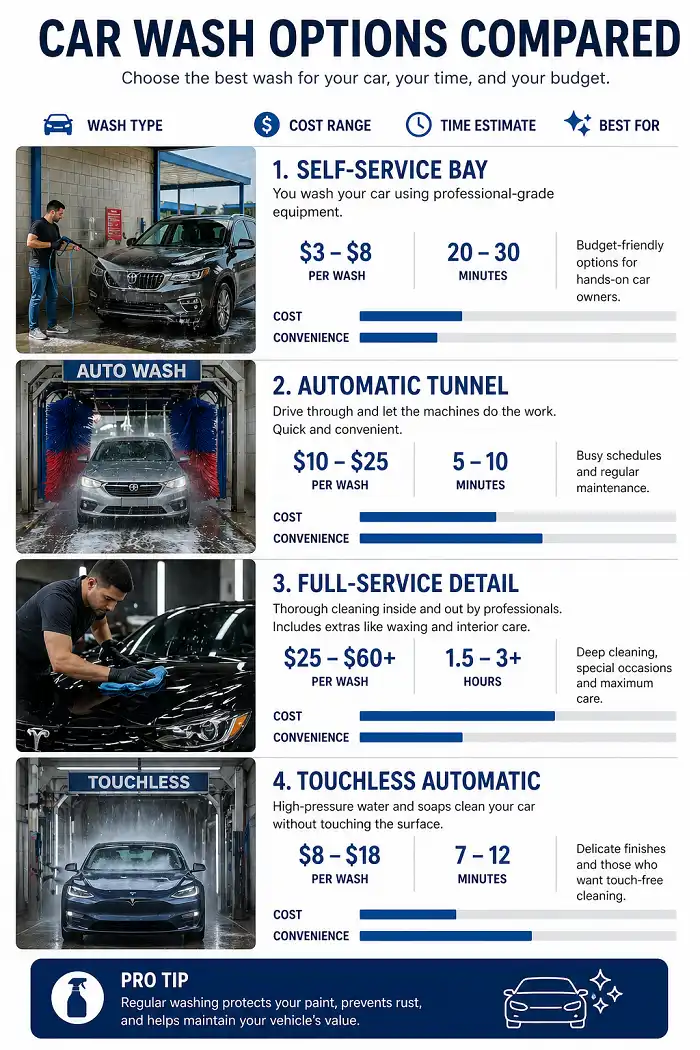
A self diy car wash costs $3 to $8 per visit in 2026, depending on location and add-ons. Base rates start around $3 for 4 minutes. Each extra minute adds $0.25 to $0.50.
| Wash Type | Average Cost | Time Required |
|---|---|---|
| Self diy car wash (basic) | $3 to $5 | 4 to 6 minutes |
| Self diy car wash (with wax) | $6 to $8 | 7 to 10 minutes |
| Automatic tunnel wash | $10 to $25 | 3 to 5 minutes |
| Full-service detail | $25 to $60 | 30 to 60 minutes |
Annual cost for one self diy car wash visit per week runs $200 to $400. The DIY washing workflow at home costs less but takes more setup time.
Self Diy Car Wash vs Automatic Car Wash
A self diy car wash gives the driver full control over soap, pressure, and dwell time. An automatic wash runs the same program for every vehicle. Drivers who care about paint protection prefer the self diy car wash format.
Automatic tunnels finish faster but use rotating brushes that sometimes leave swirl marks. The touchless system comparison covers brushless options for paint-sensitive owners. For drivers between the two, a manual washing bay nearby splits the difference.
Common Self Diy Car Wash Mistakes to Avoid
These five errors cause most poor results:
- Using the foam brush on dirty wheels first: Transfers grit straight to the paint.
- Skipping presoak in summer: Soap dries on the panel before the rinse stage.
- Standing too close with the wand: Damages emblems and trim at under 12 inches.
- Running out of time on rinse: Soap residue causes streaks after drying.
- Drying in direct sunlight without a microfiber: Creates water spots within 60 seconds.
A clean self diy car wash run prevents 90% of these issues through proper sequencing.
Safety Tips at a Self Diy Car Wash Bay
Personal safety matters at any self diy car wash location. Follow these rules:
- Park close to the wand holder to avoid stretching the hose.
- Wear closed-toe shoes; the floor stays wet and soapy.
- Keep keys and phone in a sealed bag, not a pocket.
- Visit during daylight hours when possible.
- Avoid spraying the wand at people, pets, or open windows.
Pressure washers at 1,200 PSI can cut skin at close range, per federal consumer product safety reporting. Keep the nozzle at least 18 inches from your hand.
Troubleshooting Common Issues
Problem: Soap will not dispense. Check the dial position. Some bays have a 3-second delay between settings. Notify the attendant if no soap appears after 10 seconds.
Problem: Pressure feels low. The wand head sometimes clogs with sediment. Tap the trigger 2 to 3 times to clear it.
Problem: Time ran out mid-wash. Most bays accept additional payment without restarting the cycle. Add coins or tap your card to extend.
Problem: Water spots after drying. Use the spot-free rinse next time. Most spots come from skipping that final stage or not drying within 3 minutes.
Final Thoughts
A self diy car wash gives drivers control, low cost, and a clean vehicle in under 10 minutes. The format works for weekly maintenance, seasonal salt removal, and quick cleanups between detail visits. Follow the 7-step workflow, watch the dial timing, and dry within 3 minutes for the best finish.
Pick a clean bay with working equipment, bring a microfiber towel, and aim for the spot-free rinse before you finish. Your paint will thank you.