Introduction
A homemade car soap cleans paint without stripping wax when you mix a mild surfactant, warm water, and a gloss agent in correct ratios. This guide covers four working recipes, the two-bucket wash method, common mistakes, and safety notes you can apply today. I’m Ethan from Frisco, TX, and I’ve tested these blends for six years.
Quick Answer: How to Make Car Soap at Home
Mix 1 gallon of warm water with 1 cup of liquid Castile soap and 2 tablespoons of vegetable glycerin. Stir without foaming. Apply with a microfiber mitt using the two-bucket method. Rinse the car within 5 minutes and dry with a soft towel. This blend cleans dirt and protects the wax layer.
What Is Homemade Car Soap?
Homemade car soap is a DIY wash solution that combines plant-based or pH-neutral surfactants with water and conditioning agents. The blend lifts road grime, bug residue, and dust from automotive paint. A balanced recipe protects the clear coat and existing wax sealant.
I’ve tested a dozen DIY recipes for car soap, and the better blends always include a conditioning agent like glycerin for slip.
What Ingredients Go Into Homemade Car Soap?
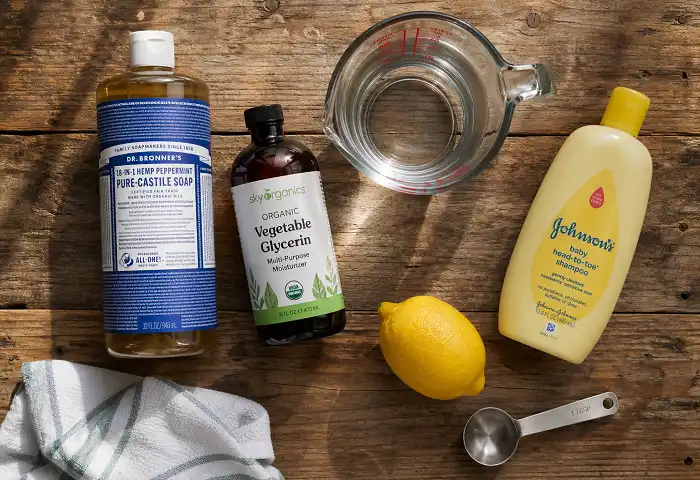
Four ingredient groups define a working recipe. Each one plays a separate role on the paint surface.
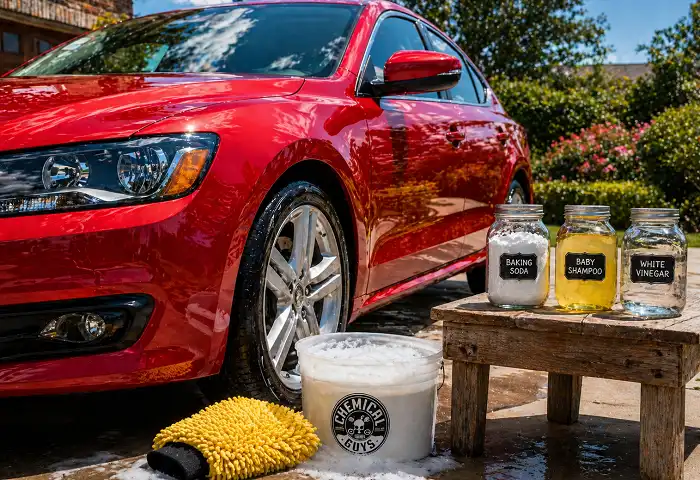
- Surfactant: liquid Castile soap, fragrance-free baby shampoo, or pH-neutral hand soap
- Carrier: distilled water or warm tap water
- Lubricant: vegetable glycerin or a commercial wash booster
- Optional gloss agent: 1 tablespoon of detail spray per gallon
Skip household dish detergent as your main surfactant. Dish soap contains aggressive degreasers that strip wax in 2 to 3 washes. According to EPA stormwater guidance, residential wash runoff also affects storm drains, so pick biodegradable surfactants when possible.
When Should You Use Homemade Car Soap?
Use homemade car soap every two weeks for a daily driver. Wash weekly during spring pollen season and after winter road salt exposure. Wash early in the morning or in late afternoon shade. Hot panels above 85°F cause streaks and dried water spots.
For broader frequency tips, see this guide on how to wash a car at home without damaging the finish.
Where Should You Wash Your Car With Homemade Soap?
Wash the car on grass, gravel, or a permeable surface where local rules allow it. Soil filters soap before it reaches storm drains. Avoid concrete driveways that drain to street gutters. University extension resources recommend biodegradable cleaners for residential car washing to reduce runoff impact.
If hard-surface washing is your only option, route runoff to a grass strip using a hose diverter or split foam pad.
How to Make Car Soap at Home: 4 Recipes That Work
Recipe 1: Castile Soap Base Wash
- Pour 1 gallon of warm water into a clean 5-gallon bucket
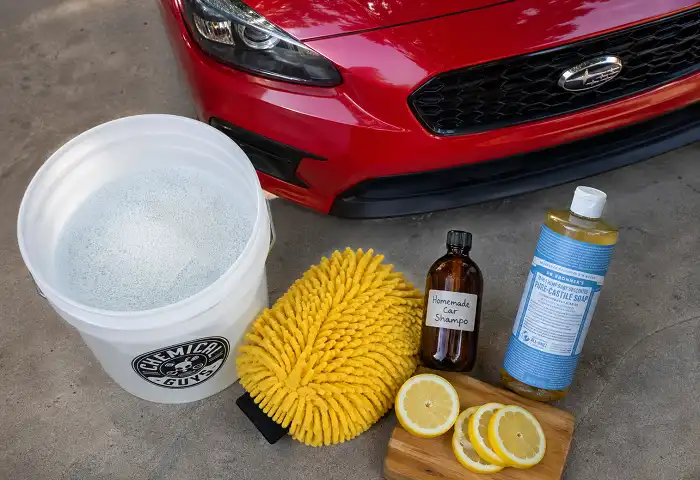
- Add 1 cup of liquid Castile soap (Dr. Bronner’s or a generic)
- Add 2 tablespoons of vegetable glycerin
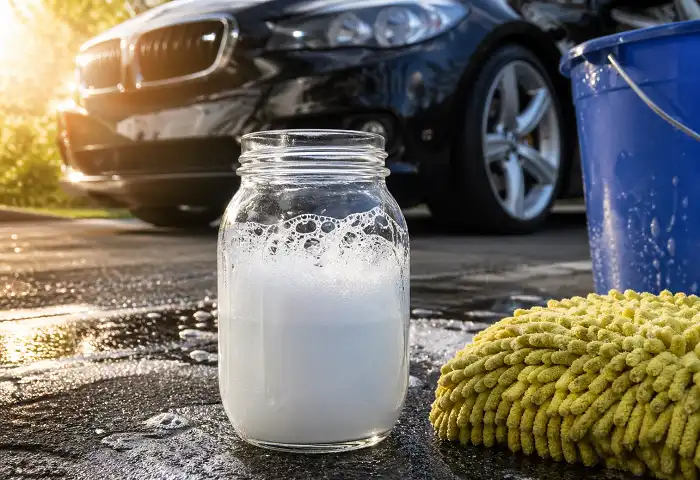
- Stir slowly with a long spoon for 30 seconds
- Use within 24 hours for full lather
This base recipe cleans light dust and keeps the wax layer intact. It works on sealed paint, matte wraps, and ceramic-coated finishes.
Recipe 2: Baby Shampoo Wash
- Combine 1 gallon of warm water with 1 cup of fragrance-free baby shampoo
- Add 1 tablespoon of glycerin for added slip
- Stir without producing heavy foam
- Apply within 12 hours
Baby shampoo runs at a neutral pH near 7.0. It cleans without stripping clear coat polish or wax.
Recipe 3: Booster-Boosted Wash
- Mix 1 gallon of warm water with 3/4 cup of Castile soap
- Add 2 ounces of commercial car wash booster concentrate
- Add 1 ounce of detail spray for added gloss
- Stir gently for 1 minute
Use this stronger recipe on neglected paint with embedded grime, traffic film, or bug splatter.
Recipe 4: Eco-Light Wash
- Add 1/2 cup of liquid Castile soap to 1 gallon of distilled water
- Add 1 teaspoon of glycerin
- Add 5 drops of lemon essential oil for scent
- Stir for 20 seconds
This light recipe suits weekly maintenance washes between deeper cleanings. It uses fewer chemicals per gallon.
For more options, check these easy car shampoo recipes that I’ve tested side by side.
How to Apply Homemade Car Soap: The Two-Bucket Method
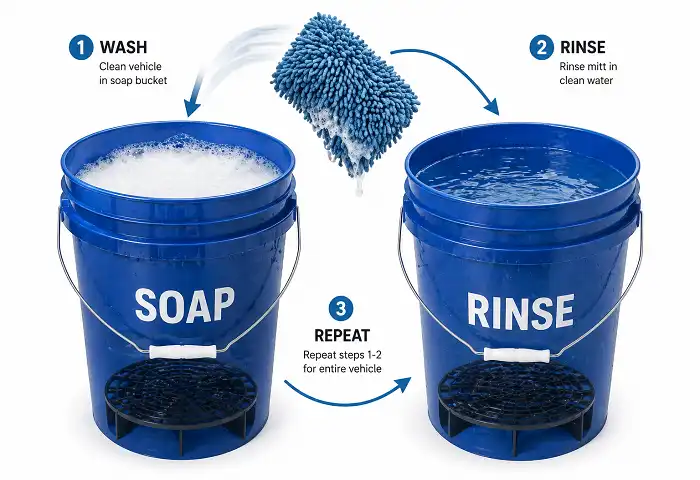
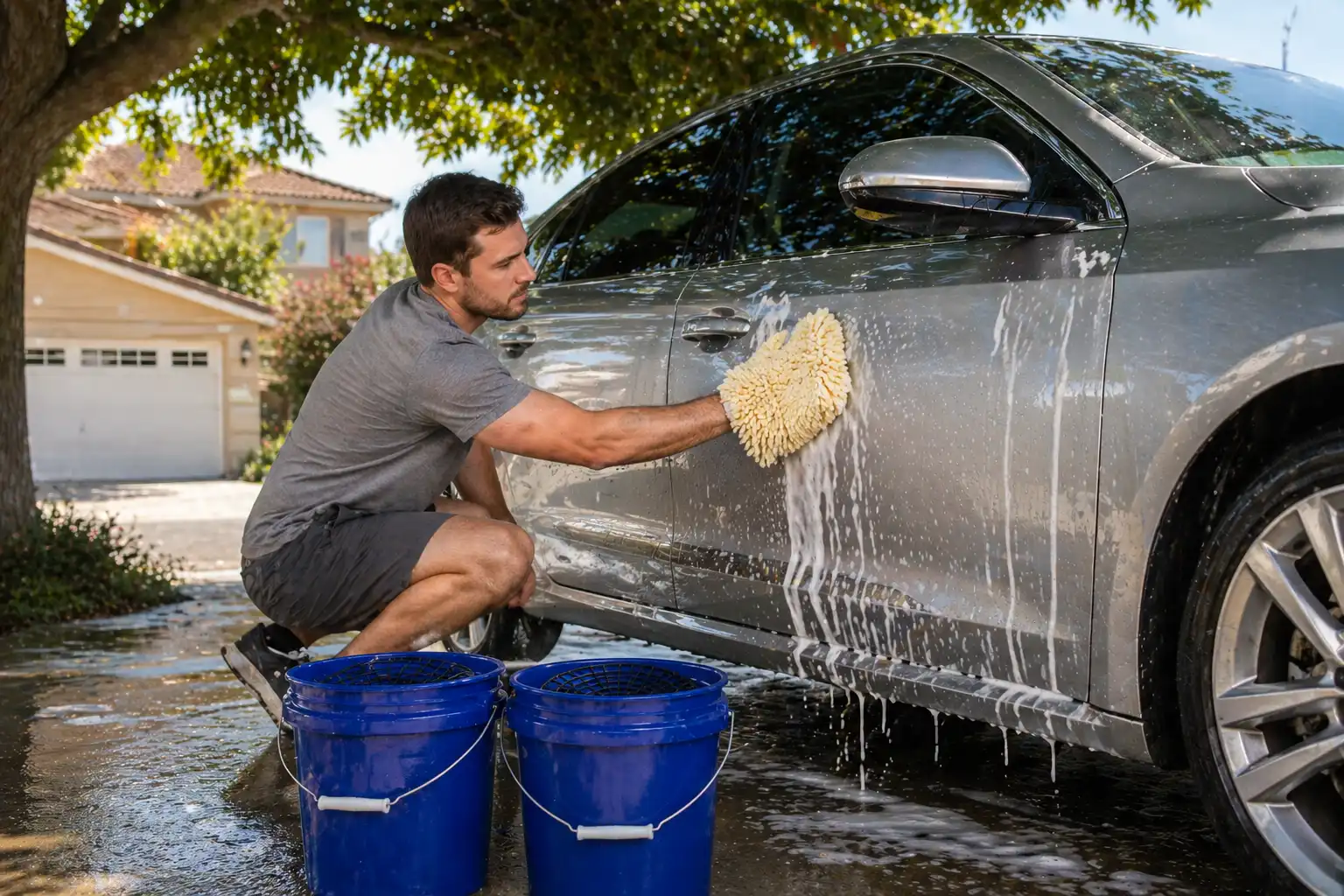
The two-bucket method prevents swirl marks and surface scratches. You need two 5-gallon buckets, two grit guards, and one microfiber wash mitt.
- Fill bucket A with the homemade soap mix
- Fill bucket B with plain rinse water
- Rinse the car top to bottom with a garden hose
- Dip the mitt in bucket A and wash one panel
- Rinse the mitt in bucket B before reloading soap
- Work panel by panel from roof down to rocker panels
- Rinse the car within 5 minutes of soaping
- Dry with two clean microfiber towels using a blot motion
Wash the wheels last with a separate dedicated mitt. For darker paint, see these targeted soap picks for black cars that reduce visible swirl marks.
Common Problems and Solutions
Three issues appear with DIY car soap. Each one has a direct fix.
- Streaks after drying: water dried on hot paint. Wash in shade and dry within 2 minutes per panel.
- Weak suds: increase Castile soap by 2 tablespoons per gallon and use warmer water.
- Soap film haze: rinse twice with clean water and dry sooner with fresh microfiber towels.
A grit guard at the bottom of each bucket traps debris and reduces paint marring.
Mistakes to Avoid With Homemade Car Soap
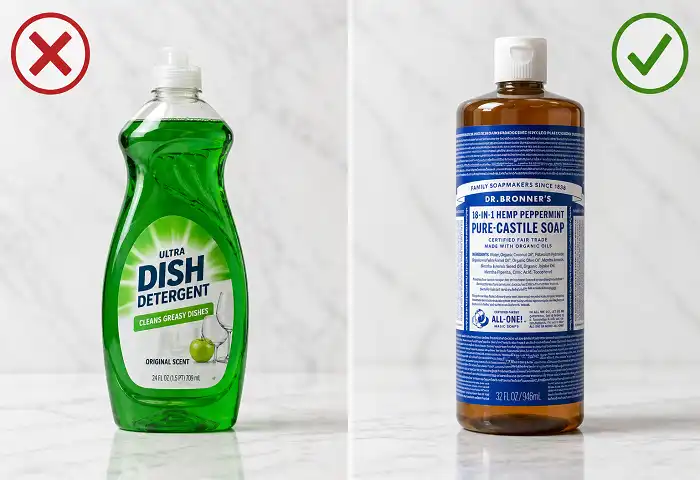
Skip these errors. They damage paint, wax, and rubber trim.
- Using dish detergent like Dawn as the main surfactant (strips wax in 2 to 3 washes)
- Mixing bleach or ammonia into the recipe (corrodes trim and clear coat)
- Washing in direct sun above 85°F (causes water spots and streaks)
- Using a household sponge instead of a microfiber mitt (creates swirl marks)
- Reusing dirty wash water for a second pass (drags grit across paint)
The strip-and-rewax cycle costs more in product and time than a balanced DIY recipe. See this detailed wash soap recipe guide for ratio adjustments by paint condition.
Safety Notes for DIY Car Soap
Castile soap and baby shampoo carry low skin irritation risk. Vegetable glycerin is food grade. Even so, follow these safety steps each wash day.
- Wear nitrile gloves if you have sensitive skin
- Keep buckets out of reach of kids and pets during a wash
- Store leftover mix in a labeled bottle for under 7 days
- Avoid eye contact with concentrated Castile soap
- Pour dirty wash water onto grass, away from storm drains
For neighborhood wash days, more variations sit in this collection of homemade wash soap blends suited to different paint conditions.
Final Thoughts on Homemade Car Soap
A homemade car soap built on Castile soap, water, and glycerin cleans paint at a fraction of store prices. The two-bucket method protects the clear coat. Skip dish detergent, wash in shade, and dry with clean microfiber towels. After six years of testing, this method keeps my truck’s wax layer intact between full detail sessions.