Introduction
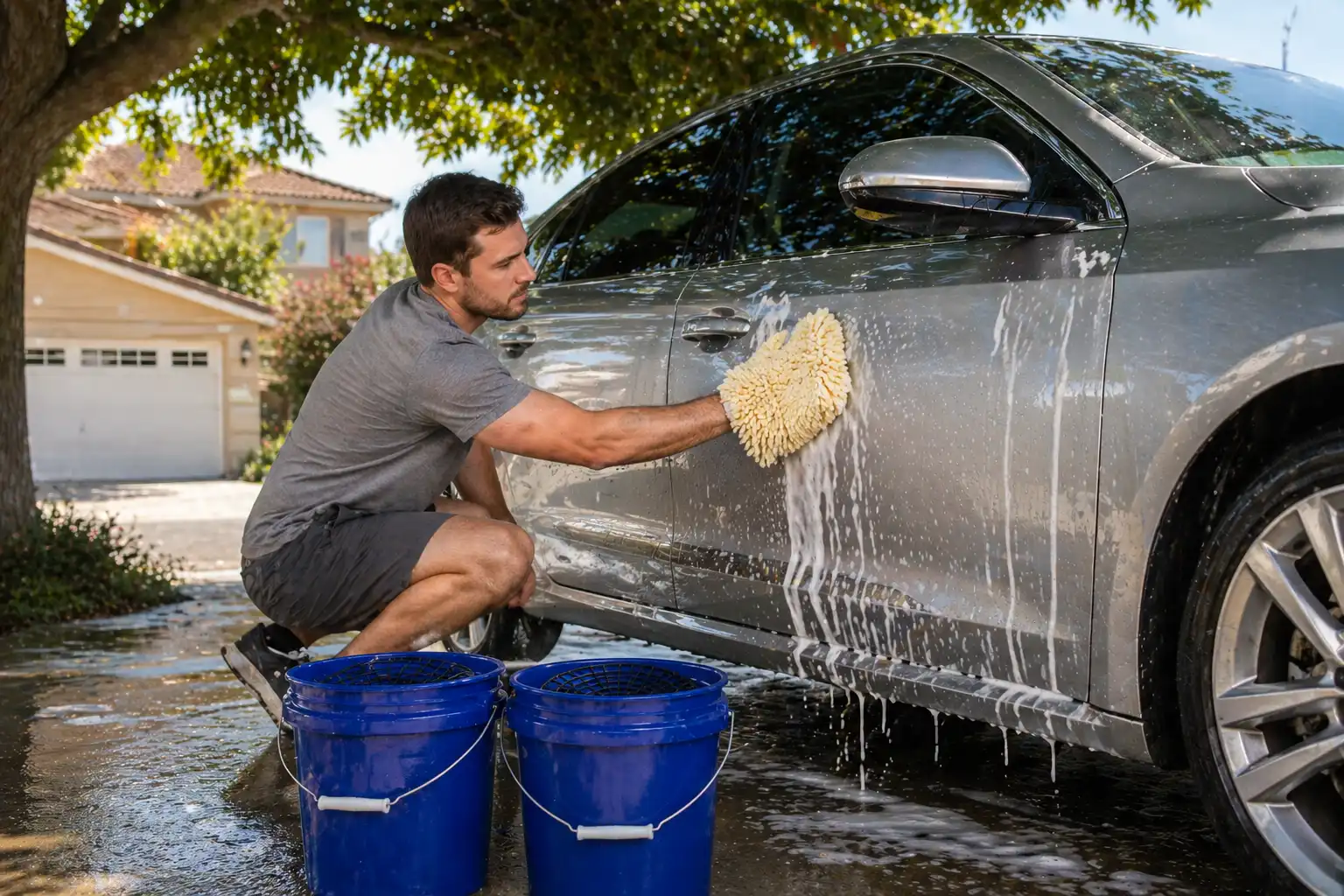
Washing your own car at home cleans paint, glass, and wheels with two buckets, pH-neutral soap, a microfiber mitt, and clean water. A car wash do yourself approach saves money, protects clear coat, and finishes faster than a busy tunnel wash. I tested each step in my Frisco, TX home driveway so you skip swirl marks, streaks, and water spots.
Quick Answer
A car wash do yourself session takes 45 to 60 minutes, costs under $30 in supplies, and uses two buckets to keep grit off the paint. Rinse, foam, wash top to bottom with a microfiber mitt, rinse again, then dry with a plush towel. Park in shade and skip washing on hot panels.
What is a Car Wash Do Yourself?
A car wash do yourself routine is a home cleaning method where the owner uses buckets, soap, and microfiber tools to clean exterior paint, wheels, and glass. The two-bucket method separates wash water from rinse water. This setup reduces swirl marks because grit drops into the rinse bucket instead of returning to the mitt.
The process follows a clear sequence: prep the car, foam the body, wash panel by panel, rinse, then dry. Each step protects clear coat from contamination.
Why Choose a Car Wash Do Yourself Over Automatic?
Three reasons pull most owners toward home washing: cost, paint safety, and control.
A car wash do yourself session costs $1 to $3 per wash after the initial kit purchase. Tunnel washes average $10 to $25 per visit. Across 40 washes a year, home washing saves $360 to $880.
Automatic brush systems leave fine scratches on clear coat over time. Touchless tunnels rely on stronger chemicals to compensate for no contact, which strips wax faster than pH-neutral soap.
For a deeper comparison, my look at brushless cleaning options covers paint safety in detail.
When and Where to Wash Your Car at Home
Wash early morning or late afternoon when panels stay below 85°F. Hot paint dries soap into spots before the rinse cycle finishes.
A shaded driveway works best. Sealed concrete drains water cleanly. Avoid grass for repeated washes; concentrated soap damages lawns.
Frequency: every 1 to 2 weeks for daily drivers. Wash within 48 hours of rain, road salt, or bird droppings. Bird waste etches clear coat in 24 to 72 hours under summer heat.
Tools and Supplies for a Car Wash Do Yourself
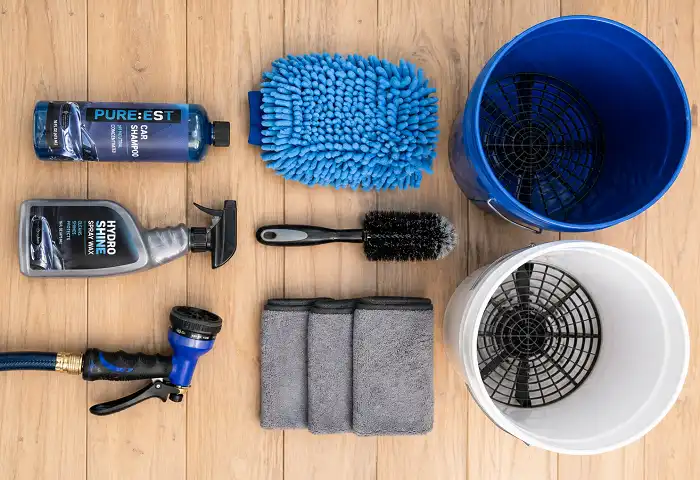
Build a kit with these items:
- Two 5-gallon buckets with grit guards
- pH-neutral car shampoo (not dish detergent)
- Microfiber wash mitt
- Wheel brush with soft bristles
- Three plush microfiber drying towels
- Garden hose with adjustable nozzle
- Spray detailer or quick wax
A car wash do yourself kit costs $40 to $60 to build and lasts multiple seasons. Skip dish detergent. It strips wax and dries rubber trim.
For brush selection guidance, see my home guide to safe wash brushes.
Step-by-Step Car Wash Do Yourself Guide
Follow these nine steps for a streak-free finish.
Step 1: Park in Shade
Move the car under a tree, carport, or shaded driveway. Cool panels prevent flash-drying.
Step 2: Pre-Rinse Top to Bottom
Rinse the entire car for 60 to 90 seconds. Loose dust, pollen, and bird droppings come off first. A heavy pre-rinse cuts wash time and protects paint.
Step 3: Clean Wheels First
Wheels carry brake dust, road salt, and tar. A car wash do yourself pro-tip: clean wheels before paint so rinse splash does not contaminate clean panels.
Use a dedicated wheel brush and a separate wheel-only sponge. Brake dust contains iron particles that scratch clear coat when transferred to body panels.
Step 4: Foam the Body
Spray foam soap on the upper half. Let it dwell 30 to 60 seconds. Foam softens dirt before contact and lifts particles away from paint.
Step 5: Wash with the Two-Bucket Method
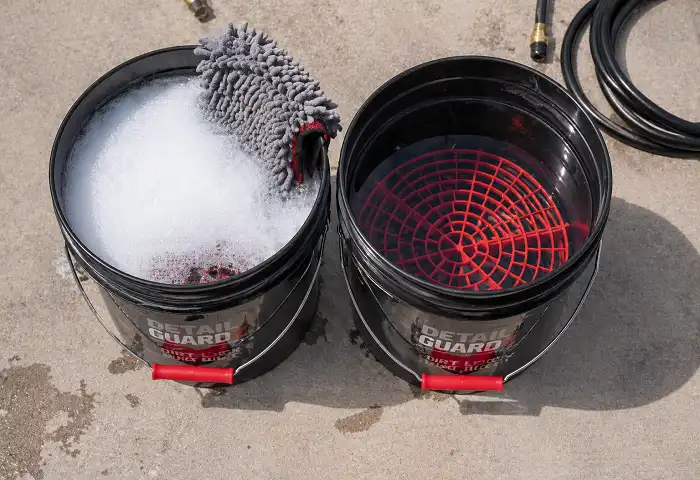
Fill bucket one with soapy water. Fill bucket two with clean rinse water. Both buckets need grit guards at the bottom.
Dunk the mitt in soap, wash one panel, then rinse the mitt in bucket two. Repeat. This sequence keeps abrasive particles off the paint surface.
Wash from roof down to rocker panels. Lower sections hold the heaviest road grime.
For more on bucket configuration, my guide to home wash bucket setups covers grit guard placement.
Step 6: Final Rinse
Rinse in sheets, not jets. Remove the nozzle and let water flow freely down panels. Sheeting reduces water spotting on flat surfaces.
Step 7: Dry with Microfiber
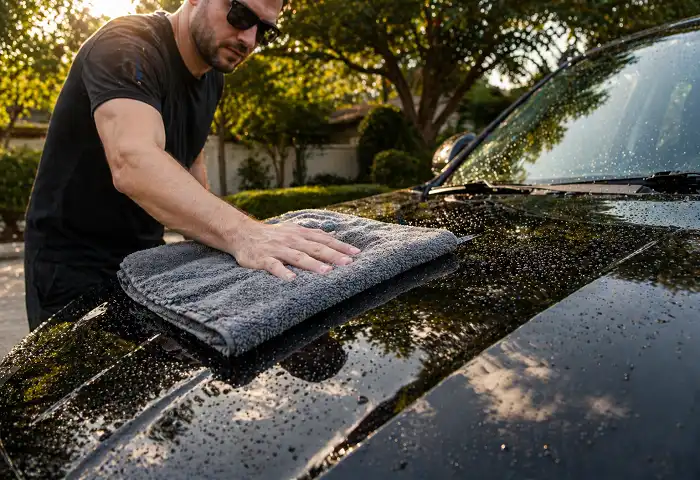
Pat-dry with a plush 1100 GSM towel. Move the towel in straight lines, not circles. Circular motion creates swirl marks visible under sunlight.
Step 8: Clean Glass
Spray ammonia-free glass cleaner and wipe with a separate microfiber. Use vertical strokes inside the cabin and horizontal strokes outside. The opposing direction makes streaks easy to spot.
Step 9: Finish with Spray Wax
Mist a spray wax on each panel. Buff with a clean towel. Spray wax adds 4 to 8 weeks of hydrophobic protection.
That completes the car wash do yourself sequence.
DIY Soap Recipes for a Car Wash Do Yourself
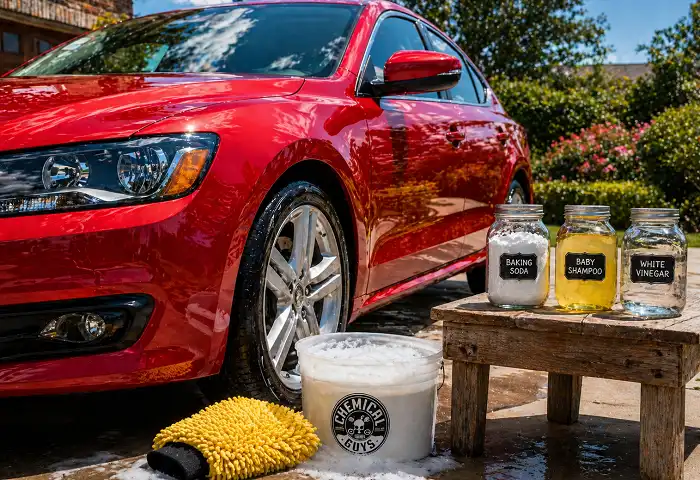
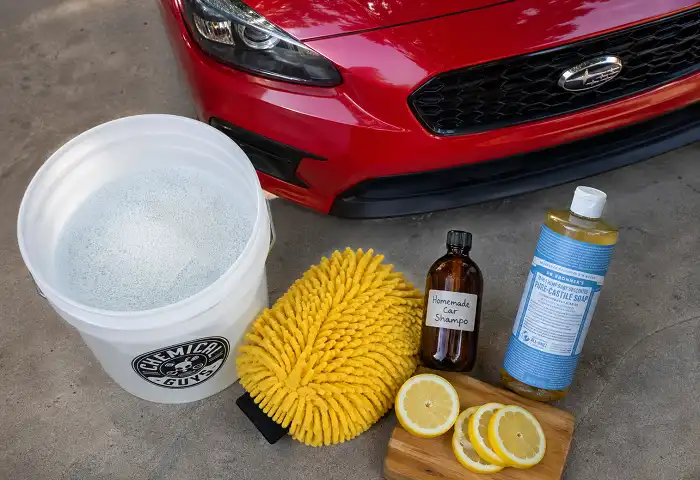
Two recipes work for routine cleaning:
Light Wash Recipe:
- 1 gallon warm water
- 1/4 cup pure castile soap
- 1 tablespoon glycerin
Heavy Grime Recipe:
- 1 gallon warm water
- 1/3 cup baby shampoo
- 1 tablespoon liquid car wax
Both formulas stay pH-neutral and protect existing wax layers. For more tested formulas, see my collection of homemade car shampoo recipes.
Drying Methods That Prevent Water Spots
Three drying methods produce spot-free results:
- Plush 1100 GSM microfiber towel pat-dry
- Waffle-weave drying towel drag method
- Filtered leaf blower for crevices, mirrors, and grilles
Hard water causes spots because of dissolved mineral content. The USGS classifies water with 121 to 180 mg/L of calcium carbonate as hard, and most North Texas tap water sits in this range. A drying aid spray helps minerals release before they bond to paint.
Common Car Wash Do Yourself Mistakes
Five mistakes cause most home-wash paint damage:
- Washing in direct sun. Hot panels flash-dry soap into mineral spots.
- Using dish soap. Dish detergent strips wax and dries rubber trim.
- Skipping the two-bucket method. Reusing dirty water grinds grit into clear coat.
- Drying with cotton bath towels. Cotton fibers leave swirl marks.
- Cleaning paint before wheels. Wheel splash recontaminates clean panels.
A car wash do yourself routine works only when the sequence stays correct. Order matters more than product choice.
Troubleshooting Common Problems
Streaks after drying: Dry faster, use larger towels, and work in shade.
Soap spots on glass: Keep panels wet through the wash. Rinse foam every 2 to 3 panels in hot weather.
Fresh swirl marks: Switch to a softer mitt, use grit guards, and dry with plush microfiber only.
Brake dust returning within days: Apply a wheel sealant after the next wash. Sealants block iron embedding.
Streaky glass after cleaner: Wipe in opposing directions inside versus outside so streak sources stay easy to identify.
Safety and Eco-Friendly Notes
Wear closed-toe shoes. Wet driveways stay slippery for 20 to 30 minutes after the rinse.
Keep electrical components dry. Avoid spraying water directly into engine bay seams or fuse boxes.
Eco notes: A bucket wash uses 15 to 20 gallons. Automatic tunnels use 35 to 45 gallons per cycle. Wash on a permeable surface or near a planted area where soap filters through soil rather than reaching storm drains. The EPA’s nonpoint source pollution program covers driveway runoff guidance for residential car care.
For lower-impact home options, my self-service home wash guide covers eco-friendly setups.
FAQs
Does a car wash do yourself replace professional detailing? No. Detailing includes clay bar treatment, polish, and paint correction. Home washing handles routine cleaning between detail sessions every 4 to 6 months.
Is rainwater fine for rinsing? Yes when collected clean. Avoid runoff from asphalt shingles, which carries petroleum residue.
How often is wax application reasonable after a car wash do yourself? Spray wax after every wash. Paste wax every 8 to 12 weeks for daily drivers in Texas heat.
Is the two-bucket method needed for newer cars? Yes. Modern clear coat scratches at the same rate as older paint systems.
Does a car wash do yourself void factory warranty? No. Manufacturer warranties cover defects, not wash methods.
Final Take
A car wash do yourself routine produces dealership-grade results when you follow the two-bucket method, work top to bottom, and dry with plush microfiber. The 9-step sequence takes under an hour and protects paint from swirl marks, water spots, and embedded brake dust. Build the kit once, follow the order, and the finish stays sharp across the seasons.