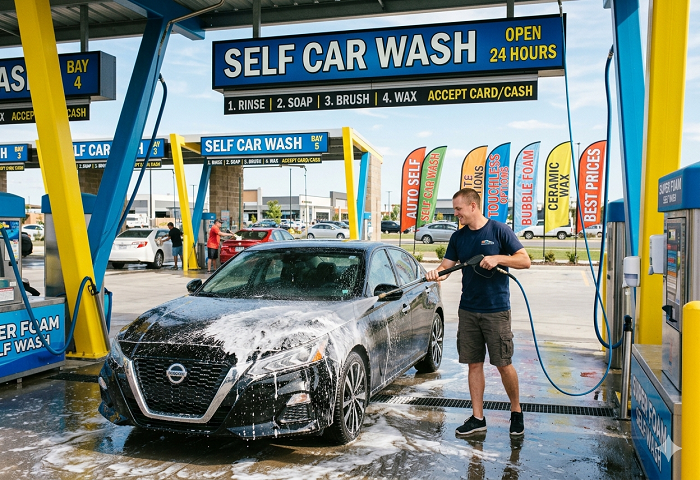
Introduction
There’s something deeply satisfying about pulling a spotlessly clean car out of your driveway. But with professional detailers charging upward of $150 per session and drive-through tunnels risking swirl marks on your paint, more and more car owners are turning to the auto self car wash as the smartest, most cost-effective solution. Whether you’re a weekend warrior who loves spending time with your vehicle or just someone who wants a reliable routine to keep their car looking showroom-fresh, mastering the auto self car wash process will save you money, protect your paintwork, and give you results that rival any professional shop.
This guide covers everything — from the gear you’ll need, to the step-by-step washing process, the best cleaning products, and the common mistakes that can cost you a good paint job. By the time you finish reading, you’ll have a clear, actionable plan to make every auto self car wash session a success.
Why Choose an Auto Self Car Wash Over Automated Tunnels?
Before diving into technique, it’s worth understanding why so many car enthusiasts and everyday drivers are ditching the drive-through tunnel in favor of doing it themselves.
1. Full Control Over the Process
An auto self car wash means you decide how much pressure goes on which panel, what soap touches your paint, and how long each section gets attention. Automated tunnels use stiff brushes and recycled water that can leave fine scratches, called swirl marks, across your entire vehicle. These micro-scratches accumulate over time and dull your clear coat significantly. When you handle the wash yourself, you eliminate that risk entirely.
2. Better Cleaning Results
The reality is that no machine can replicate the precision of a hands-on, auto self car wash. Door jambs, behind badges, wheel arches, and lower body panels all get the individual attention they deserve. A self service car wash also lets you tackle stubborn bird droppings, tar spots, and bug splatter with targeted products before they cause permanent etching.
3. Cost Savings Over Time
A single visit to an express detailer can cost $60–$200. A complete auto self car wash setup — foam cannon, pressure washer, quality soap, and microfiber towels — costs roughly $200–$350 upfront but lasts years. Within three to four wash sessions, you’re already saving money.
4. Therapeutic Value
Ask any car person and they’ll tell you: washing your car by hand is genuinely relaxing. There’s something meditative about the process. An auto self car wash routine gives you time outdoors, a physical task with a clear, rewarding result, and a vehicle that looks exactly the way you want it.
Essential Tools and Supplies for an Auto Self Car Wash
Getting the right gear is the foundation of every great wash. Here’s what you’ll need before you start.
Pressure Washer
A quality electric pressure washer (1,600–2,000 PSI) is the single biggest upgrade you can make to your auto self car wash setup. It blasts away loose dirt, road grime, and mud before a sponge or wash mitt ever touches your paint — significantly reducing the chance of scratching.
Look for models with an adjustable nozzle so you can switch between a wide fan spray for rinsing and a more focused jet for wheel arches and undercarriage.
Foam Cannon
A foam cannon attaches to your pressure washer and covers your entire car in a thick, clinging layer of pre-wash foam. This “snow foam” phase is critical: it lubricates the surface and lifts dirt away before the contact wash begins. For the best auto self car wash experience, invest in a quality foam cannon — the cheap ones produce watery foam that runs off instantly.
Two Buckets
The two-bucket method is a non-negotiable standard in proper car washing. Use one bucket for your clean, soapy wash solution and a second bucket (with a grit guard at the bottom) for rinsing your wash mitt. Every time your mitt comes off the paint, you rinse it in the dirty bucket and reload from the clean one. This prevents the grit you just picked up from being dragged back across your clear coat — a simple but incredibly effective technique in any auto self car wash routine.
pH-Neutral Car Wash Soap
Never use dish soap, household detergents, or all-purpose cleaners on your car’s paint. These strip wax, damage rubber trim, and dry out plastics. Choose a pH-neutral car wash soap that’s specifically formulated to clean effectively while protecting your sealant or wax layer. Many products designed for auto self car wash use come in concentrate form — a single bottle lasts dozens of washes.
Microfiber Wash Mitts
Microfiber wash mitts are far gentler on paint than traditional sponges. Their plush nap traps dirt particles away from the paint surface rather than dragging them across it. Use at least two mitts per wash — one for the upper body and one for the lower panels, which carry more road contamination.
Microfiber Drying Towels
Drying is where many DIYers unknowingly damage their paint. A thick, large-format microfiber drying towel (800 GSM or higher) absorbs water gently without scratching. Some detailers prefer a leaf blower or dedicated car dryer for a swirl-free, completely touchless finish during the drying stage of the auto self car wash.
Wheel Brushes and Tire Cleaner
Your wheels collect brake dust, road tar, and grime that regular soap can’t fully cut through. Dedicated wheel cleaner sprays (iron-reactive formulas turn purple on contact to show they’re working) combined with soft wheel brushes and a stiffer tire brush make short work of dirty wheels.
Clay Bar and Iron Remover (Monthly Use)
Even with regular washing, contamination bonds to your paint over time — rail dust, industrial fallout, embedded brake dust. A clay bar used once a month after washing pulls these particles from the surface, leaving your paint glass-smooth and ready for protection. It’s an often-overlooked step in a thorough auto self car wash routine but makes a dramatic difference in how your paint feels and reflects light.
The Step-by-Step Auto Self Car Wash Process
Now let’s walk through the complete wash process from start to finish.
Step 1 — Pre-Rinse
Begin your auto self car wash with a thorough pre-rinse using your pressure washer. Work from the roof down, and pay special attention to the lower panels, wheel arches, and behind the wheels where mud and road salt accumulate. The goal here is to knock off as much loose dirt as possible before any chemical or contact step. This single step prevents 80% of potential wash-induced scratches.
Step 2 — Apply Snow Foam
Fill your foam cannon with the correct dilution of pH-neutral snow foam and coat the entire vehicle from top to bottom. Let it dwell for 5–10 minutes (don’t let it dry). The foam will visibly darken as it lifts and encapsulates dirt particles. This pre-wash stage is what separates a proper auto self car wash from a hurried rinse-and-wipe job.
Step 3 — Rinse Off the Foam
Using your pressure washer on a wide fan setting, rinse the foam off completely before moving to the contact wash. You’ll be surprised how much dirt comes away at this stage — on a lightly contaminated car, the foam stage alone can handle most of the grime.
Step 4 — Two-Bucket Contact Wash
Mix your pH-neutral car wash soap into the clean bucket per the manufacturer’s instructions. Soak your wash mitt, and begin washing the car in straight, overlapping strokes — never in circles, which create visible swirl marks. Work panel by panel, starting with the roof and working down.
After each panel, rinse your mitt in the dirty bucket, wring it out, then reload from the clean bucket. This two-bucket discipline is the heart of a scratch-free auto self car wash.
Step 5 — Wheels and Tires
Tackle the wheels separately, ideally before the main body wash so any tire cleaner or wheel cleaner that splashes back doesn’t contaminate clean paint. Spray your iron remover on the wheels, let it dwell, then agitate with a dedicated wheel brush. Follow with your regular car wash soap. Scrub the tires with a stiff brush to remove old dressing and embedded dirt.
Step 6 — Final Rinse
Do a thorough final rinse of the entire vehicle, working top to bottom. Remove all soap residue from panel gaps, mirrors, door handles, and grilles. Use a gentle stream around rubber seals and windows.
Step 7 — Drying
Dry the car immediately to prevent water spots. Use your large microfiber drying towel in gentle, blotting motions rather than harsh dragging strokes. Start with the glass, then work across the roof, hood, trunk, and sides. An auto self car wash completed without proper drying often results in hard water spots that are surprisingly difficult to remove later.
Step 8 — Detailing Touches (Optional but Recommended)
Once the car is dry, this is the perfect moment to apply a quick detailer spray or a spray wax for added gloss and protection. Dress the tires with a water-based tire dressing. Clean the glass with an automotive glass cleaner and a microfiber cloth. These finishing steps take ten minutes but make the auto self car wash result look genuinely professional.
Common Mistakes to Avoid in an Auto Self Car Wash
Even experienced DIYers fall into these traps. Here’s what to watch out for.
Washing in Direct Sunlight
Heat accelerates soap drying and causes water spots. Always perform your auto self car wash in a shaded area or during cooler parts of the day — early morning or evening.
Using the Wrong Products
Using household cleaners, dish soap, or the wrong dilution ratios for your wash soap can strip wax, damage rubber, and dull paintwork. Invest in products specifically formulated for automotive use.
Skipping the Pre-Rinse
Touching paint that hasn’t been pre-rinsed is the fastest way to inflict scratches. Never skip the foam or pre-rinse stage, no matter how mild the contamination looks.
Reusing Dirty Towels
A microfiber towel used on the lower panels or wheels should never go near the paint again that session without being washed. Keep separate towels for different tasks — glass, paint, tires, and interior.
Neglecting the Interior
A full auto self car wash session should include at least a basic interior pass: vacuum the carpets and seats, wipe down hard surfaces with an appropriate interior cleaner, and clean the glass from the inside to eliminate haze and smearing that affects visibility.
Frequency: How Often Should You Do an Auto Self Car Wash?
The right washing frequency depends on your environment and how you use your vehicle. As a general guide:
- Weekly — If you park outside, drive through heavy rain, or live near the coast where salt air accelerates corrosion.
- Every 2 weeks — The sweet spot for most daily drivers. Enough to prevent contamination from bonding while not being excessive.
- Monthly — Suitable for garage-kept vehicles driven only occasionally, though a monthly clay bar session is still recommended.
Many detailers recommend that a full auto self car wash with wax application happens every three to four washes to maintain a consistent layer of paint protection year-round.
Protecting Your Car After an Auto Self Car Wash
Washing removes the very protection you want to maintain — this is why post-wash protection is so important.
Spray Wax
The quickest solution after an auto self car wash is a spray wax applied to a wet or dry panel. These products bead water exceptionally well and add weeks of protection with almost no effort.
Paint Sealant
A synthetic sealant lasts three to six months and provides a harder, more durable shield than traditional carnauba wax. Apply after claying your paint for best results.
Ceramic Coating
For long-term protection spanning one to five years, a consumer-grade ceramic coating transforms your auto self car wash maintenance routine. Coated cars repel water, dirt, and contamination far more effectively — meaning washing takes less time and less effort with every session.
The Waterless Car Wash Alternative
If you’re short on time or don’t have access to a hose and pressure washer, a quality waterless car wash spray is a solid option for lightly contaminated vehicles. These formulas encapsulate dirt particles in a lubricating solution, allowing you to wipe the surface clean without scratching. Keep a waterless car wash kit in your trunk for quick touch-ups between full auto self car wash sessions.
Building Your Auto Self Car Wash Routine
Consistency is everything. Here’s a simple framework to build your own routine:
Weekly Quick Wash (20–30 minutes): Pre-rinse → foam cannon → contact wash → rinse → dry → spray wax
Monthly Deep Clean (60–90 minutes): Full weekly process + clay bar + iron remover + wheels deep clean + interior vacuum and wipe-down + full wax or sealant application
Seasonal Refresh (2–3 hours): Full monthly process + paint inspection + ceramic spray coating or sealant + glass sealant + engine bay wipe-down + full interior detail
Sticking to this tiered structure means your vehicle never reaches a state where contamination has had time to permanently bond or etch into the paint — keeping every auto self car wash session efficient and rewarding.
Final Thoughts
The auto self car wash isn’t just about saving money — though it absolutely does that. It’s about taking genuine ownership of one of your most valuable assets, understanding what your vehicle needs, and developing the skills to maintain it at a level that no drive-through tunnel ever will. With the right tools, quality products, and a consistent process, every wash becomes faster, easier, and more satisfying than the last.
Whether you’re washing a daily commuter or a weekend show car, the fundamentals of an effective auto self car wash are the same: rinse first, use proper lubrication, work methodically, dry carefully, and protect afterward. Follow that blueprint and your vehicle will look better, last longer, and hold its value in ways that genuinely matter.
Start small if you need to — even a basic two-bucket wash with a quality soap and microfiber mitts is a massive upgrade over a tunnel wash. From there, build your kit piece by piece. Before long, your auto self car wash sessions will be the part of your weekend routine you genuinely look forward to.
Quick Reference: Auto Self Car Wash Product Checklist
| Category | Recommended Product Type |
|---|---|
| Pre-wash | pH-neutral snow foam / foam cannon |
| Wash soap | pH-neutral car wash concentrate |
| Wash tool | Microfiber wash mitt (x2) |
| Drying | 800 GSM microfiber drying towel |
| Wheels | Iron remover + wheel brush set |
| Decontamination | Clay bar kit |
| Protection | Spray wax / paint sealant / ceramic coating |
| Quick clean | Waterless car wash spray |
| Interior | Interior detailer + vacuum |
| Glass | Automotive glass cleaner |
Frequently Asked Questions About Auto Self Car Wash
Q: Is a self car wash better than an automatic car wash? Yes, in almost every case. An auto self car wash gives you full control over products, pressure, and technique — eliminating the swirl marks and paint damage that automated tunnel brushes commonly cause.
Q: How much does an auto self car wash setup cost? A beginner kit including a foam cannon, wash mitts, soap, and microfiber towels costs $80–$150. A full setup with an electric pressure washer runs $250–$400 — typically recouped within six months of regular washing.
Q: Can I do an auto self car wash without a pressure washer? Yes. A garden hose with a strong spray nozzle combined with the two-bucket method and foam cannon (connected to the hose) delivers excellent results. A pressure washer improves the experience but isn’t mandatory.
Q: How long does an auto self car wash take? A routine weekly wash takes 25–40 minutes once you have a system dialed in. A full monthly detail session including clay bar and wax takes 60–90 minutes.
Q: What is the safest car wash method for paint? The safest method is: foam pre-wash → two-bucket contact wash with microfiber mitts → careful hand drying with a plush microfiber towel. This process — the foundation of every proper auto self car wash — eliminates the conditions that cause paint scratches.