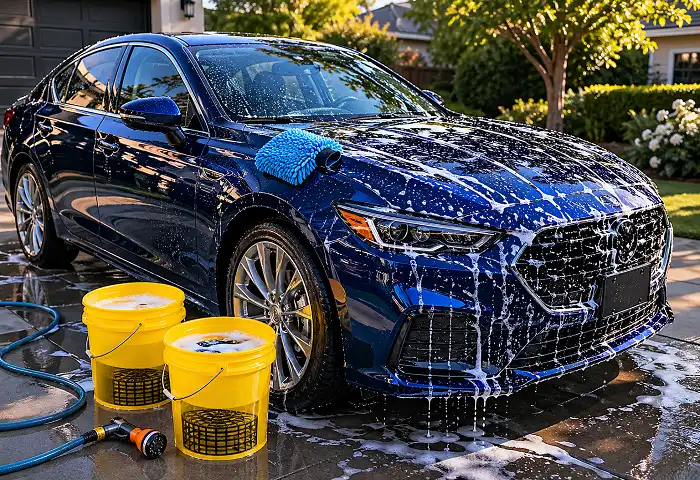
Introduction
A car wash home made setup uses pH-neutral dish soap, warm water, and microfiber tools to clean paint without strippers or harsh chemicals. This guide walks through every step, from prepping the rinse and choosing recipes to drying without swirl marks. You’ll learn safe ratios, the correct wash order, common mistakes, and fixes that protect clear coat and trim.
Quick Answer: What Is a Car Wash Home Made?
A car wash home made is a DIY cleaning routine that mixes household ingredients like dish soap and water using the two-bucket method. It lifts road grime, tar, and dust while protecting paint when applied with microfiber mitts and rinsed in the shade.
What Goes Into a Home Made Car Wash Solution?
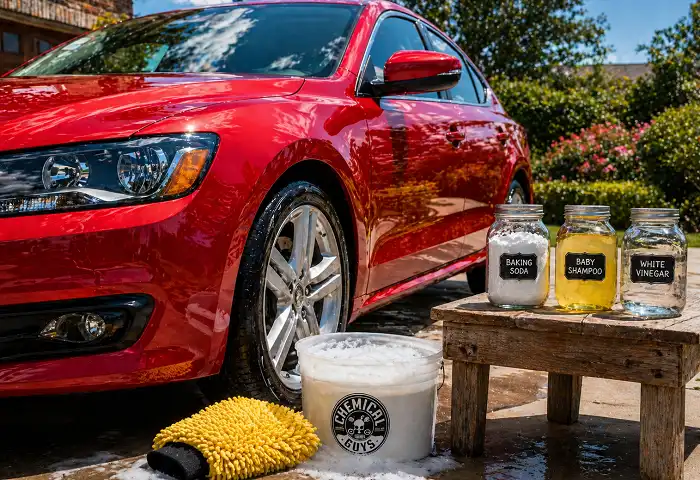
A home made car wash solution combines a surfactant, water, and an optional gloss agent. Castile soap or pH-neutral dish soap acts as the cleaner. Warm water boosts foaming action. White vinegar or baking soda can spot-treat hard water deposits.
The U.S. Environmental Protection Agency recommends washing on grass or gravel to keep runoff out of storm drains.
For ready-to-use options, see these proven soap recipes and easy shampoo recipes that match common paint types.
When Should You Choose a Car Wash Home Made Method?
Pick a homemade car wash when the paint has light dust, pollen, or two-week road film. Skip DIY mixes after road salt exposure, brake dust buildup, or bird droppings older than 24 hours. Those need pH-balanced commercial shampoos to prevent etching.
Wash every two weeks in summer and every three to four weeks in winter, following Texas A&M AgriLife Extension guidance on vehicle care and water use.
Where to Set Up Your Home Made Car Wash
Park the vehicle in full shade on a flat surface. Direct sun dries soap into spots within 60 seconds. A garage, carport, or shaded driveway works best. Keep a hose, two buckets, and a drying towel within three feet.
Supplies You Need for a Car Wash Home Made
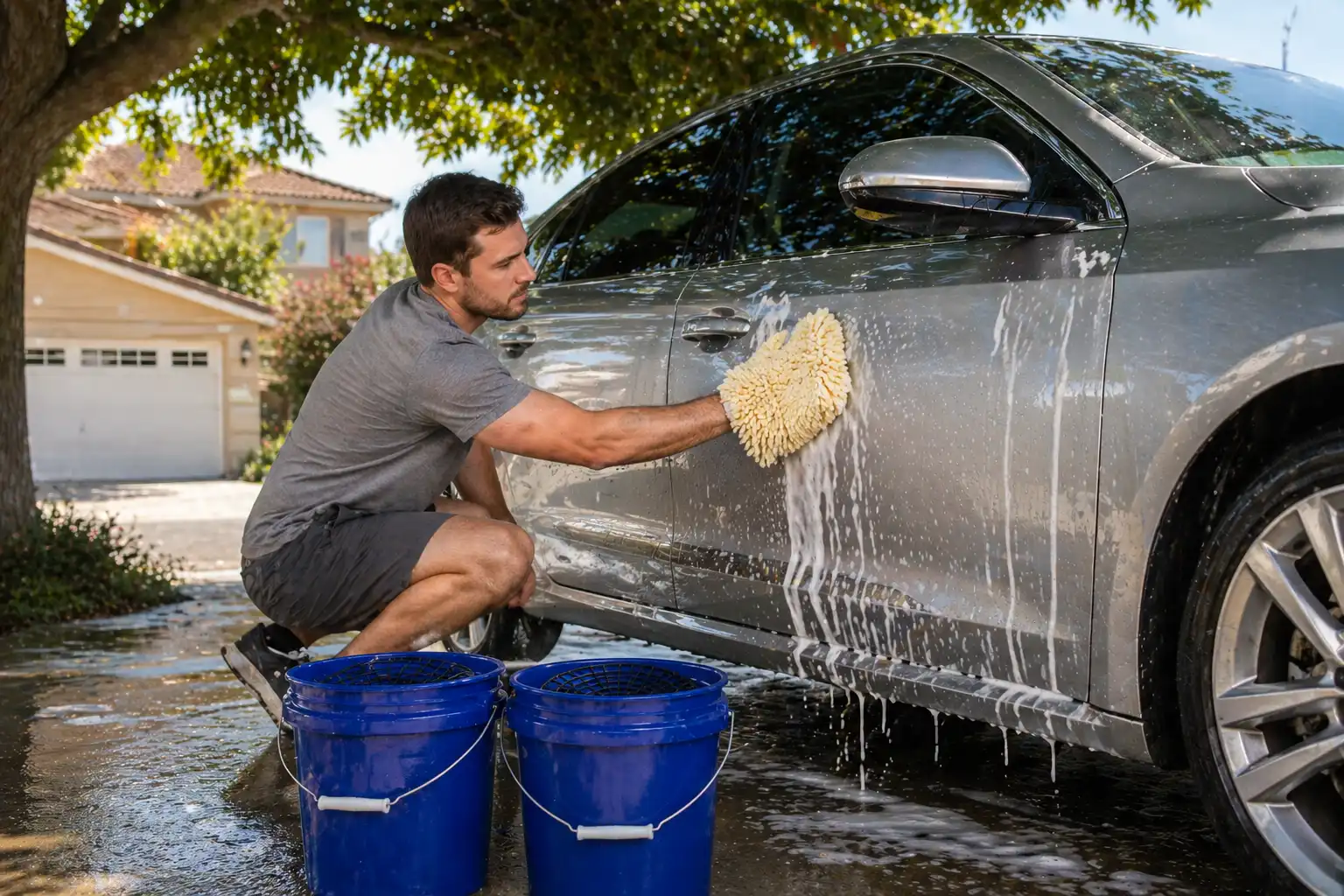
- Two 5-gallon buckets (one wash, one rinse)
- Grit guards for both buckets
- Microfiber wash mitt
- Two microfiber drying towels (1,200+ GSM)
- Garden hose with adjustable nozzle
- pH-neutral dish soap or Castile soap
- Wheel brush with soft bristles
- Glass cleaner without ammonia
How to Make a Car Wash Home Made Solution: Step-by-Step
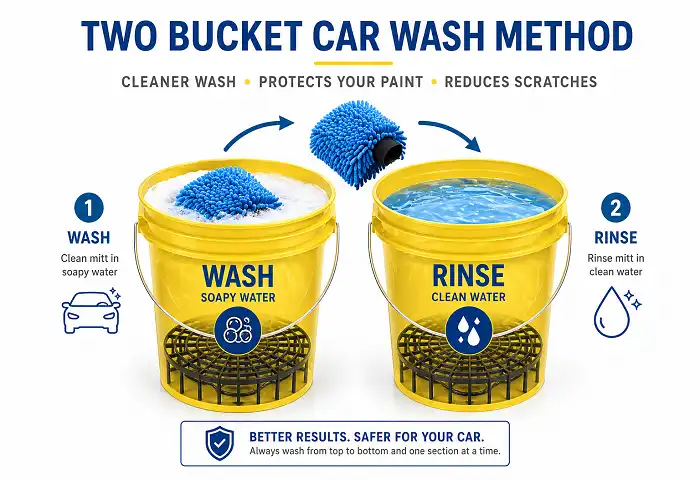
Every car wash home made session starts with the right prep, then moves panel by panel from top to bottom.
Step 1: Mix the Wash Bucket
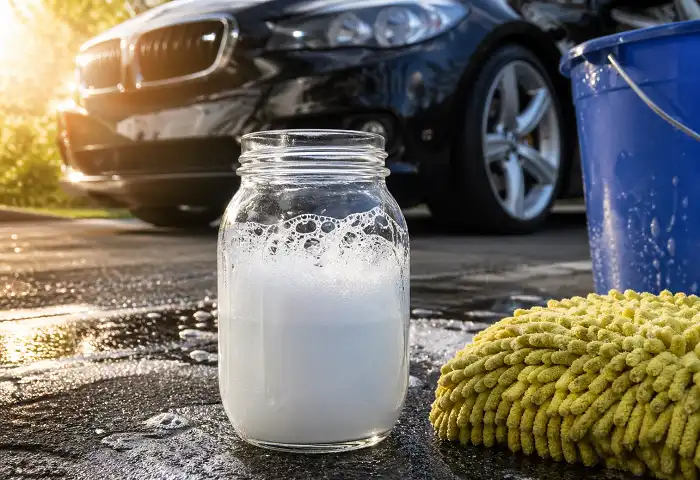
Add 1 tablespoon of pH-neutral dish soap to 3 gallons of warm water in the wash bucket. Stir until foam forms on top. This ratio cleans without stripping wax.
Step 2: Fill the Rinse Bucket
Fill the second bucket with plain water. Drop a grit guard at the bottom. The rinse bucket traps dirt before the mitt re-enters the wash bucket.
Step 3: Rinse the Vehicle
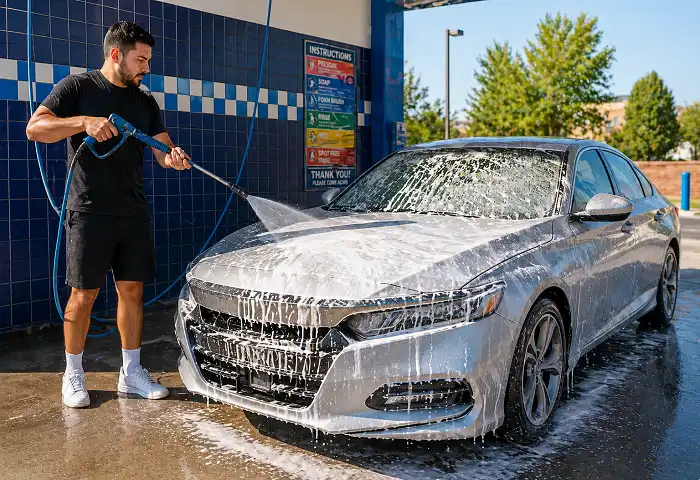
Spray the car top to bottom with a wide nozzle. Wet wheels and lower panels first to soften brake dust and road grime.
Step 4: Wash from Top to Bottom
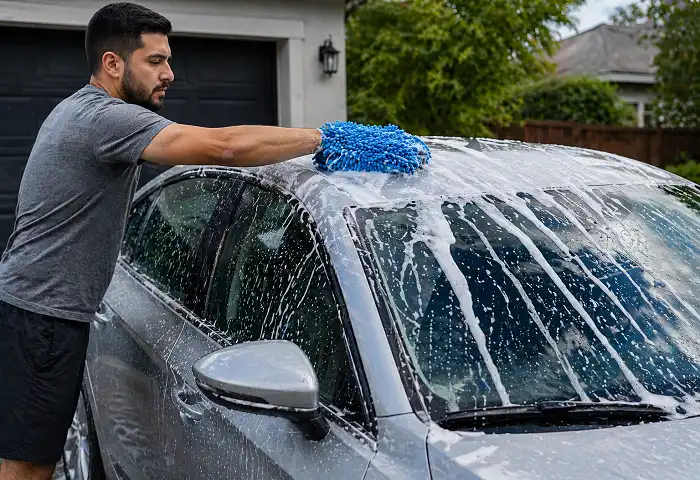
Dip the mitt in the wash bucket. Glide in straight lines across the roof, then hood, sides, and bumpers. Never circle. Circles create swirl marks.
Step 5: Rinse the Mitt Often
Drop the mitt into the rinse bucket between panels. Drag it across the grit guard to release dirt. Reload with soap and continue.
Step 6: Wash Wheels Last
Use a separate mitt and the wheel brush. Wheels carry the heaviest brake dust and iron particles. Cross-contamination ruins paint.
Step 7: Final Rinse
Remove the nozzle. Let water sheet off the panels. Sheeting reduces water spots before drying.
Step 8: Dry with Microfiber
Pat each panel with a 1,200 GSM towel. Drag, do not rub. Use a second towel for door jambs and mirrors.
Best Car Wash Home Made Recipes That Work
Recipe 1: Classic Dish Soap Wash
- 1 tablespoon Dawn dish soap
- 3 gallons warm water
- 1 teaspoon baking soda for hard water areas
Recipe 2: Castile Soap Wash
- 2 tablespoons liquid Castile soap
- 3 gallons warm water
- 5 drops glycerin for added slickness
Recipe 3: Vinegar Rinse Aid
- 1 cup white vinegar
- 1 gallon water
- Use as a final rinse on glass to cut hard water spots
For deeper recipe comparisons, check this step-by-step washing guide and the full hand washing technique.
Solutions for Common Car Wash Home Made Problems
Problem: Streaks on paint after drying. Switch to a higher-GSM towel. Pat instead of wiping. Dry within two minutes of the final rinse.
Problem: Soap dries before rinse. Move the vehicle into shade. Lower the soap ratio to 2 teaspoons per 3 gallons.
Problem: Hard water spots. Wipe each panel with a vinegar rinse, then re-rinse with distilled water.
Troubleshooting: When Home Made Car Wash Mixes Fail
Dish soap above 1 tablespoon per gallon strips wax. Cut the ratio in half if water beading disappears after one wash. Reapply spray wax every fourth wash to keep hydrophobic protection.
If the mitt drags or squeaks, soap concentration is too low. Add 1 teaspoon and re-foam.
If foam collapses fast, the water is too cold. Refill with water at 90–100°F.
Mistakes to Avoid in a Car Wash Home Made Routine
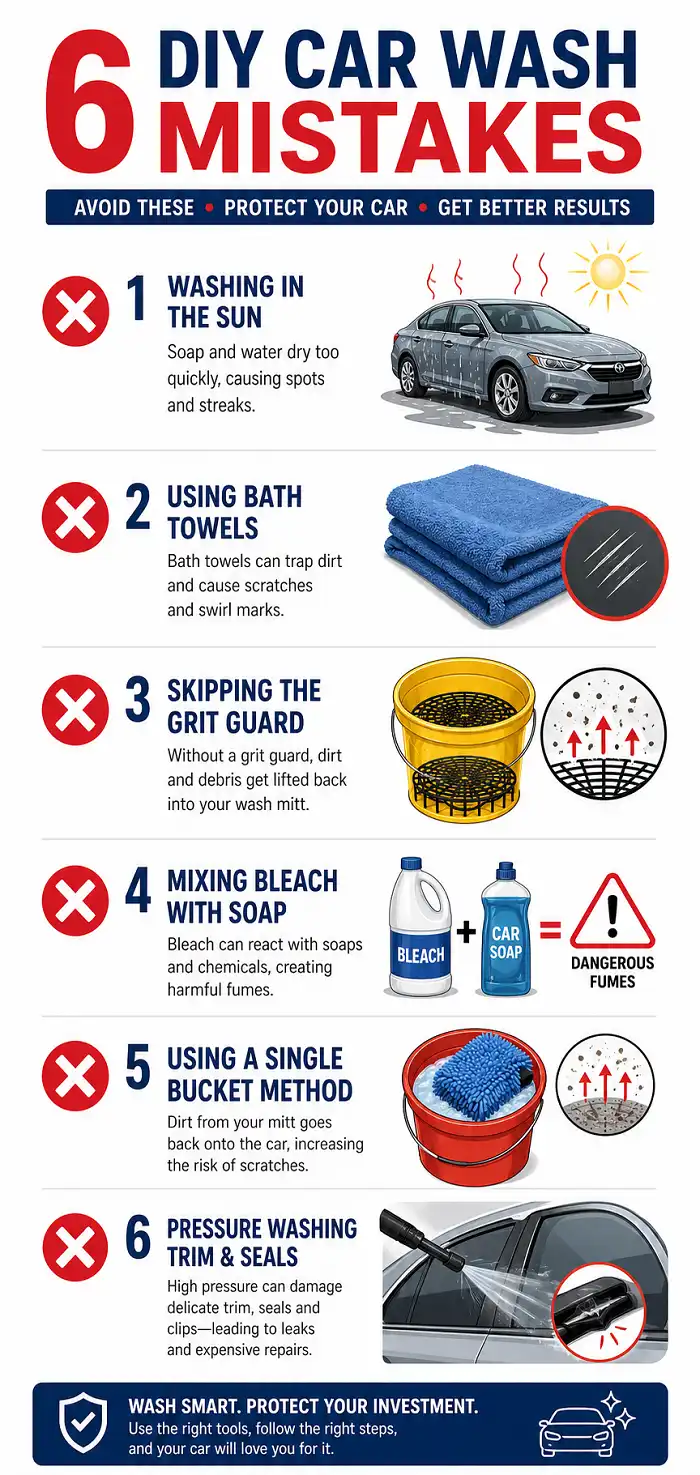
- Washing in direct sun
- Using one bucket instead of two
- Skipping the grit guard
- Drying with bath towels (they scratch)
- Mixing bleach or laundry detergent into the wash
- Pressure washing trim seals at close range
A side-by-side soap comparison shows which household options stay paint-safe.
Safety Notes for Car Wash Home Made Sessions
Wear closed-toe shoes on wet concrete. Keep electrical cords off the ground. Never mix vinegar with bleach, which produces toxic chlorine gas. Store leftover solutions in labeled containers away from children and pets.
For paint with ceramic coatings, skip vinegar. Acidic rinses degrade SiO2 layers within weeks.
Car Wash Home Made vs Commercial Wash: Quick Compare
| Factor | Home Made | Commercial |
|---|---|---|
| Cost per wash | $0.50–$1.00 | $8–$25 |
| Time | 45–60 minutes | 5–10 minutes |
| Paint safety | High (correct ratio) | Varies |
| Water use | 20–40 gallons | 30–45 gallons |
If time matters more than savings, a touchless option works for daily drivers.
Frequently Asked Questions
Is dish soap safe for car paint? PH-neutral dish soap at 1 tablespoon per 3 gallons cleans safely. Higher ratios strip wax over time.
How often should I do a car wash home made? Every 14 days in dry climates. Every 7 days in coastal or salt-heavy regions.
Can I use laundry detergent in a home made car wash? No. Laundry detergent contains brighteners and high-pH builders that fade clear coat.
Does baking soda damage paint? At 1 teaspoon per 3 gallons, baking soda is safe and softens hard water. Avoid pastes on clear coat.
Will a car wash home made remove tree sap? Light sap lifts with warm soapy water. Hardened sap needs isopropyl alcohol on a microfiber pad.
Conclusion
A car wash home made routine saves money and protects paint when you follow correct ratios, the two-bucket method, and shade-only washing. Stick to pH-neutral soap, microfiber tools, and patient drying. Skip DIY mixes after salt exposure or bird droppings. With the right recipe and order, your home wash matches detail-shop results at a fraction of the cost.