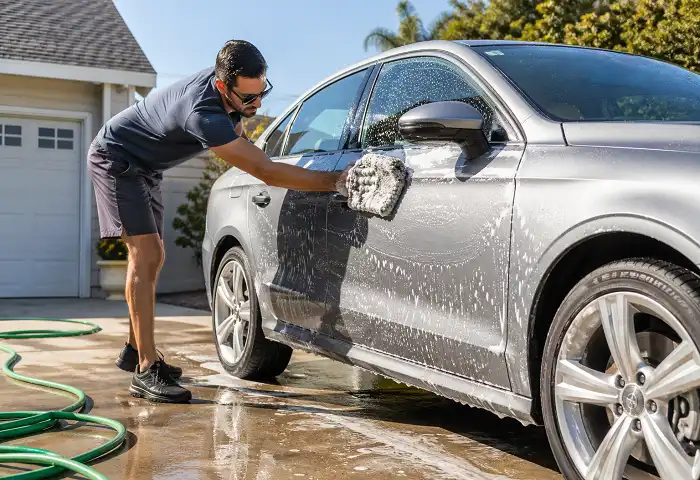
Introduction: Why the Best Self Car Wash Beats Every Alternative
There is a moment every car owner knows well. You pull up to an automatic tunnel wash, hand over your money, and watch a machine drag rotating brushes across your paint — brushes that have already scraped against hundreds of other vehicles that day. You drive out hoping for a clean car and instead find swirl marks, missed spots, and a finish that looks nothing like the showroom shine you were hoping for. That experience is precisely why millions of drivers today are turning to the best self car wash methods available — whether at home, in a coin-operated bay, or at a dedicated self-service facility.
The best self car wash is not just about saving money. It is about taking complete, informed control of how your vehicle is treated. You choose the products. You control the pressure. You decide exactly how long to spend on each panel and which areas need extra care. When you master the best self car wash approach, the results are consistently superior to anything a commercial machine or rushed detailing service can deliver. This guide covers everything — the tools, the techniques, the step-by-step process, and the professional tips that separate a mediocre wash from one that genuinely protects and enhances your vehicle’s appearance.
What Is a Self Car Wash and Why Does It Matter?
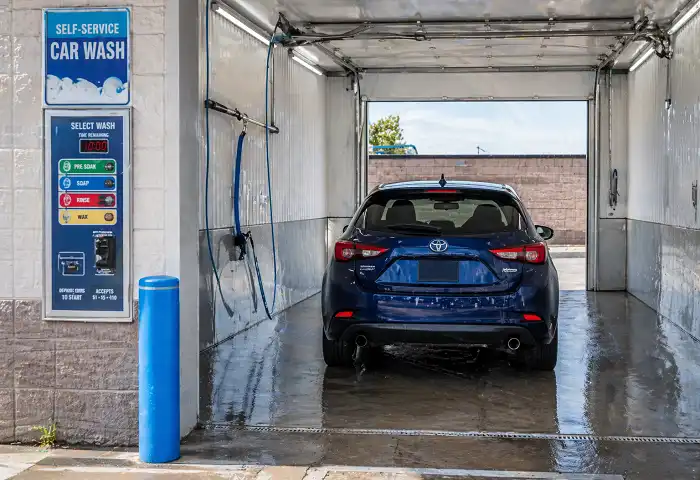
A self car wash refers to any washing method where the vehicle owner handles the process personally rather than delegating it to an automated machine or a full-service detailing shop. This includes washing at home using a bucket, hose, and mitt, visiting a coin-operated or card-operated self-service bay, or setting up a complete home detailing station in a driveway or garage.
What makes the best self car wash method genuinely superior is the level of attention and care it provides. Automatic car washes — particularly brush-based tunnel systems — are among the most consistently damaging tools in everyday car care. These rotating brushes accumulate grit, debris, and road contamination from every vehicle that passes before yours, and they drag all of that material across your clear coat under significant mechanical pressure. The result, over time, is a network of fine scratches and swirl marks that dull your paint and reduce your car’s visual appeal and resale value.
By contrast, the best self car wash method uses clean tools, fresh wash water, and deliberate technique. Every panel receives focused attention. Every product is chosen for paint safety. And the entire process is done at a pace that allows for a genuinely thorough clean rather than the minimum effort required to move the next car through.
Essential Tools for the Best Self Car Wash Results
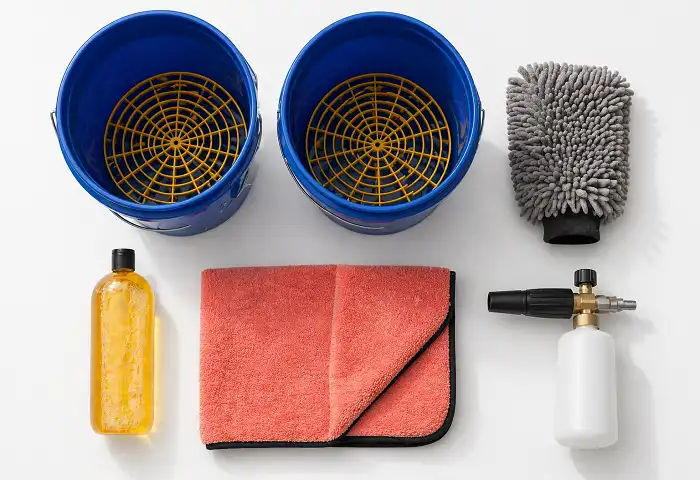
Getting the best self car wash results starts before you touch the vehicle. Having the right equipment makes the difference between a wash that protects your paint and one that unknowingly damages it.
Two-Bucket System
The two-bucket method is the single most important technique in any best self car wash setup. One bucket holds your car shampoo mixed with water — this is your wash bucket. The second bucket holds clean water only — this is your rinse bucket. After washing a section of the car with your mitt, you dunk the mitt into the rinse bucket first before reloading it with soapy water. This simple system prevents contaminated water from going back onto the paint surface. Professional detailers use it universally, and it is the foundation of any safe hand wash.
Grit Guards
A grit guard sits at the bottom of each bucket. This plastic grid traps dirt and debris below the waterline so that contaminants you rinse off your mitt do not circulate back up when you agitate the water. Grit guards are inexpensive and genuinely effective at reducing the risk of fine paint scratches during your best self car wash routine.
Microfiber Wash Mitts
Ditch the sponge. A high-quality microfiber wash mitt is essential for the best self car wash technique. Microfiber lifts and traps dirt within its fibres rather than pushing it across the paint surface the way a flat sponge does. Choose a thick, plush mitt with long fibres, and always use a fresh, clean mitt for every wash. Never use a mitt that has been dropped on the ground without thoroughly rinsing it.
pH-Neutral Car Shampoo
The shampoo you use matters enormously. Never use dish soap, household detergents, or general-purpose cleaners on automotive paint. These products are formulated to cut grease aggressively, and they will strip the wax or sealant protecting your clear coat. The best self car wash routine uses a pH-neutral automotive shampoo — one that cleans thoroughly without disturbing your paint’s protective layers. Look for a concentrated formula, which offers better value per wash and greater flexibility in how strong you mix it.
Microfiber Drying Towels
Once the car is clean and rinsed, drying matters just as much as washing. Allowing the car to air dry leads to water spots — mineral deposits left behind as water evaporates. A large, plush microfiber drying towel absorbs water quickly and safely. Use a blotting motion rather than dragging the towel across the paint surface to minimise friction and reduce the risk of introducing fine scratches during drying.
Optional: Pressure Washer or Foam Lance
For drivers who wash at home, a pressure washer with a foam lance attachment transforms the pre-wash stage. A foam lance coats the entire vehicle in thick, clinging foam that loosens surface dirt before any contact is made with the paint. This snow foam pre-wash step is one of the most paint-safe ways to prepare a vehicle for the best self car wash process because it breaks down contamination chemically rather than physically.
How to Find the Best Self Car Wash Facility Near You
Not everyone has driveway access, outdoor water availability, or the space to set up a full home wash station. For these drivers, locating a quality self-service car wash bay is the first practical step.
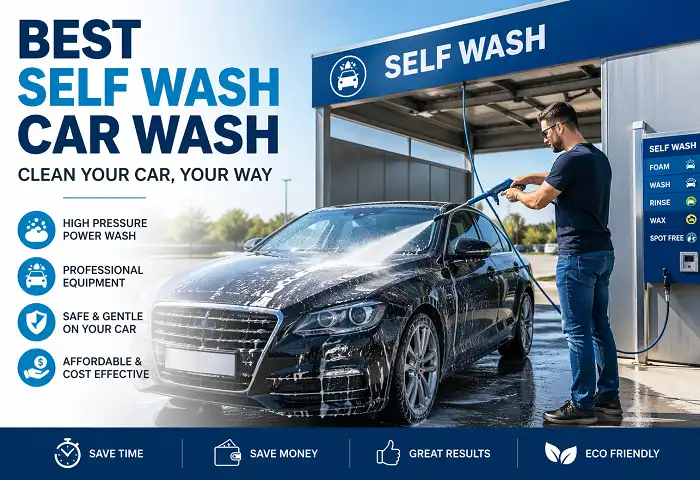
Coin-operated or card-operated self-service bays are the most widely available option. Found at fuel stations, standalone car wash parks, and retail car parks, these facilities provide a high-pressure wash wand with multiple settings — pre-soak, high-pressure soap, rinse, and often a spot-free final rinse — for a metered payment. The best self car wash facility of this kind will offer consistent, high water pressure, a working foam or pre-soak setting, a genuine spot-free final rinse, and a clean, well-maintained environment.
Before committing to a bay, assess the equipment. Low pressure, clogged nozzles, or non-functional settings will undermine your results regardless of how good your technique is. The best self car wash results from a coin-operated facility come when the equipment is well maintained and the water supply is adequate.
When visiting a self-service bay, consider bringing your own microfiber mitts, your preferred car shampoo, and drying towels. The cleaning agents supplied by the facility are functional but rarely premium quality. Supplementing with your own products allows you to maintain the same standard you would achieve at home.
Step-by-Step Process: The Best Self Car Wash Method
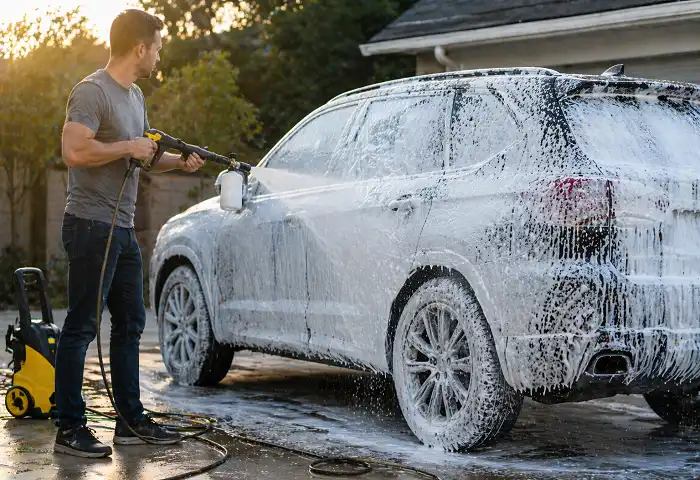
This is the exact sequence that produces a professional-quality finish every time, whether at a self-service bay or at home.
Step 1: Preparation
Park in the shade whenever possible. Direct sunlight heats the body panels and causes soap to dry on the surface before you can rinse it — leaving water spots and streaks that are time-consuming to remove. The best self car wash is done in the morning, evening, or under a covered area. Close all windows and sunroofs. Remove any loose interior items and take out floor mats for separate cleaning.
Step 2: Rinse the Entire Vehicle
Before applying any product, rinse the entire car from top to bottom with clean water. This first rinse removes loose dirt, dust, pollen, and debris that would otherwise be dragged across the paint by your wash mitt. Pay particular attention to wheel arches, lower door sills, and the area behind the wheels where mud and road salt accumulate heavily.
Step 3: Pre-Soak or Snow Foam (If Available)
If using a foam lance at home or the pre-soak setting at a self-service bay, apply a thick coat of foam to the entire vehicle at this stage. Allow it to dwell for two to five minutes — this contact time is what allows the chemicals to break down surface grime before you begin washing. Do not allow the foam to dry completely. Rinse it off before it becomes tacky.
Step 4: Wash the Wheels First
Wheels and tyres are the dirtiest parts of any vehicle. Wash these first, using a dedicated wheel brush and wheel cleaner, before moving to the paintwork. This prevents brake dust and tyre contamination from splashing onto clean paint panels later in the process. Never use your paint wash mitt on the wheels — keep the tools separate.
Step 5: Wash the Vehicle Top to Bottom
Begin washing the body panels starting from the roof and working systematically downward. This top-to-bottom approach uses gravity correctly — dirty water runs down, not up — and ensures you are always washing from the cleanest area to the dirtiest. Use your microfiber wash mitt loaded with fresh soapy water, work in straight lines across each panel, and rinse the mitt in your rinse bucket before reloading with shampoo after each panel.
Do not use circular or scrubbing motions. Circular washing creates the swirl marks that dull paint over time. Long, straight, overlapping strokes are the correct technique in any best self car wash routine.
Step 6: Rinse Thoroughly
Once all panels have been washed, rinse the entire vehicle from top to bottom with clean water. Use consistent pressure and be thorough — any soap residue left on the paint will leave streaks and water spots as it dries.
Step 7: Apply Spot-Free Rinse (If Available)
Many self-service car wash bays offer a spot-free final rinse option. This uses purified, deionised water that dries without leaving mineral deposits. If this option is available, always use it as the final rinse step. It significantly reduces the effort required during drying and helps produce a cleaner, more streak-free finish.
Step 8: Dry the Vehicle Immediately
Never allow a washed car to air dry. Use your microfiber drying towel to blot the water from each panel starting at the roof and working down. Fold the towel into sections so you always have a clean, dry surface absorbing the water. Replace the towel when it becomes saturated. Pay attention to door shuts, mirror housings, and panel gaps where water pools and drips out later.
Step 9: Apply Wax or Sealant (Recommended)
The best self car wash routine includes some form of paint protection applied after drying. A quick spray detailer or spray wax applied with a microfiber cloth after each wash tops up the protective layer on your paint, enhances gloss, and makes the next wash easier by preventing contamination from bonding as strongly to the surface. For longer-lasting protection, a dedicated paste wax or liquid sealant applied every two to three months builds a more durable protective layer.
LSI Keywords and Common Mistakes to Avoid
Across the best self car wash community, certain mistakes come up repeatedly. Being aware of them prevents damage and frustration.
Using the wrong soap: As covered above, household cleaners strip protective coatings. Always use a dedicated automotive car wash shampoo designed for hand washing.
Washing in direct sunlight: Heat causes premature drying of soap and rinse water, leading to mineral deposits and streaks. Choose timing and location carefully for the best self car wash results.
Using a dirty mitt: A mitt contaminated with grit or debris will scratch your paint just as surely as a brush-based machine. Inspect your mitt before each use and wash it regularly.
Skipping the pre-rinse: Applying soap directly to a dry, dirty car without pre-rinsing first turns surface grit into an abrasive paste against your paint. Always pre-rinse as step one.
Neglecting wheel arches and sills: These areas accumulate the heaviest contamination and are the most prone to corrosion if left unattended. Every best self car wash session should include focused attention here.
Washing too infrequently: Allowing dirt, road salt, bird droppings, and environmental fallout to build up for weeks or months makes each eventual wash harder and increases the risk of permanent paint damage. A regular schedule — every two to four weeks — keeps contamination manageable and your vehicle in consistently good condition.
Self Car Wash vs. Automatic Wash: The Real Comparison
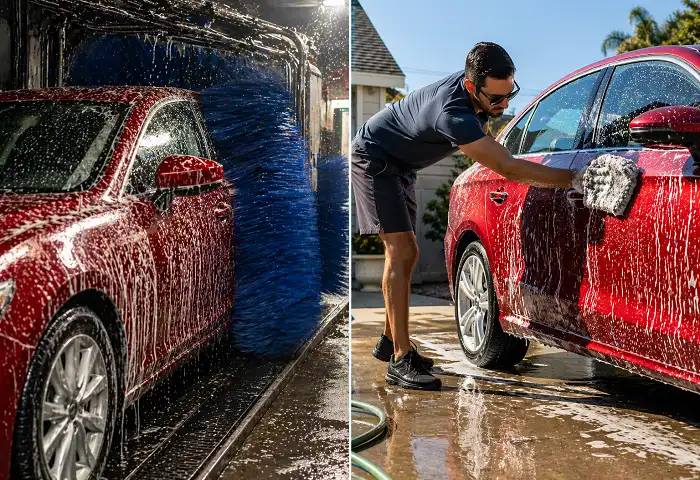
The debate between the best self car wash method and an automatic wash comes down to three factors: paint safety, cleanliness, and cost.
On paint safety, the self car wash wins clearly. Automatic brush-based systems inflict measurable damage to clear coats over time through abrasive contact. Even touchless automatic washes use high-chemical, high-pressure systems that can be aggressive on wax and sealant layers.
On cleanliness, the self car wash also wins. A machine cannot replicate the focused attention a human gives to problem areas, difficult-to-reach spots, and panels that need extra care.
On cost, the self car wash is considerably more economical over time. A self-service bay wash typically costs a fraction of a full-service professional detail, and home washing costs are limited to the initial investment in quality tools and the ongoing cost of shampoo and consumables.
The only genuine advantage of an automatic wash is speed and convenience. For drivers who are unwilling or unable to spend time on a proper wash, an automatic touchless wash is the least harmful commercial option available. But for anyone who cares about the long-term condition of their vehicle’s paint, the best self car wash method is the clear and consistent choice.
Seasonal Considerations for the Best Self Car Wash
Winter Washing
Road salt is one of the most damaging substances a vehicle encounters. In winter, the best self car wash schedule becomes even more important, as salt accumulation on the undercarriage, wheel arches, and lower body panels actively corrodes metal and accelerates paint failure. Washing every ten to fourteen days during winter, with particular attention to the undercarriage, is the recommended minimum. Some self-service bays offer undercarriage rinse settings specifically for this purpose.
Summer Washing
High temperatures in summer increase the risk of soap drying on panels before rinsing. Timing washes for early morning or evening, avoiding direct sunlight, and working quickly through each section reduces this risk. Bird droppings, tree sap, and insect residue — all of which are more prevalent in summer — should be removed as quickly as possible, as their acidic content can etch and permanently damage clear coat within a matter of hours on a hot surface.
Building Your Best Self Car Wash Setup at Home
For drivers committed to the best self car wash results, investing in a quality home setup is worthwhile. The core equipment — two buckets with grit guards, quality wash mitts, a pH-neutral shampoo, and microfiber drying towels — can be assembled for a modest outlay that pays for itself after just a few washes compared to commercial alternatives.
Adding a pressure washer and foam lance elevates the home setup to near-professional standard. A mid-range electric pressure washer with an adjustable foam lance and a range of nozzle attachments provides everything needed for a comprehensive wash, a chemical pre-soak, and a thorough rinse at appropriate pressure. Choose an electric model over a petrol-powered one for domestic use — they are quieter, lighter, and adequate for all car washing needs.
Completing the setup with a spray wax, an iron fallout remover for periodic decontamination, and a clay bar for annual paint correction creates a comprehensive maintenance system that keeps your vehicle’s paint in exceptional condition year-round.
Conclusion: Make the Best Self Car Wash Your Standard
The best self car wash is not a compromise between convenience and quality — it is the choice that delivers genuinely superior results when done correctly. The tools are accessible, the technique is learnable, and the investment in time is modest compared to the long-term benefit of well-maintained paintwork, a more attractive vehicle, and avoided repair costs from paint damage and corrosion.
Whether you are washing at home with a two-bucket setup and a quality shampoo, or visiting a well-equipped self-service bay near you, the principles are the same. Rinse first. Wash top to bottom with clean tools and fresh water. Rinse thoroughly. Dry immediately. Protect with wax. Follow this process consistently, and the best self car wash results will speak for themselves — a cleaner, safer, better-protected vehicle that holds its value, its appearance, and its paint quality for years longer than one treated by any commercial machine.
Take control of your car’s condition. The best self car wash is simply the best wash, full stop.