Introduction
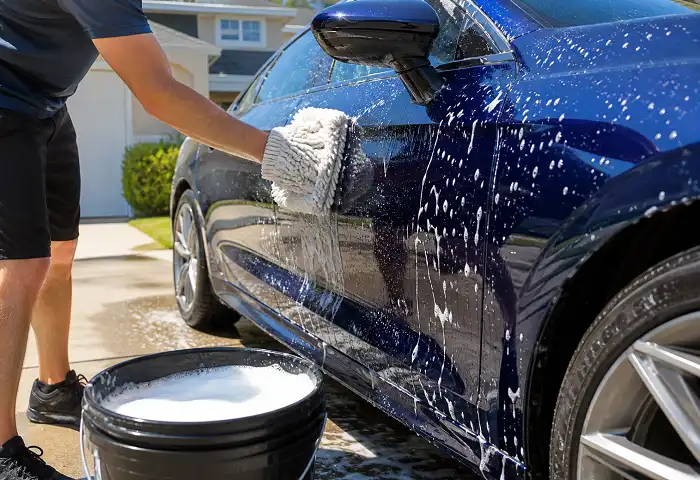
Want a cleaner car without spending $15 on a bottle of soap every month? A home made car wash cleaner gives your vehicle a thorough clean using ingredients already in your kitchen or garage. This guide covers six proven DIY formulas, the safest ingredients to choose, how to apply each formula without scratching paint, and common mistakes that damage clear coat.
Quick Answer: A home made car wash cleaner uses dish soap, castile soap, white vinegar, or baby shampoo mixed with water to remove dirt, road grime, and film from a vehicle’s exterior. The most common base formula combines 1 tablespoon of dish soap with 1 gallon of lukewarm water.
What Is a Home Made Car Wash Cleaner?
A home made car wash cleaner is a DIY solution made from household ingredients. It removes surface dirt, road film, bird droppings, tree sap, and brake dust from painted panels, glass, plastic trim, and wheels.
Most formulas combine three elements: a surfactant to lift dirt, a degreaser to cut oil-based grime, and water to carry contaminants away.
Commercial car wash soap costs between $8 and $25 per bottle. A home made car wash cleaner costs under $1 per gallon batch.
What Ingredients Does a Home Made Car Wash Cleaner Use?
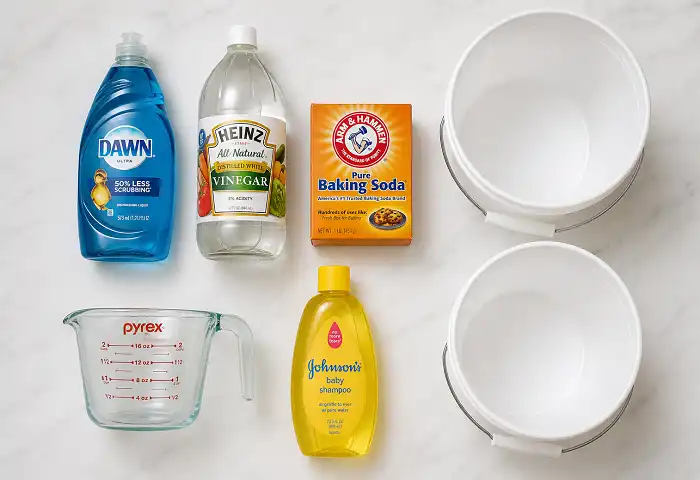
A safe home made car wash cleaner draws from four ingredient categories.
Surfactants break the surface tension between dirt and paint. Dish soap and castile soap serve as effective surfactants. Dawn Original Blue dish soap cuts grease without generating excess foam.
Degreasers lift oil-based contaminants. White vinegar provides mild degreasing action at low cost. It also removes hard water mineral deposits from glass and lower panels.
Mild abrasives tackle stuck-on grime without scratching. Baking soda works on wheel grime and road salt deposits when mixed at low concentrations.
Conditioners protect paint after washing. Baby shampoo contains conditioning agents that leave painted surfaces smoother and reduce static dust attraction.
Water quality affects results. Hard tap water leaves mineral residue after drying. Adding a tablespoon of white vinegar to the rinse water reduces spotting in hard water areas.
Are All Dish Soaps Safe for Car Paint?
Not all dish soaps belong in a home made car wash cleaner. Soaps that contain citrus degreasers, bleach agents, or antibacterial compounds strip wax and degrade paint sealants.
Dawn Original Blue and castile-based dish soaps carry low risk on painted surfaces. Antibacterial soaps contain triclosan or benzalkonium chloride, which degrade rubber trim and plastic over repeated use.
A home made car wash cleaner made with baby shampoo reduces wax-stripping risk because baby shampoo carries a pH between 5.5 and 7.0, close to neutral. Most dish soaps range from pH 7 to pH 9.
For proven soap formulas that protect car wax, that guide compares several DIY options with specific ingredient ratios.
6 Proven Home Made Car Wash Cleaner Formulas
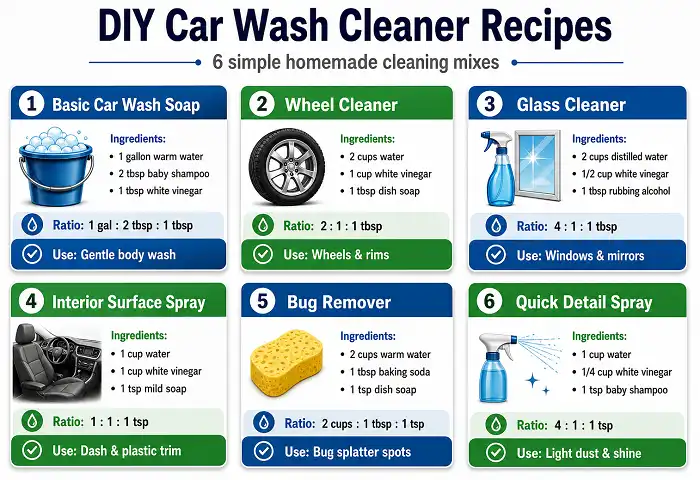
Formula 1: Basic Dish Soap Cleaner
This home made car wash cleaner suits regular weekly maintenance washes on painted panels and glass.
Ingredients:
- 1 tablespoon Dawn Original dish soap
- 1 gallon lukewarm water
- 1 tablespoon white vinegar (add in hard water areas)
Mix vinegar into water first. Add soap last and stir slowly to reduce foam.
Formula 2: Castile Soap Cleaner
This castile soap home made car wash cleaner works on vehicles with active wax coatings or ceramic sealants.
Ingredients:
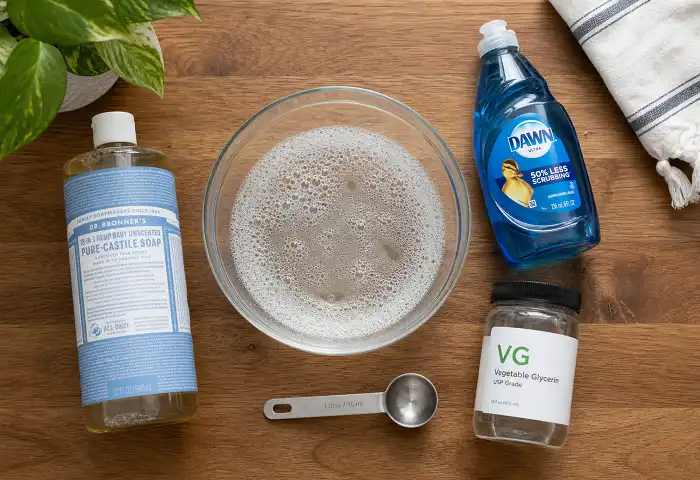
- 2 tablespoons unscented castile soap (Dr. Bronner’s works well)
- 1 gallon water
- 1 teaspoon vegetable glycerin (optional)
Glycerin reduces friction between the wash mitt and paint surface. This decreases swirl marks on dark-colored vehicles.
Formula 3: Baking Soda and Vinegar Degreaser
This home made car wash cleaner targets heavy road grime, salt residue, and oxidized film on lower panels.
Ingredients:
- 1 tablespoon baking soda
- 1 tablespoon white vinegar
- 1 gallon water
- 1 teaspoon dish soap
Add baking soda to water first. Add vinegar second. Add dish soap last. The fizzing reaction settles within 30 seconds. Apply to lower panels, rocker panels, and wheel arches. Avoid contact with uncoated aluminum trim because vinegar lightly etches bare aluminum.
Formula 4: Baby Shampoo Cleaner
A baby shampoo home made car wash cleaner suits vehicles with freshly applied wax, paint protection film (PPF), or new paint repairs.
Ingredients:
- 3 tablespoons baby shampoo
- 1 gallon lukewarm water
Baby shampoo rinses completely without residue. It does not strip wax layers or dry out rubber door seals.
Formula 5: Waterless Spot-Clean Spray
This home made car wash cleaner handles light dust removal and fingerprints between full washes.
Ingredients:
- 2 cups distilled water
- 2 tablespoons isopropyl alcohol (70%)
- 1 tablespoon baby shampoo
- 1 teaspoon aloe vera gel
Combine in a labeled spray bottle. Shake gently before each use. Spray onto a clean microfiber cloth, not directly onto paint. Wipe in straight lines, not circles.
Formula 6: Heavy-Duty Wheel Cleaner
This home made car wash cleaner targets brake dust buildup, road tar, and wheel grease.
Ingredients:
- 1 cup white vinegar
- 1 cup water
- 1 tablespoon dish soap
- 1 teaspoon baking soda
Apply to wheels with a dedicated wheel brush. Allow 2 minutes of dwell time before scrubbing. Rinse with a strong water stream. Keep this formula away from painted body panels.
For additional homemade shampoo recipes with step-by-step ratios, that resource covers eight variations including foam cannon formulas.
How to Apply a Home Made Car Wash Cleaner (Step-by-Step Guide)
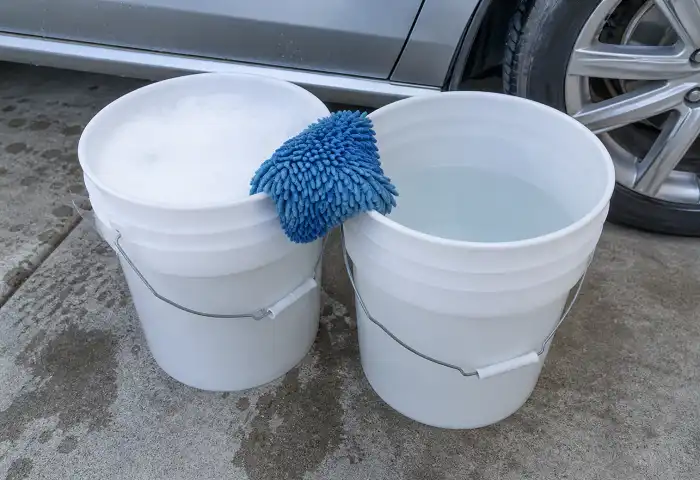
A home made car wash cleaner produces better results with the two-bucket method. This process separates clean solution from rinse water to prevent reintroducing dirt onto paint.
Step 1: Gather supplies
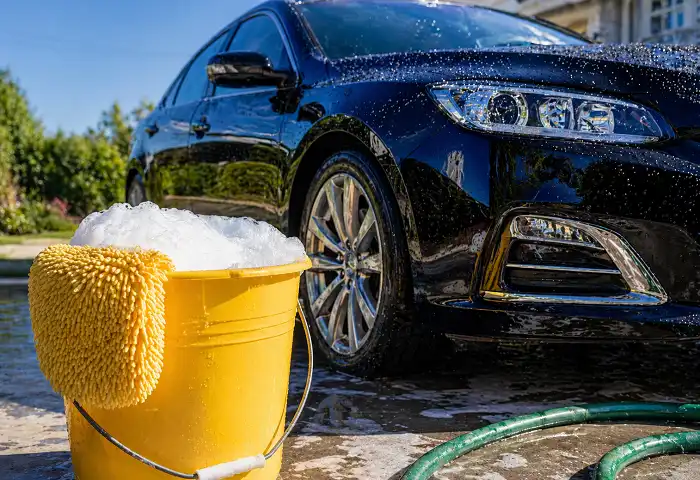
Collect two 5-gallon buckets, a microfiber wash mitt, a microfiber drying towel, a wheel brush, and a garden hose. Place grit guards at the bottom of each bucket. Grit guards trap abrasive particles below the wash zone.
Step 2: Mix the solution
Fill Bucket 1 with your chosen home made car wash cleaner recipe. Fill Bucket 2 with clean water for rinsing the mitt. Never add soap to Bucket 2.
Step 3: Pre-rinse the entire vehicle
Rinse from roof to lower panels using a free-flowing hose. This removes loose dirt, dust, and debris. Skipping this step drags abrasive particles across clear coat during washing.
Step 4: Wash wheels first
Wash wheels before the body. Wheel cleaning splashes brake dust and grit onto clean panels. Use the wheel brush with Formula 6, then rinse wheels thoroughly before washing the rest of the vehicle.
Step 5: Wash panels from top to bottom
Dip the mitt into Bucket 1 (soap). Wash in this sequence: roof → windshield → hood → trunk lid → rear glass → front and rear doors → lower panels. Washing top to bottom prevents dirty water from running over already-clean surfaces.
Step 6: Rinse the mitt after each panel
Dunk the mitt into Bucket 2 (rinse water) and wring it out after every panel. Reload from Bucket 1. This step keeps the home made car wash cleaner solution clean throughout the full wash.
Step 7: Perform a final rinse
Rinse the entire vehicle from top to bottom. Use a free-flowing hose rather than high-pressure spray near rubber door seals, sunroof tracks, or freshly repaired paint sections.
Step 8: Dry immediately
Use a clean, dry microfiber towel. Pat the surface rather than dragging the towel. Air drying causes water spotting, particularly in hard water regions.
What Surfaces Does a Home Made Car Wash Cleaner Work On?
Painted body panels: Formulas 1, 2, and 4 work without stripping existing wax protection.
Windshield and side glass: A vinegar-based home made car wash cleaner removes mineral haze and windshield film. Apply with a separate cloth to avoid cross-contamination from body panel grime.
Rubber trim and door seals: Baby shampoo-based formula prevents rubber from drying or cracking during the wash cycle.
Alloy and steel wheels: Formula 6 removes brake dust compounds and road tar with a 2-minute dwell time.
Plastic bumpers and trim: A castile soap home made car wash cleaner removes road film from plastic without causing fading or surface hazing.
For a full hand washing process covering surface-specific techniques, that guide includes mitt pressure guidance for sensitive surfaces.
What Mistakes Damage Paint or Leave Poor Results?
Using too much soap: One tablespoon per gallon covers a full-size sedan. Excess soap leaves a white film on paint after rinsing. More soap does not increase cleaning power.
Washing in direct sunlight: Heat causes a home made car wash cleaner to dry before rinsing. This leaves streaks and water spots across all panels. Wash in shade or during morning hours before 10 a.m.
Applying vinegar to chrome: White vinegar etches uncoated chrome, bare aluminum grilles, and polished exhaust tips. Use plain soap and water on metal trim.
Using a single bucket: A one-bucket wash reloads the mitt with dirt removed from previous panels. The two-bucket method reduces this risk significantly.
Using terry cloth towels: Terry cloth generates more surface friction than microfiber. It increases the chance of fine scratches on clear coat. Use dedicated microfiber wash mitts and drying towels only.
Skipping the pre-rinse: Any home made car wash cleaner applied without a prior rinse drags loose grit across paint under the mitt. A 60-second full-vehicle rinse removes most abrasive particles before hand washing begins.
How Often Should You Apply a Home Made Car Wash Cleaner?
A home made car wash cleaner suits a bi-weekly wash schedule for daily-driven vehicles. Vehicles in high-dust, coastal, or high-road-salt environments benefit from weekly washing.
Vehicles with ceramic coatings perform best with pH-neutral formulas such as castile soap or baby shampoo. Washing ceramic-coated paint more than once per week with any soap accelerates hydrophobic degradation.
Seasonal washing changes apply in northern climates. During winter months, salt accumulates in wheel wells, lower panels, and undercarriage. Increasing wash frequency to once per week during heavy salt season reduces corrosion risk.
Is a Home Made Car Wash Cleaner as Effective as Commercial Car Shampoo?
A home made car wash cleaner removes surface dirt and road film as effectively as entry-level commercial products. It does not match the performance of premium pH-balanced car shampoos for vehicles with active wax or ceramic coatings.
Commercial car shampoos use synthetic surfactant blends and paint lubricants that reduce swirl marks during washing. A home made car wash cleaner using castile soap or baby shampoo gets closest to this standard.
The performance gap increases for heavily soiled vehicles. Commercial snow foam and traffic film removers use concentrated surfactant ratios that a standard home made car wash cleaner does not replicate.
For most daily drivers with standard paint, a DIY formula delivers acceptable results at a fraction of the cost.
What Safety Steps Apply When Using a Home Made Car Wash Cleaner?
A home made car wash cleaner uses low-toxicity household ingredients, but basic precautions apply.
Skin contact: Dish soap causes dryness with prolonged exposure. Wear rubber gloves during mixing and application. The EPA Safer Choice program classifies most dish soap surfactants as low environmental hazard under standard use conditions.
Eye contact: Rinse eyes with water for 15 minutes if soapy solution enters. Avoid spraying near the face.
Drainage and runoff: Car wash runoff carries soap, oil, and brake dust into storm drains. EPA stormwater guidance recommends washing on gravel or grass where possible to reduce direct storm drain discharge.
Storage: Label all mixed solutions clearly. Store in sealed containers in a cool location. Use mixed home made car wash cleaner within 7 days. Soap-water solutions develop bacterial growth beyond 10 days.
Ventilation: Isopropyl alcohol in Formula 5 requires ventilation. Use outdoors or in a well-ventilated garage.
How Much Does a Home Made Car Wash Cleaner Save Per Year?
A home made car wash cleaner reduces annual washing costs significantly.
| Option | Cost Per Wash | Annual Cost (26 washes) |
|---|---|---|
| Commercial car soap | $0.75–$1.50 | $20–$39 |
| Premium car shampoo | $1.50–$3.00 | $39–$78 |
| Home made dish soap formula | $0.10–0.20 | $3–$5 |
| Home made castile soap formula | $0.25–$0.40 | $7–$10 |
Households with two or more vehicles double these savings.
A home made car wash cleaner also reduces plastic packaging waste. One dish soap bottle produces 40 to 50 wash batches compared to one commercial car wash soap bottle producing 10 to 15 wash sessions.
For comparison of the best commercial and DIY car wash soap options, that resource covers ingredient quality across multiple product tiers.
Quick Reference: Ingredient Safety Chart
| Ingredient | Function | Safe For | Avoid On |
|---|---|---|---|
| Dish soap | Surfactant | Paint, glass, plastic | Chrome, fresh wax |
| Castile soap | Gentle surfactant | All surfaces | No restrictions |
| White vinegar | Degreaser | Glass, wheels, lower panels | Chrome, bare aluminum |
| Baking soda | Mild abrasive | Wheels, rocker panels | Clear coat, fresh paint |
| Baby shampoo | Gentle cleanser | Waxed paint, PPF, rubber | No restrictions |
| Isopropyl alcohol | Spot cleaner | Painted panels | Rubber seals, plastics |
Conclusion
A home made car wash cleaner delivers clean, streak-free results using ingredients most households already own. The six formulas above cover standard maintenance washing, wax-safe cleaning, heavy degreasing, and waterless spot cleaning. Choose the formula that matches your vehicle’s surface condition, follow the two-bucket application method, and dry with microfiber to avoid water spots. For most daily-driven vehicles, a dish soap or castile soap formula produces results that compare well with commercial products at a fraction of the cost.