Introduction
If you have ever pulled into a grimy, overcrowded automatic car wash and walked away disappointed — paint still streaked, tires still dusty, mirrors still smeared — you already know why millions of car owners are switching to the self use car wash. A self use car wash puts the power back in your hands. You control the pressure, the soap, the rinse time, and the attention to detail. The result? A cleaner car, a lighter bill, and a surprisingly satisfying experience.
The self use car wash industry has grown dramatically over the last decade. Drive down any busy commercial strip and you will likely spot a coin-operated self-service car wash bay nestled between a gas station and a fast-food outlet. These bays are open 24/7, affordable, and require zero appointments. Whether you drive a daily commuter, a weekend truck, or a showroom-quality sports car, a self use car wash is one of the smartest maintenance habits you can build.
In this complete guide, we are going to walk you through everything — what a self use car wash actually is, how it compares to other wash methods, the step-by-step process for getting a showroom-clean result, the gear you need, the mistakes you must avoid, and pro-level tips that most car owners simply never learn. By the time you finish reading, you will approach every self use car wash visit like a seasoned detailer.
What Is a Self Use Car Wash?
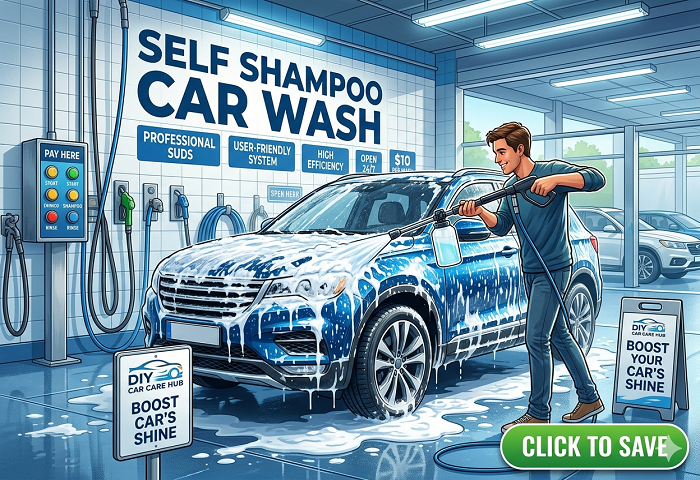
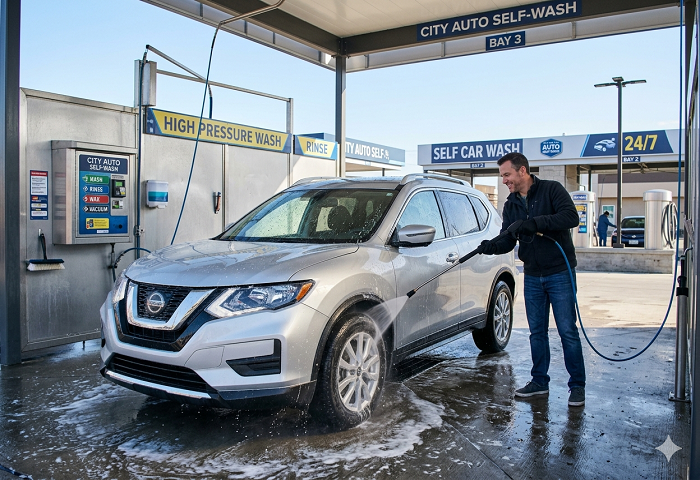
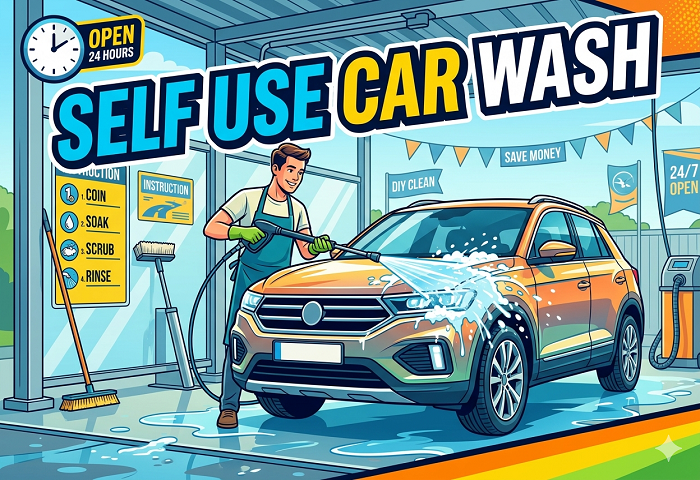
A self use car wash, often called a self-service car wash or coin-operated car wash, is a facility where you wash your own vehicle using professional-grade equipment provided on site. Unlike a full-service car wash where employees handle everything, or an automatic tunnel wash where your car rolls through a machine, a self use car wash puts you in control of the wand, the brush, and every single spray pattern.
Most self use car wash bays offer a high-pressure wand with multiple settings:
- Pre-soak / foam brush – loosens dirt and road grime before the main wash
- High-pressure soap – blasts away stubborn debris with soapy water
- Rinse – removes all soap residue completely
- Spot-free rinse – deionized water that eliminates water spots as the car dries
- Wax or tire shine – adds a protective or cosmetic finish
You typically pay by time — using coins, tokens, credit cards, or an app — and the meter keeps running while you work. Efficiency matters. But speed should never come at the cost of doing the job right.
Self Use Car Wash vs. Other Wash Methods
Before diving into technique, it helps to understand why a self use car wash often beats the alternatives.
Automatic Tunnel Wash
The automatic tunnel wash is the most convenient option, but convenience has a price. The rotating brushes and stiff cloth strips used in many tunnel washes can cause micro-scratches on your clear coat over time. Water pressure is standardized, not customized. Tight spots — wheel wells, side mirrors, door handles — are frequently missed. A self use car wash, by contrast, lets you blast every crevice with the exact pressure you choose.
Full-Service Car Wash
A full-service car wash is handled by attendants who vacuum the interior, hand-dry the exterior, and sometimes apply dressing to your tires and trim. It sounds perfect, but quality varies wildly depending on the crew’s attention and experience. Costs are also significantly higher. A self use car wash gives you the same hands-on clean at a fraction of the cost.
Washing at Home
Washing your car in your driveway with a garden hose and a bucket is the original DIY car wash experience. The problem is that a household garden hose rarely generates enough pressure to properly rinse road salt, brake dust, and embedded grime. You also run the risk of water restrictions in many municipalities. A self use car wash bay provides commercial-grade water pressure — typically 1,000 to 1,200 PSI — that simply cannot be replicated with a home hose.
Verdict
For car owners who want professional results without paying professional prices, the self use car wash is the clear winner. You get high-pressure water, quality soap, spot-free rinse options, and complete control — all for a few dollars per visit.
Step-by-Step Guide: How to Use a Self Use Car Wash
Getting the most out of a self use car wash is not complicated, but there is a right way and a wrong way. Follow these steps every single time and your car will look better than most vehicles coming out of a paid detailing service.
Step 1: Choose the Right Self Use Car Wash Bay
Not all self use car wash bays are created equal. Before you pull in, look for:
- Cleanliness of the bay floor — A well-maintained bay suggests well-maintained equipment
- Functioning meter and wand — Test the trigger before inserting money
- Adequate bay width — You need room to walk around your entire vehicle comfortably
- Spot-free rinse option — This feature alone is worth seeking out
Pull your vehicle into the center of the bay and leave enough room on both sides to comfortably maneuver the wand.
Step 2: Rinse the Entire Vehicle First
The first thing you do at any self use car wash is select the rinse or pre-soak setting and rinse your entire car from top to bottom. This accomplishes two critical things: it loosens the surface dirt and road film, and it cools down hot metal panels so that soap does not flash-dry before you can rinse it off — especially important on sunny days.
Work systematically: roof first, then hood, trunk, sides, front bumper, rear bumper, and finally the wheel wells. The wheel wells collect the heaviest concentration of brake dust and road grime, so spend extra time there.
Step 3: Apply Pre-Soak or Foam
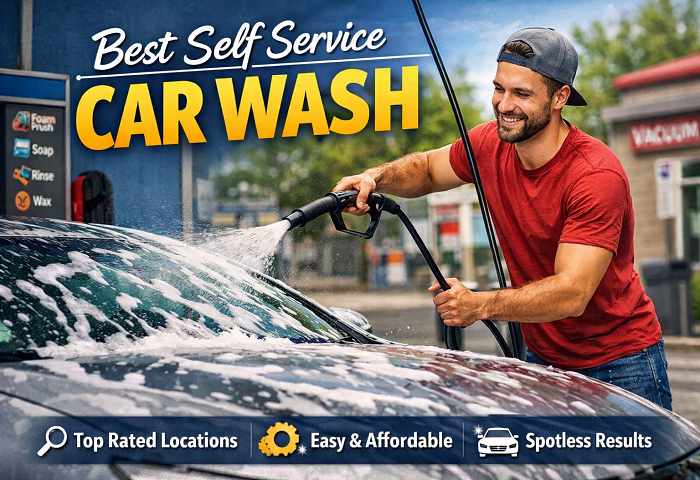
Switch to the pre-soak or foam brush setting on the self use car wash wand. Foam is your best friend. It clings to the paint surface and begins breaking down dirt chemically, which means less mechanical scrubbing required — and less chance of scratching.
Apply foam generously across all painted surfaces. Let it dwell for 30 to 60 seconds if your timer allows. Do not let it dry completely; if it begins to haze, rinse it off immediately.
Step 4: Scrub with the Foam Brush (Optional but Recommended)
Many self use car wash bays provide a large foam brush on a flexible handle. Use it. Yes, some detailing purists avoid shared brushes because they can collect sand and debris from previous users. If you are concerned, bring your own microfiber mitt and use the high-pressure soap setting as your suds source instead.
Scrub in straight, overlapping lines from top to bottom. Circular scrubbing patterns can cause swirl marks. Keep your strokes parallel and even, working section by section.
Step 5: High-Pressure Soap Rinse
Switch to the high-pressure soap setting on the self use car wash wand. Hold the wand at a consistent 12 to 18 inches from the surface — close enough for pressure to be effective, far enough to avoid paint damage on sensitive areas like decals, trim edges, and rubber seals.
Work top to bottom again. Pay special attention to:
- Door jambs — Grime loves to hide here
- Lower body panels — Road splash accumulates heavily
- Side mirrors — Often missed but always dirty
- Grille and front bumper — Bug splatter requires direct, close-range pressure
Step 6: Final Rinse
This is arguably the most important step at a self use car wash. A poor final rinse leaves soap residue behind, which drags in more dirt and leaves streaks after drying. Rinse thoroughly and methodically. Start at the roof, work down the sides, and end at the tires and wheel wells.
Use the spot-free rinse setting if available. Deionized water has the minerals stripped out, which means it evaporates cleanly without leaving hard-water deposits or water spots on your paint or glass.
Step 7: Dry Immediately
Drying is not optional. Even with a spot-free rinse, standing water can leave marks — especially in direct sunlight. Use a clean, high-quality microfiber drying towel and dry your car as soon as you exit the self use car wash bay. Drag the towel across the surface in straight lines with light pressure. Flip the towel regularly to a dry section.
Essential Gear to Bring to a Self Use Car Wash
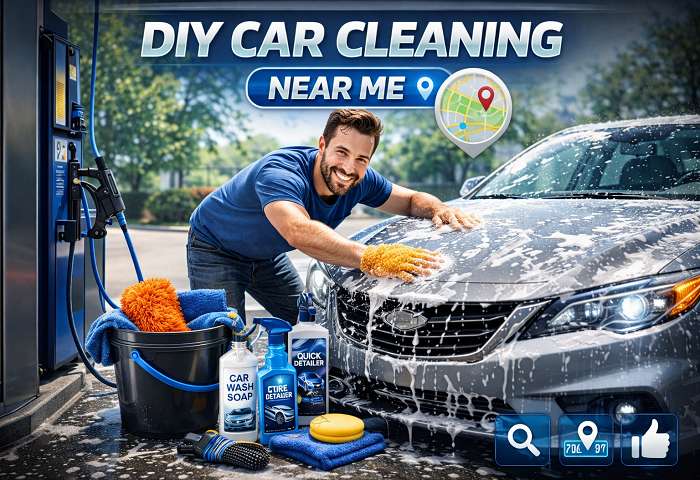
The self use car wash provides the pressure wand, water, and soap — but smart car owners bring a few items of their own to elevate the result.
Microfiber drying towels are non-negotiable. Two large waffle-weave microfiber towels are ideal. They absorb water quickly, glide without scratching, and dry far faster than traditional chamois cloths.
A separate wheel brush lets you attack brake dust in the spokes without using the shared bay brush on your paint afterward. Brake dust is chemically abrasive and cross-contaminating your wash mitt or towel with it is a common cause of scratching.
A spray detailer or quick-detailer spray is perfect for wiping down glass, trim, and bodywork immediately after the self use car wash rinse. It adds gloss, removes any missed water spots, and leaves a light layer of protection.
Tire shine or tire dressing — while many self use car wash bays offer this as a paid setting, bringing your own foam applicator and dressing gives you more coverage and a better finish than the spray-based machine option.
How Much Does a Self Use Car Wash Cost?
One of the biggest advantages of the self use car wash is the cost. Depending on your location, you can expect to pay between $2 and $8 for a thorough wash using the coin-operated or card-operated bay. Premium features like tire shine or the spot-free rinse may cost an additional $1 to $2.
Compare that to:
- Full-service car wash: $20 to $50+
- Auto detailing service: $100 to $300+
- Monthly automatic wash subscription: $20 to $50/month
Washing your car at a self use car wash twice a month costs roughly $8 to $20 — a fraction of nearly every alternative. Over the course of a year, the savings are substantial.
How Often Should You Use a Self Use Car Wash?
Most automotive experts recommend washing your car every one to two weeks under normal driving conditions. If you live in an area with heavy road salt usage in winter, park under trees that drop sap and debris, or regularly drive on unpaved roads, increase the frequency.
The key rule: do not wait until your car is visibly dirty. By the time grime becomes obvious to the eye, it has already been sitting on your paint long enough to begin etching into the clear coat. A regular visit to the self use car wash is preventive maintenance, not just cosmetic upkeep.
Common Mistakes to Avoid at a Self Use Car Wash
Even experienced car owners make these errors at a self use car wash. Avoid them and your paint will thank you.
Holding the wand too close. High-pressure water at less than six inches from the surface can damage paint, peel badges, dislodge window seals, and even strip fresh wax. Keep a safe distance, especially around edges and trim.
Skipping the pre-soak. Jumping straight to the scrub brush or high-pressure soap without a pre-soak means you are dragging dry, abrasive dirt particles across your paint. Always loosen the dirt first.
Washing in direct sunlight on a hot day. Soap dries fast on a hot surface. Work in the shade or during cooler parts of the day when visiting a self use car wash in summer.
Using the shared bay brush on your hood or roof. The shared brush at a self use car wash bay may carry sand and grit from previous users. If you use it, rinse it thoroughly with high-pressure water for 30 seconds before touching your paint.
Forgetting the undercarriage. Many self use car wash bays offer an undercarriage flush setting. Use it every time during winter or after off-road driving. Road salt on the undercarriage is one of the leading causes of rust on vehicles in cold climates.
Pro Tips for a Better Self Use Car Wash Result
These are the techniques that separate a basic wash from a genuinely great one.
Wash the tires and wheels first. Clean the dirtiest parts before you clean the painted body. That way, any overspray or splash from the wheel wells does not re-contaminate panels you have already washed.
Use the two-bucket method if you bring your own mitt. Fill one bucket with soapy water and one with clean rinse water. Dip your mitt in soapy water, wash a panel, rinse the mitt in clean water before reloading with soap. This single habit dramatically reduces swirl marks.
Work section by section. Do not try to soap the entire car at once, especially in warm weather. Soap one section, rinse it, move to the next. This prevents soap from drying on the surface before you can rinse it.
Finish with a spray wax or sealant. After drying your car post self use car wash, apply a spray wax or paint sealant for 10 minutes of extra protection. Modern spray sealants provide two to three months of water beading and UV protection with almost no effort.
The Environmental Side of Self Use Car Wash
Here is a fact that surprises most people: a professional self use car wash is significantly more environmentally friendly than washing your car at home. Residential washing sends soapy, chemical-laden runoff directly into storm drains, which often flow to rivers, streams, and lakes untreated.
Commercial self use car wash facilities are required by law in most regions to route all runoff water into sanitary sewer systems where it is treated before being released. Many modern bays also recycle water to reduce total consumption. Choosing a self use car wash over your driveway is not just a practical choice — it is an environmentally responsible one.
Finding the Best Self Use Car Wash Near You
The easiest way to locate a quality self use car wash is through Google Maps or a dedicated car wash finder app. Search “self use car wash near me” or “self-service car wash bay” and filter by ratings. Look for locations with consistent four-star reviews or higher, comments about clean bays and functional equipment, and recent activity.
Some self use car wash operators now offer loyalty programs, app-based payment, and even real-time bay availability — features that make the entire experience more convenient. If you find a bay you trust, stick with it. Consistency in your car care routine produces the best long-term results for your vehicle’s paint and finish.
Maintaining Your Car Between Self Use Car Wash Visits
A clean car stays cleaner longer when you develop a few simple habits between self use car wash visits.
Keep a quick-detail spray and a microfiber cloth in your car at all times. Bird droppings, tree sap, and bug splatter should be removed as soon as possible — ideally within hours. Left on the surface, they become acidic and begin etching through the clear coat.
Apply a spray wax or ceramic spray coating every four to six weeks to maintain a hydrophobic surface that repels water, dust, and light grime. A well-protected surface needs less frequent deep washing and responds better to the self use car wash process when you do go.
Park in covered or shaded areas whenever possible. UV radiation degrades clear coat, oxidizes paint, and dries out rubber trim. The less direct sun exposure your car gets, the longer its finish will last between washes.
Conclusion
The self use car wash is one of the most practical, affordable, and effective ways to keep your vehicle looking its best. It offers professional-grade water pressure, quality cleaning products, and complete personal control — all without an appointment, without waiting, and without the steep price tag of full-service detailing.
Whether you are a first-time visitor to a coin-operated car wash bay or a seasoned weekend detailer looking to sharpen your technique, the principles in this guide apply every time. Pre-soak before you scrub. Rinse thoroughly. Dry immediately. Protect what you have cleaned. Come back regularly.
Your car is one of the most significant investments you will ever make. A consistent self use car wash routine is one of the simplest and most cost-effective ways to protect that investment, preserve your resale value, and honestly — drive something you are genuinely proud of every single day.
Start your next self use car wash visit with this guide in mind, and the difference will be immediately visible.