Introduction
The wrong brush can turn a simple car wash into an expensive paint correction job. That’s not an exaggeration — using the wrong car wash brush is one of the leading causes of swirl marks and micro-scratches on vehicle paint.
The good news? Choosing the right car wash brush — and knowing how to use it correctly — is simpler than most people think. This guide covers every type of car wash brush available in 2026, what features actually matter, which ones to avoid, and how to get a flawless, scratch-free clean every single time.
Why the Right Car Wash Brush Makes All the Difference
Most car owners underestimate how abrasive the washing process can be. Even clean-looking water carries microscopic dirt particles, and dragging them across paint with a stiff or low-quality brush creates the fine scratches that dull a car’s finish over time.
A high-quality car wash brush with the right bristle material and design:
- Lifts and encapsulates dirt particles rather than dragging them
- Glides across paint without applying abrasive pressure
- Reaches tight areas that wash mitts can’t access — wheel wells, door jambs, grilles
- Speeds up the washing process significantly on larger vehicles
Investing in the right tool upfront saves far more on paint correction and detailing costs down the road.
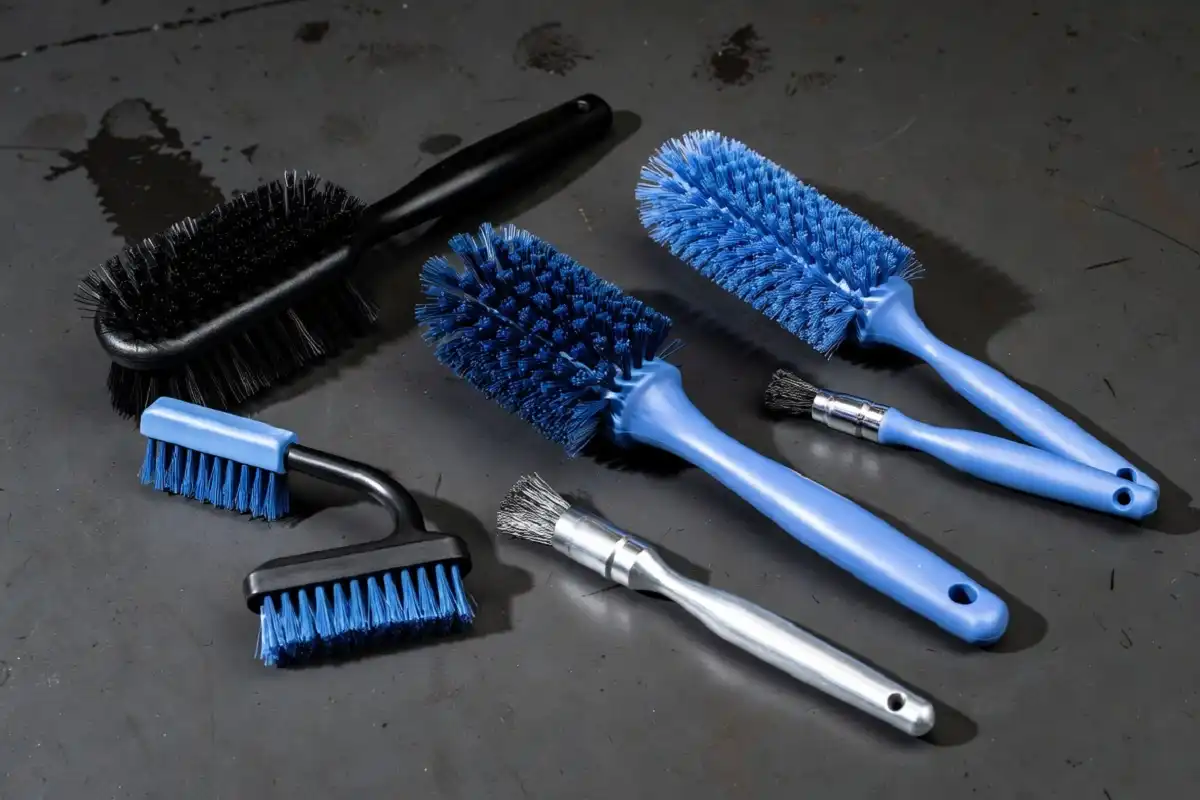
Types of Car Wash Brushes Explained
Not all car wash brushes are the same. Understanding the main types helps you choose the right one for your specific needs.
1. Soft Bristle Car Wash Brush
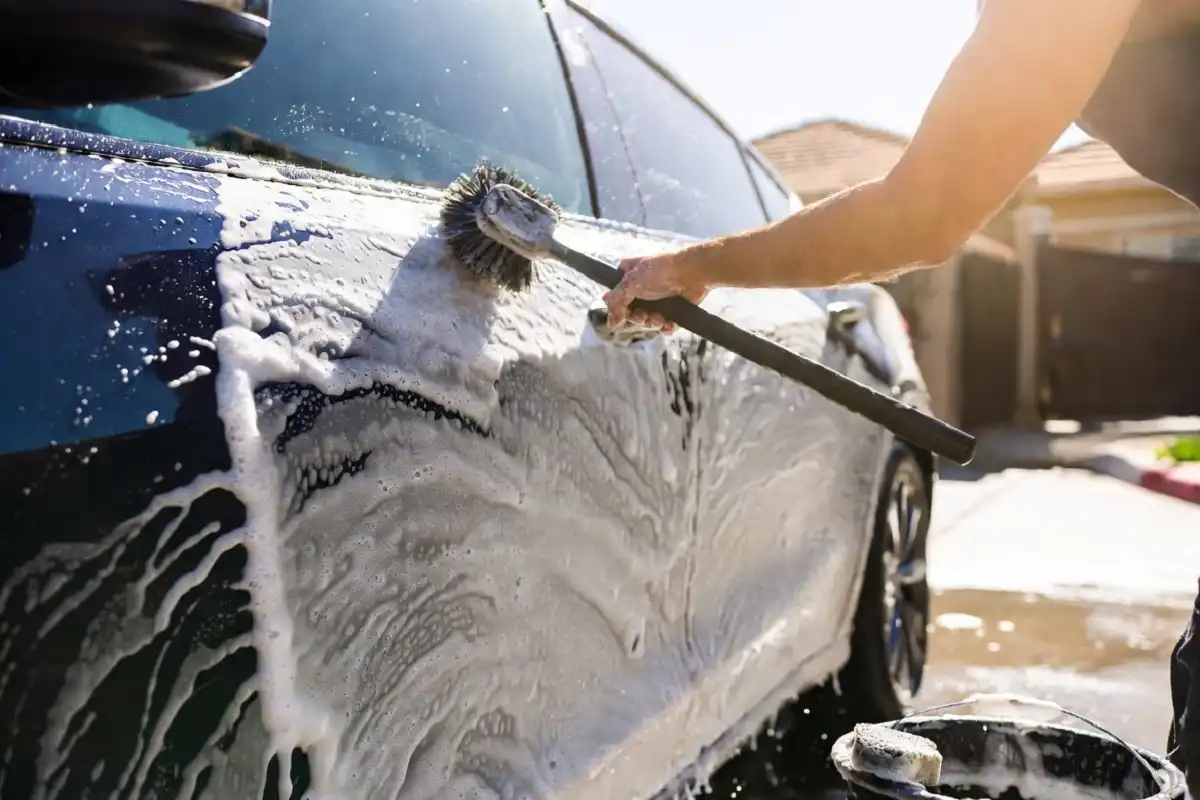
This is the most popular and paint-safe option for washing vehicle body panels. Soft bristle brushes — typically made from microfiber, boar hair, or synthetic soft fibers — are gentle enough for clear coats while still being effective at removing dirt and grime.
Best for: Body panels, roofs, hoods, doors What to look for: Ultra-soft bristle tips, dense bristle fill, ergonomic handle
2. Wheel and Tire Brush
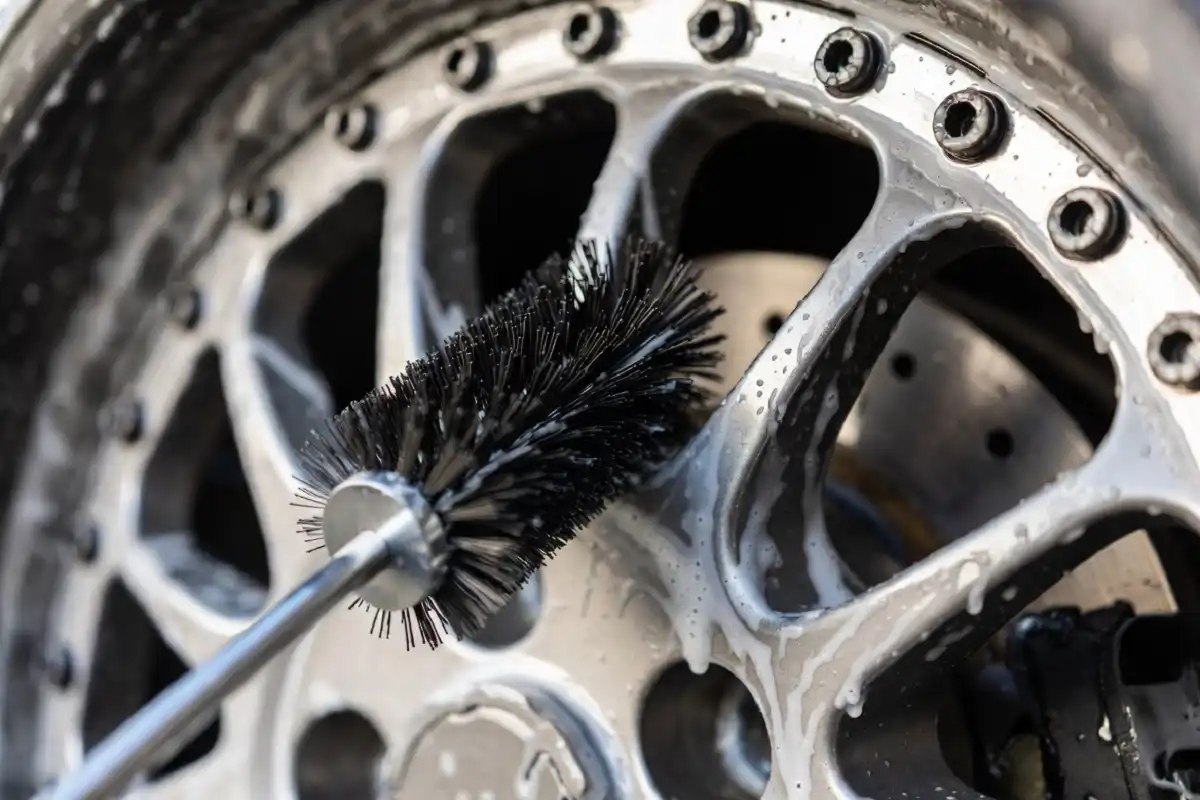
Wheels accumulate brake dust, road grime, and tar — the toughest deposits to clean. Dedicated wheel brushes use stiffer bristles (safe for metal wheels) and are specifically shaped to reach between spokes.
Best for: Alloy wheels, steel rims, tire sidewalls What to look for: Chemical-resistant bristles, slim barrel design for spoke access, non-scratch core
3. Long-Handle Car Wash Brush
For SUVs, trucks, and vans — or anyone who wants to wash without bending or stretching — a long-handle car wash brush with an extendable pole is a practical essential. Many attach to a standard garden hose for flow-through water delivery.
Best for: Rooftops, tall vehicles, full-body reach without ladders What to look for: Telescoping handle (4–6 feet), lightweight design, flow-through water valve
4. Flow-Through Water-Fed Brush
These brushes connect directly to a garden hose or pressure washer, delivering soap and water through the handle and out through the bristles. This constant flow keeps dirt moving away from the paint surface rather than building up in the brush — significantly reducing scratch risk.
Best for: Efficient full-body washing, reducing recontamination What to look for: Leak-proof connections, adjustable flow, compatible with foam soap
5. Detailing and Crevice Brush
Small, narrow brushes designed for tight spaces — vents, badges, trim lines, lug nuts, and door handles. These aren’t for washing panels but are indispensable for a thorough detail.
Best for: Interior vents, exterior trim, grille openings, badges What to look for: Fine, soft bristles for interior use; firmer bristles for exterior crevices
Key Features to Look For in a Car Wash Brush
When comparing car wash brushes, these are the features that separate a quality tool from one that will damage your paint:
Bristle Material
- Microfiber bristles — softest option, excellent water absorption, lowest scratch risk
- Boar hair bristles — naturally soft, traditional detailing choice
- Synthetic nylon — durable but variable — only safe if bristle tips are flagged (split ends that prevent scratching)
- Stiff nylon or plastic — avoid for paint; fine for tires and wheels only
Handle Design
- Non-slip grip is essential — wet hands + slippery handle = dropped brush on paint
- Ergonomic angle helps reach across panels without awkward wrist positioning
- Flow-through handles add convenience but require hose compatibility
Brush Head Size
- Larger heads (4–6 inch width) cover more surface area per stroke — faster washing
- Smaller heads (2–3 inch width) are better for detail work and tight areas
Durability and Maintenance
- Bristles should be rust-proof if they have a metal core
- Removable brush heads make cleaning easier and extend product life
- UV-resistant materials prevent handle degradation from sun exposure
How to Use a Car Wash Brush Without Scratching Your Paint
Even the best car wash brush can cause damage if used incorrectly. Follow this process for a safe, scratch-free wash every time.
Step 1: Pre-Rinse Thoroughly
Before any brush touches your car, rinse the entire vehicle with a strong stream of water. This removes loose dirt and debris — the main culprits of brush-induced scratches.
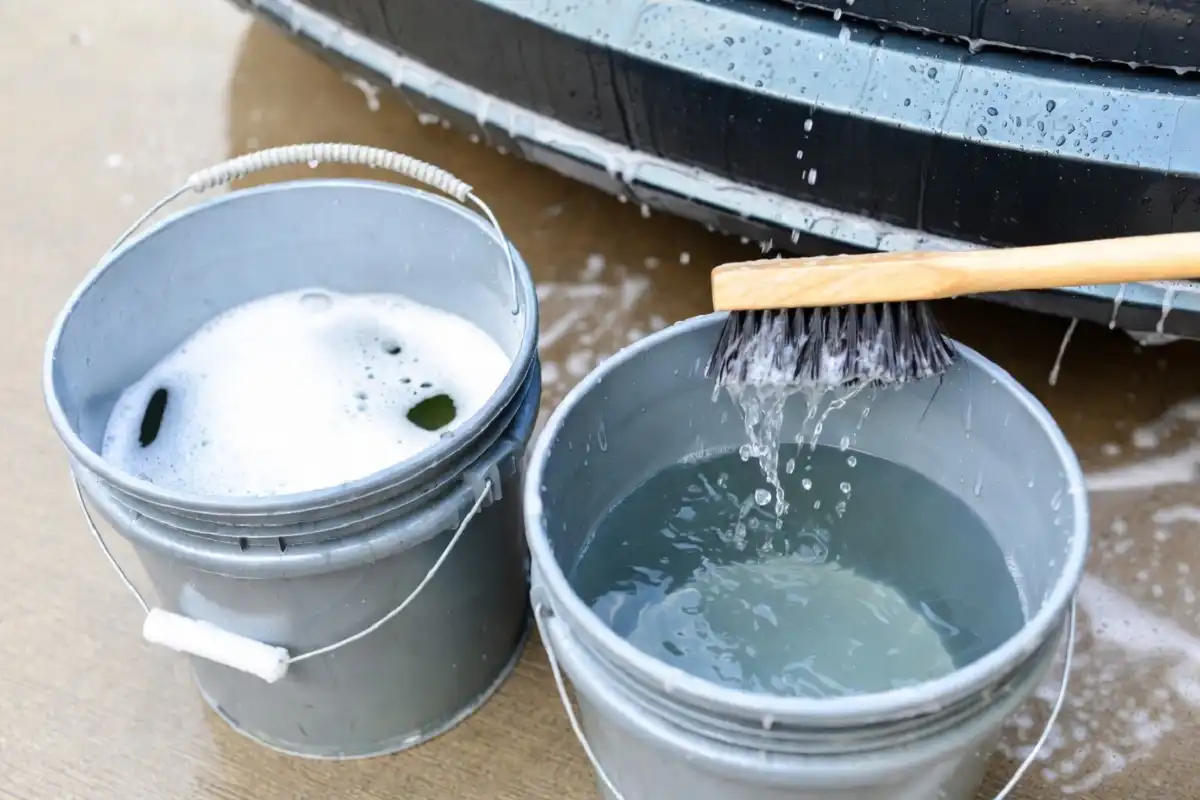
Step 2: Use the Two-Bucket Method
Fill one bucket with soapy water and a second with clean rinse water. After each pass with the brush, rinse it in the clean bucket before reloading with soap. This prevents dirt from transferring back to the paint.
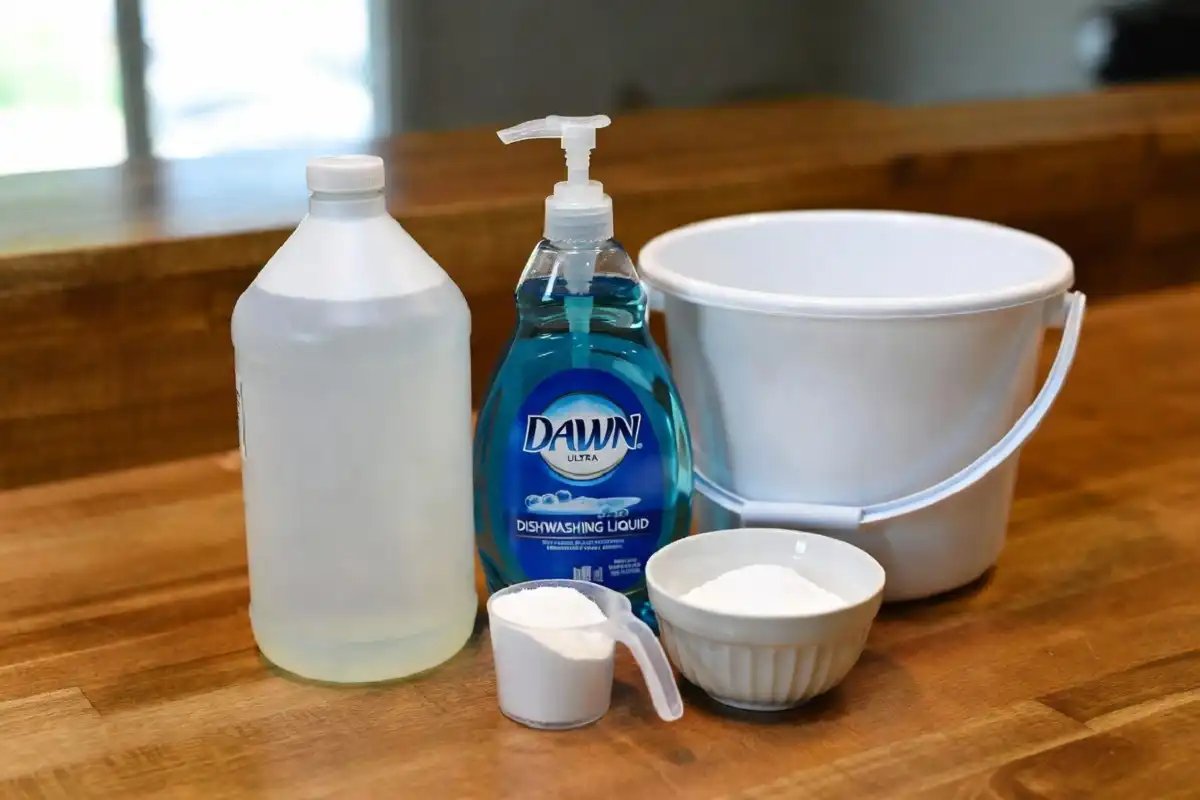
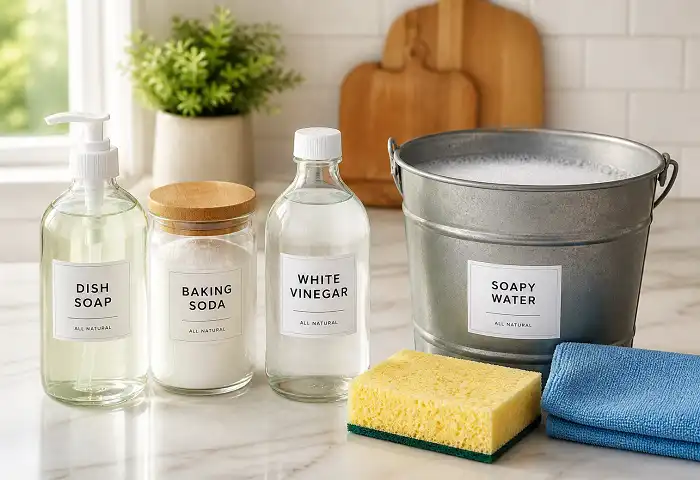
For the best soap ratios and DIY soap options, check out this complete guide to homemade car wash soap with vinegar — an effective, budget-friendly alternative to commercial products.
Step 3: Work Top to Bottom
Always start at the roof and work downward. Dirt runs down — if you start at the bottom and move up, you’ll drag lower-panel grime across already-clean upper sections.
Step 4: Use Light, Overlapping Strokes
Let the soap and bristles do the work. Pressing hard doesn’t clean better — it just pushes grit into the clear coat. Use light, straight strokes rather than circular scrubbing motions.
Step 5: Rinse the Brush Frequently
Every 2–3 passes, rinse your brush in the clean-water bucket. Dirt accumulation in bristles is the number one cause of wash-related scratches.
Step 6: Final Rinse and Dry
Rinse the car completely from top to bottom with a strong, clean stream. Then dry immediately with a clean microfiber drying towel to prevent water spots.
For a full walkthrough of the wash process from start to finish, this guide on how to wash a car the right way covers every step in detail.
Car Wash Brush vs. Wash Mitt: Which Is Better?
This is one of the most common questions in car care — and the honest answer is: it depends.
| Feature | Car Wash Brush | Wash Mitt |
|---|---|---|
| Reach and access | ✅ Excellent (tight areas) | ❌ Limited |
| Paint safety | ✅ High (with soft bristles) | ✅ Very high |
| Wheel cleaning | ✅ Purpose-built options | ❌ Not ideal |
| Large panel speed | ✅ Fast with large head | ✅ Also fast |
| Beginner-friendliness | ✅ Easy to control | ✅ Very easy |
| Cost | Mid–high | Low–mid |
For most car owners, the ideal approach uses both: a soft wash mitt for body panels and a dedicated car wash brush for wheels, tires, crevices, and hard-to-reach areas. Together, they cover every inch of the vehicle safely.
If you’re building out your full wash toolkit, this guide to a complete car cleaning kit for professional results covers every tool worth having in one place.
Top Car Wash Brush Recommendations for 2026
Here are the categories where specific brush types consistently earn top marks from detailers:
Best Overall Soft Body Brush
Look for microfiber-tipped brushes with dense, flagged bristles and a flow-through handle. Brands like Chemical Guys, Mothers, and Griot’s Garage consistently lead in independent detailer reviews for paint-safe soft brushes.
Best Wheel Brush
A slim barrel brush (around 2 inches wide) with chemical-resistant bristles and a long handle reaches between spokes without scratching alloy finishes. EZ Detail Brush and Wheel Woolies are widely regarded as best-in-category.
Best Long-Handle Brush for Trucks/SUVs
A telescoping handle extending to at least 5 feet with a flow-through water valve is the key spec. The Carrand and DocaPole systems are popular for their durability and spray control.
Best Budget Option
For budget-conscious buyers, a basic soft-bristle brush with a non-slip handle from any major automotive retailer (AutoZone, Advance Auto Parts, Amazon Basics) performs adequately when paired with proper two-bucket technique.
According to Consumer Reports’ car care guide, using the correct washing tools is one of the most impactful steps a car owner can take to preserve paint finish and long-term vehicle value.
Mistakes to Avoid When Using a Car Wash Brush
Even experienced washers make these errors:
- Using a dry brush — always pre-wet both the brush and the car surface before contact
- Reusing a brush without rinsing — loaded bristles turn the brush into sandpaper
- Using wheel brushes on paint — stiffer wheel bristles will scratch clear coat
- Skipping the pre-rinse — loose grit is the enemy; always rinse first
- Circular scrubbing motions — straight strokes are safer and more effective
- Leaving brush in direct sun between uses — UV degrades bristles and handles over time
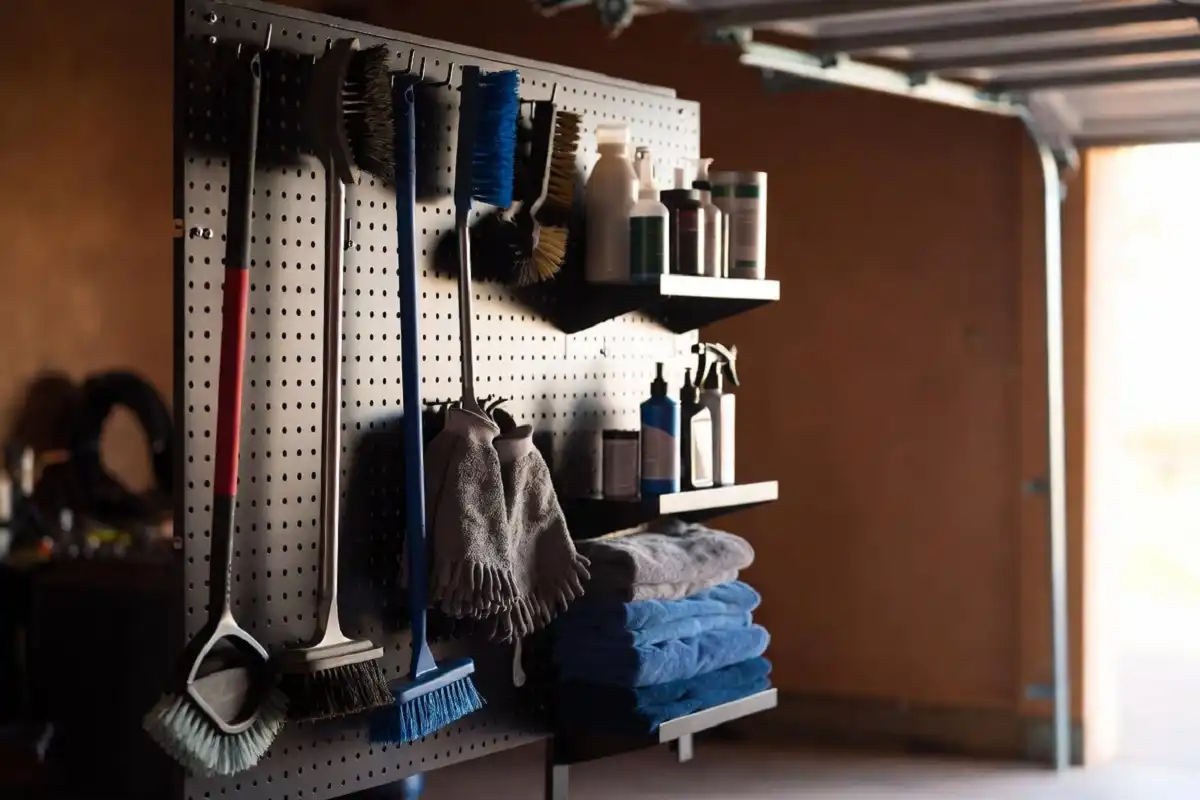
Caring for Your Car Wash Brush
A well-maintained car wash brush lasts years. Here’s how to keep it performing:
- Rinse thoroughly after every use — soap and mineral deposits degrade bristles
- Air dry completely before storing — moisture trapped inside leads to mildew and odor
- Store away from direct sunlight — UV breaks down both synthetic and natural bristles
- Replace when bristles deform — flattened or frayed bristles lose their dirt-lifting ability and become abrasive
For broader DIY car care habits that extend both your tools and your vehicle’s finish, explore these self-service car wash tips that get real results.
FAQ: Car Wash Brush
Can a car wash brush scratch paint?
Yes — if the wrong type is used or proper technique isn’t followed. A stiff-bristled brush, or any brush used without adequate lubrication and rinsing, can cause micro-scratches and swirl marks. Always use a soft bristle car wash brush with plenty of soapy water and light pressure.
What is the safest type of car wash brush for paint?
Microfiber-tipped or boar hair bristle brushes are the safest options for painted surfaces. These materials are soft enough to glide over clear coat without causing abrasion when used correctly with the two-bucket method.
Is a car wash brush better than a wash mitt?
Both have their place. A car wash brush excels at reaching tight areas and cleaning wheels, while a wash mitt offers excellent coverage for large flat panels. Using both together gives the most thorough and safe result.
Can I use a car wash brush on my wheels?
Yes — but use a dedicated wheel brush, not the same brush used on body panels. Wheel brushes are designed to handle brake dust and road tar with stiffer bristles that would scratch paint if used on car panels.
How often should I replace my car wash brush?
Replace your car wash brush when bristles begin to flatten, fray, or feel rough. With proper care — thorough rinsing and dry storage — a quality brush typically lasts 1–3 years of regular use.
What soap should I use with a car wash brush?
Use a dedicated pH-neutral car wash shampoo — never dish soap or household cleaners, which strip protective wax and sealants. If you prefer a DIY option, this guide on homemade car wash soap outlines safe and effective formulas.
Conclusion: The Right Car Wash Brush Changes Everything
A quality car wash brush isn’t just a convenience — it’s protection for one of your most significant investments. The right brush, combined with the right technique, means every wash preserves your paint rather than degrading it.
Key takeaways from this guide:
- Choose soft, microfiber or boar hair bristles for body panels
- Use a dedicated wheel brush — never mix with paint brushes
- Follow the two-bucket method and always pre-rinse
- Work top to bottom with light, straight strokes
- Rinse and dry your brush properly after every use
Ready to upgrade your wash routine? Start with a quality soft body brush and a dedicated wheel brush — the two tools that make the biggest immediate difference. And when you’re ready to build out your full setup, explore the complete car cleaning kit guide to find every tool a serious DIY washer needs.
Your car’s paint will thank you.