Introduction
Dirt, grime, and bird droppings are your car’s worst enemies — and a proper wash is your best weapon. Whether you’re prepping for a weekend drive or just tired of that dusty windshield, knowing how to wash a car correctly can save you money and keep your paint looking factory-fresh.
In this guide, you’ll learn the exact step-by-step process professionals use, the right tools to grab, mistakes to avoid, and some budget-friendly DIY soap options that actually work. By the time you finish reading, you’ll know exactly how to wash a car the right way — every single time.
Why Learning How to Wash a Car Properly Matters
Most people think a car wash is just soap and water. But improper washing is one of the leading causes of paint swirls, scratches, and premature dullness. Using the wrong technique — or the wrong products — can do more damage than the dirt itself.
When you understand how to wash a car the right way, you protect your investment on multiple levels:
- Protects the clear coat and paint finish
- Prevents rust caused by road salt and debris
- Keeps your vehicle’s resale value higher
- Gives you that satisfying showroom shine every time
What You’ll Need Before You Start
Before you touch a sponge, gather your supplies. Having everything ready makes the process faster and prevents you from cutting corners halfway through.
Essential Tools & Supplies
- Two buckets (one for soapy water, one for rinsing)
- Car wash soap (not dish soap — more on this below)
- Microfiber wash mitt or soft sponge
- Microfiber drying towels
- Wheel brush
- Garden hose or pressure washer
- Car wax or sealant (optional but recommended)
If you’re building your kit from scratch, check out this comprehensive car cleaning kit to detail your car like a pro — it covers everything you need without overspending.
Pro Tip: Always wash your car in the shade. Direct sunlight dries soap too fast, leaving stubborn water spots and streaks.
Step-by-Step: How to Wash a Car at Home
Follow these seven steps carefully. This is the exact method professional detailers use, and it’s the safest, most effective way how to wash a car without causing scratches or swirl marks.
Step 1: Rinse the Entire Car First
Start by rinsing the whole vehicle with a hose or pressure washer. This loosens surface dirt and prevents large particles from scratching the paint when you start scrubbing.
Work top to bottom — roof first, then windows, hood, doors, and finally the lower panels and wheels. Gravity is your friend here.
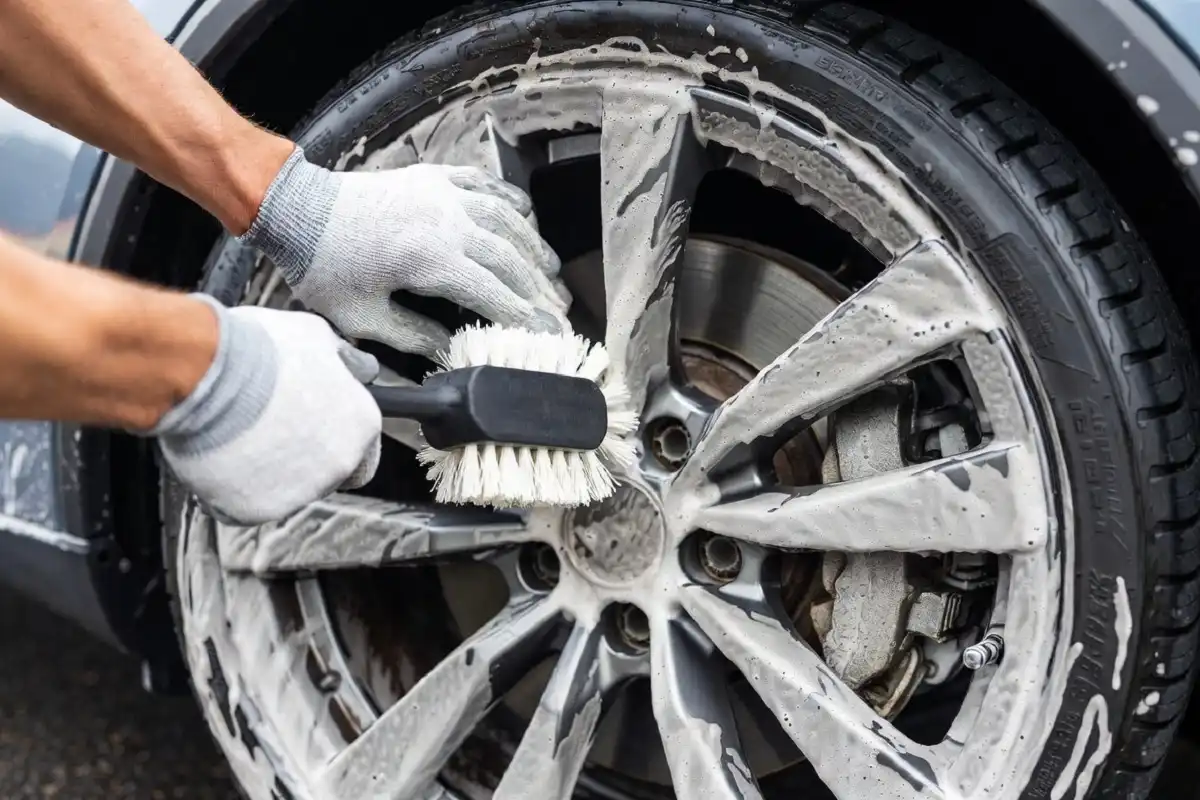
Step 2: Clean the Wheels First
Wheels and tires are the dirtiest parts of your car. Clean them first so brake dust and grime don’t splash onto the panels you’ve already washed.
- Use a dedicated wheel brush and wheel cleaner
- Scrub the rims, spokes, and wheel wells thoroughly
- Rinse completely before moving on
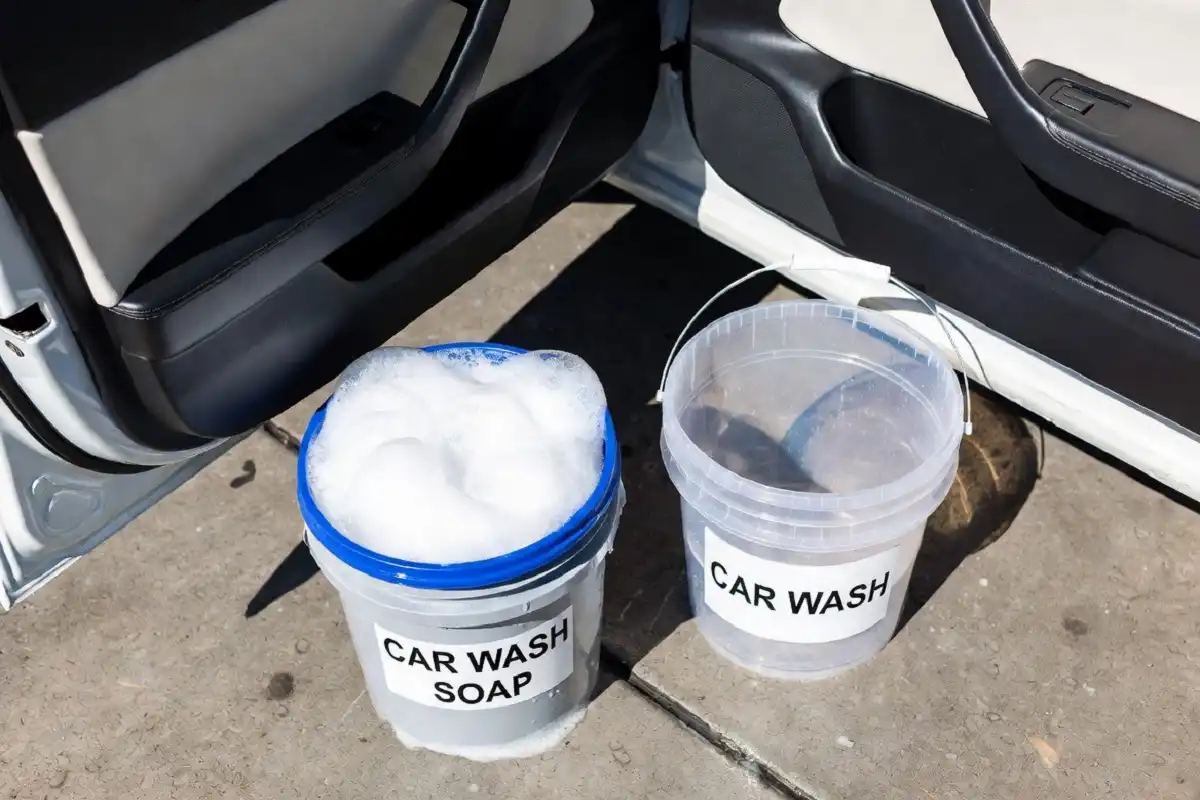
Step 3: Fill Your Two Buckets
The two-bucket method is the single biggest upgrade most home washers can make. Here’s how it works:
- Bucket 1: Clean soapy water for washing
- Bucket 2: Plain water for rinsing your mitt
After each panel, rinse your mitt in Bucket 2 before dipping it back into Bucket 1. This stops dirt from recycling back onto your car — the main cause of wash-induced scratches.
Step 4: Wash Panel by Panel
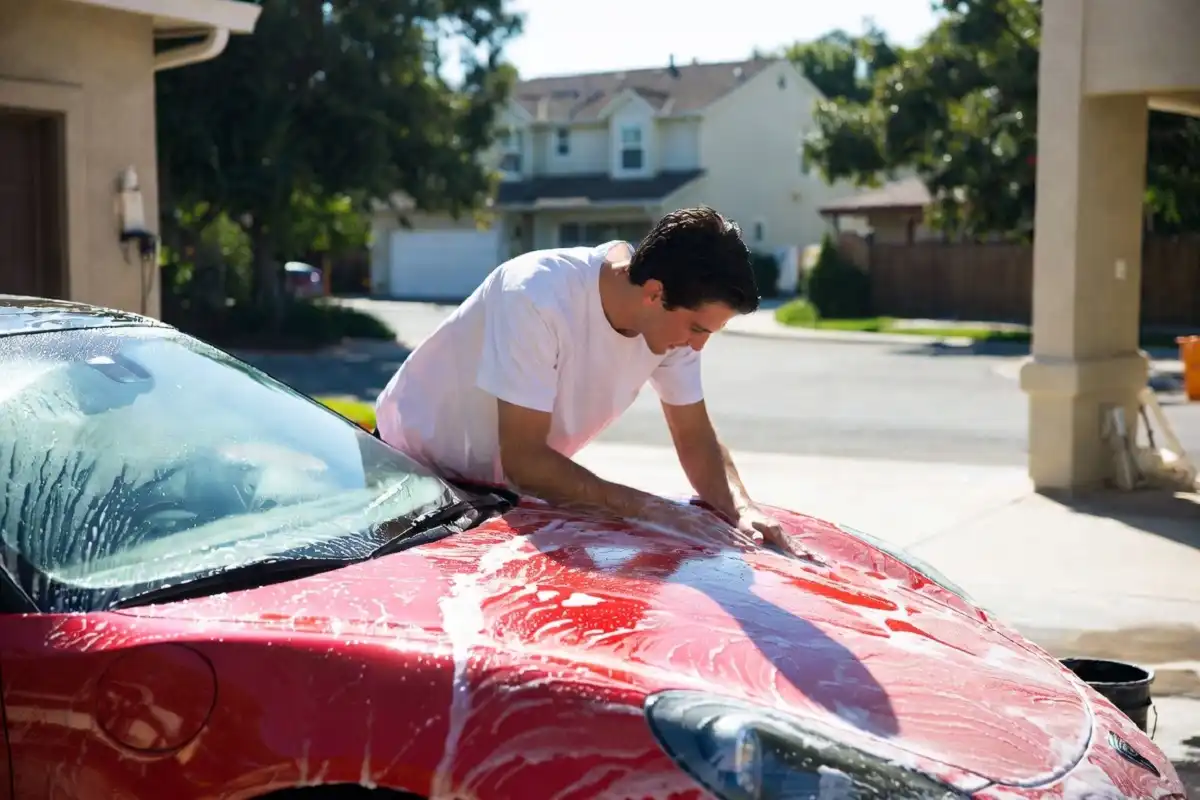
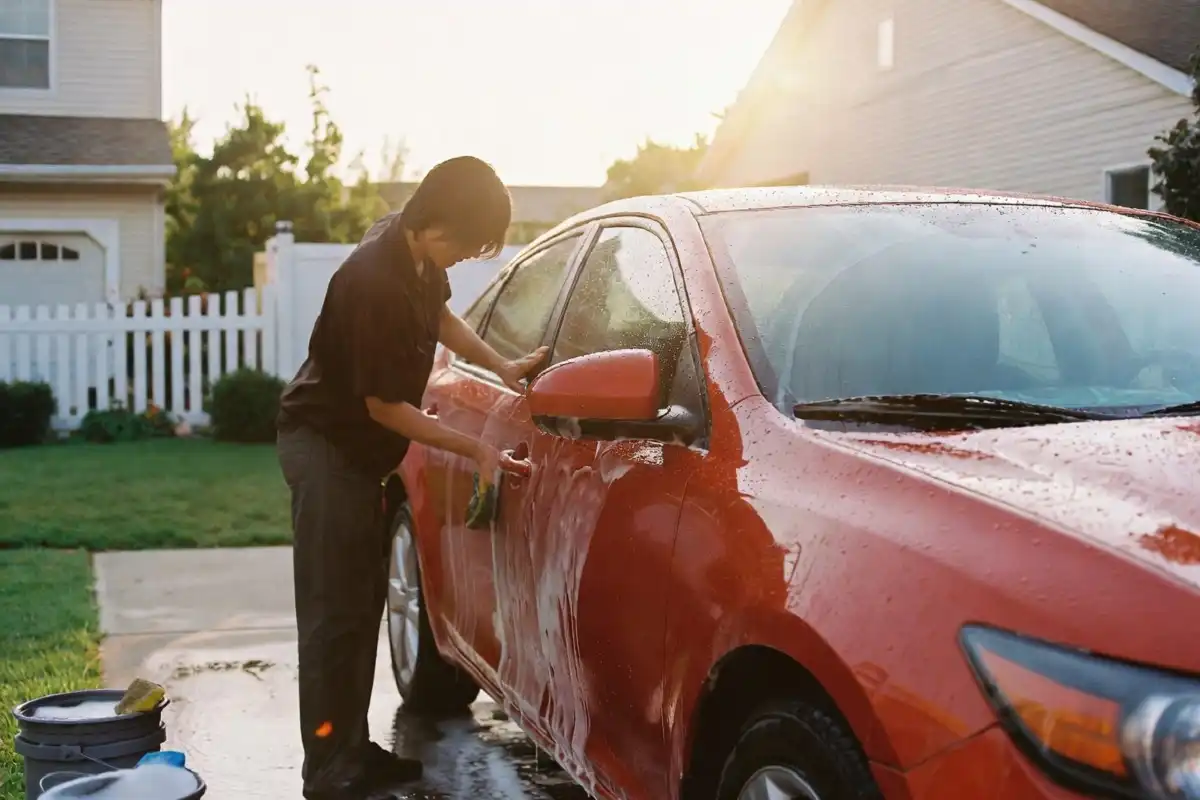
Now it’s time to actually wash the car. Use your soapy mitt and work in straight lines, not circles. Circular motions create swirl marks in the paint under sunlight.
Work section by section:
- Roof
- Hood and trunk
- Upper doors and windows
- Lower doors and rocker panels
- Front and rear bumpers
Rinse each section before the soap dries. Keep both the car and your mitt wet throughout the process.
Step 5: Final Full Rinse
Once you’ve washed every panel, do a complete final rinse from top to bottom. Make sure no soap residue remains — dried soap leaves streaks and can damage paint over time.
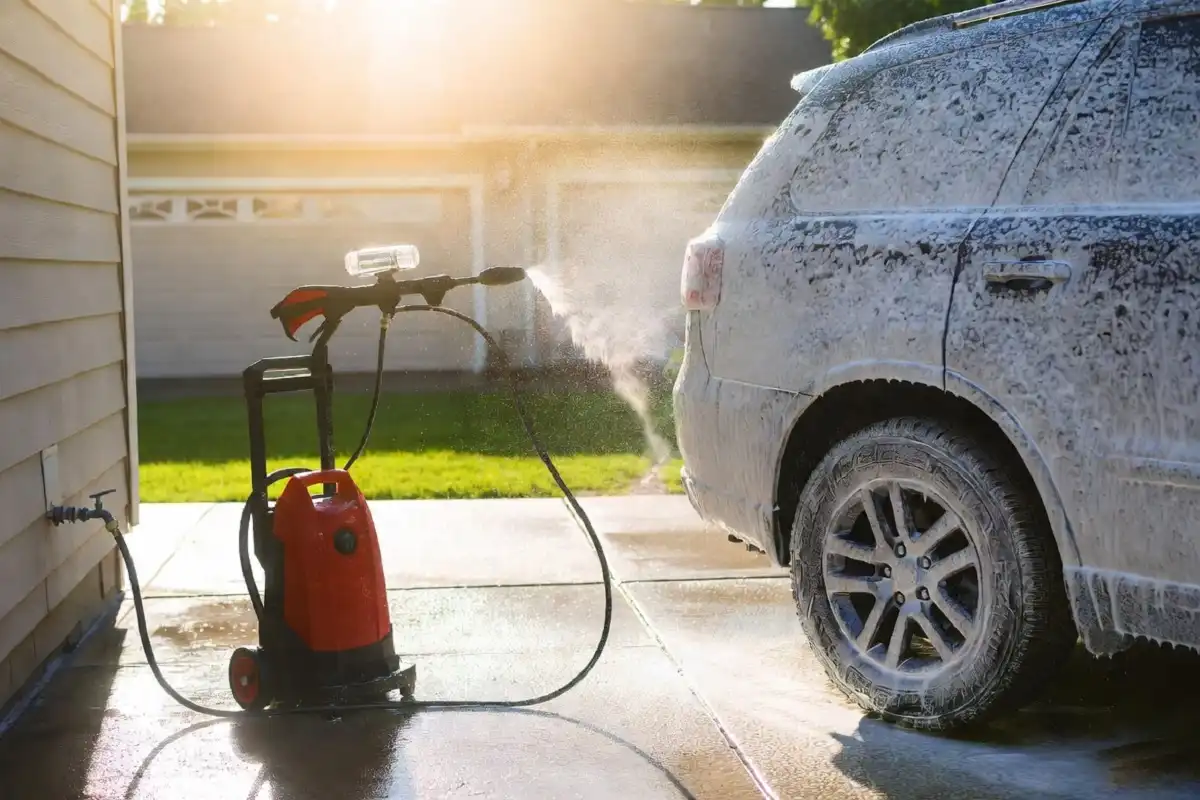
If you have a pressure washer at home, it makes rinsing much faster and more thorough. For guidance, see our roundup of the best car wash machines for home use.
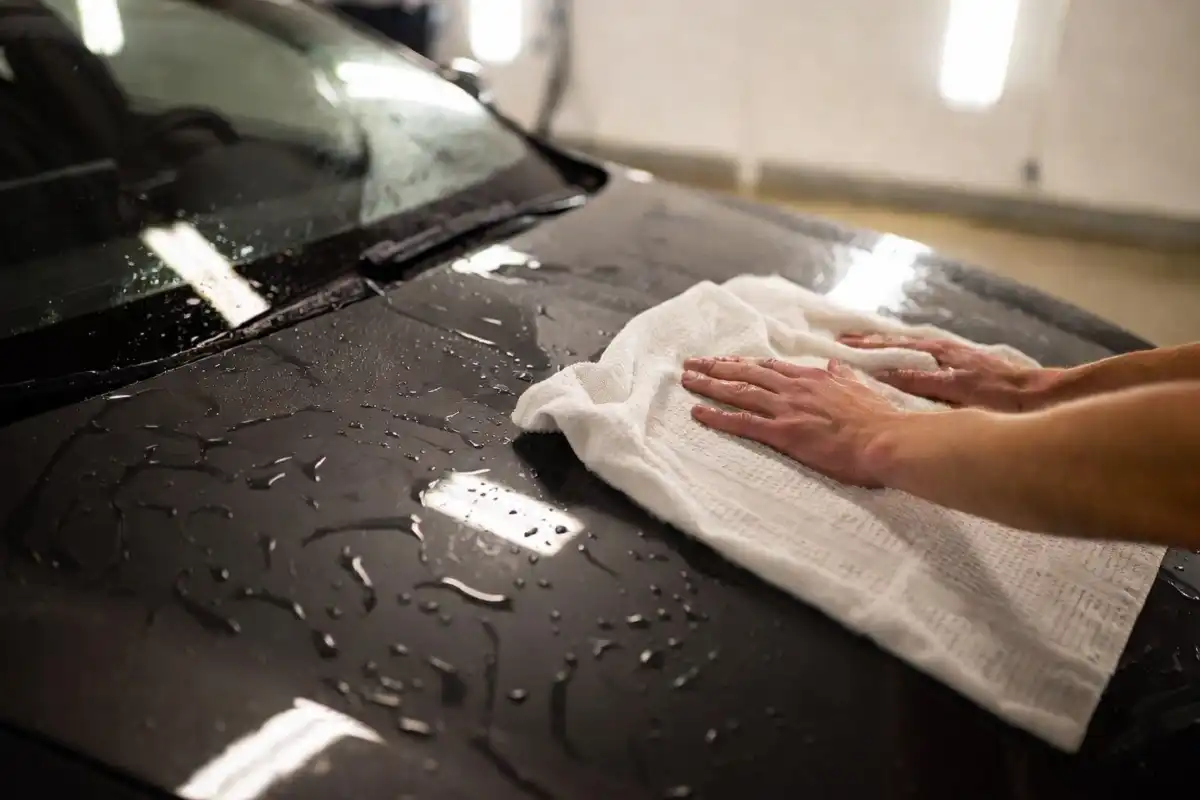
Step 6: Dry Immediately
This step is non-negotiable. Never let your car air dry — it leaves mineral deposits and water spots, especially in areas with hard water.
Use a clean microfiber drying towel and pat or drag gently across the surface. Avoid rubbing aggressively. Start from the roof and work your way down.
For large vehicles, a leaf blower on a low, warm setting is a game-changer for blasting water out of door seams and mirrors.
Step 7: Apply Wax or Sealant (Optional but Recommended)
This is the finishing touch that transforms a clean car into a gleaming one. Wax adds a protective layer over the clear coat, making future washes easier and protecting against UV damage.
Apply a thin, even coat with an applicator pad, let it haze, and then buff off with a clean microfiber cloth. If you prefer a DIY option, explore these homemade car wax recipes that use natural ingredients.
Choosing the Right Soap When You Wash a Car
The soap you use matters more than you’d think. Here’s a quick breakdown:
| Soap Type | Safe for Paint? | Best For |
|---|---|---|
| Dedicated car wash soap | ✅ Yes | Regular washing |
| Dish soap | ❌ No | Strips wax, dries rubber |
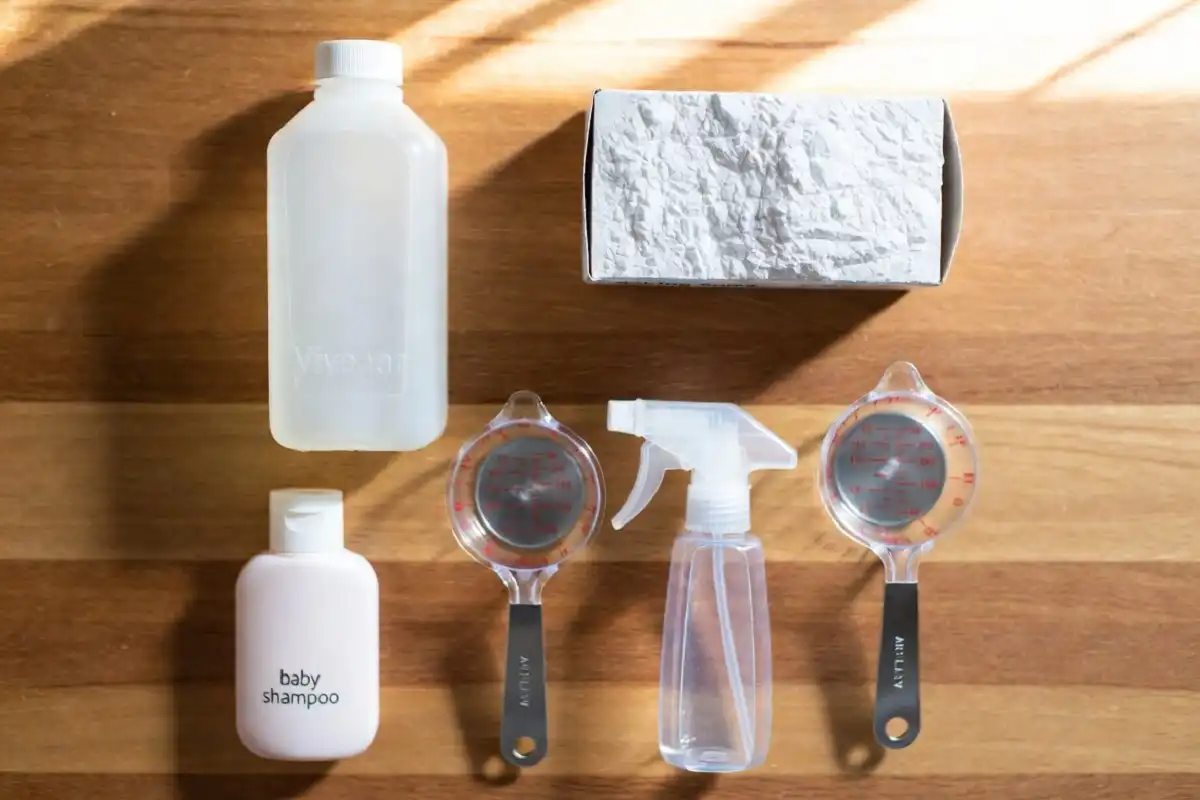
| Baby shampoo | ⚠️ Sometimes | Very gentle, occasional use |
| DIY/homemade soap | ✅ If made right | Budget-conscious washing |
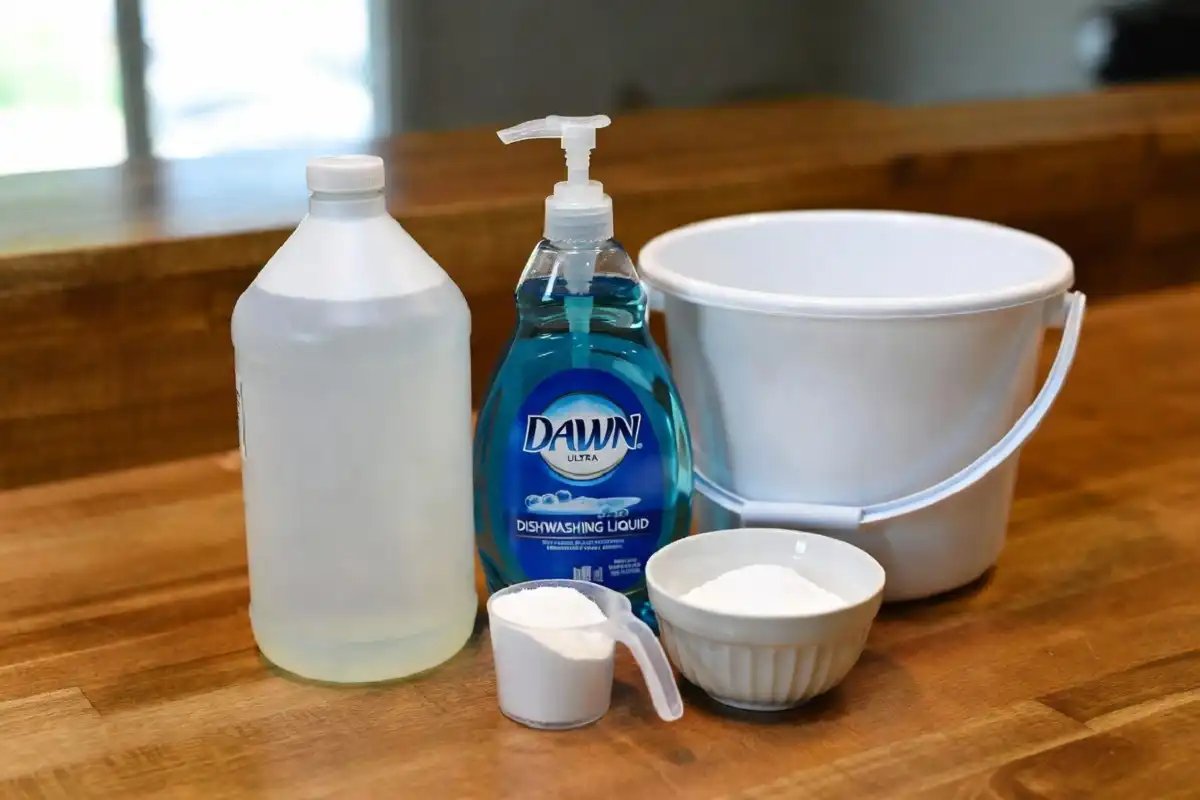
Avoid dish soap — it strips wax and can dry out rubber seals over time. If you’re wondering whether natural additives help, you might be curious: does vinegar in car wash soap really work? The answer might surprise you.
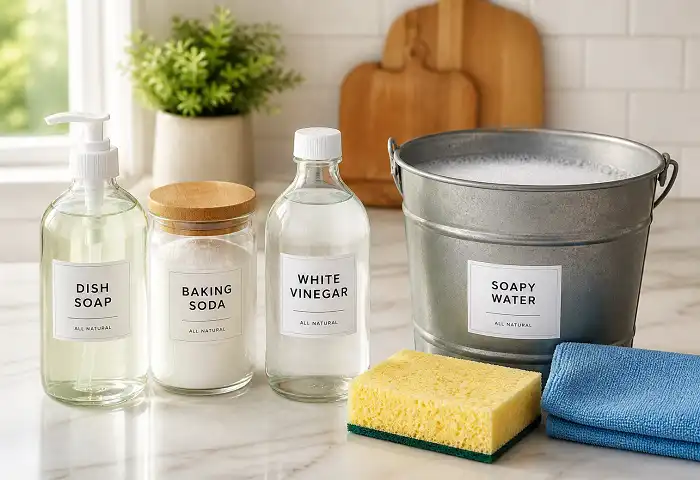
For a completely budget-friendly approach, there are excellent homemade car wash soap recipes you can make at home with safe, effective ingredients.
Common Mistakes People Make When They Wash a Car
Even experienced DIYers get this wrong. Before you grab your bucket again, make sure you’re not committing these errors. Understanding how to wash a car isn’t just about technique — it’s also about knowing what NOT to do.
- Using one bucket — Recycling dirty water back onto your paint is a fast track to scratches
- Washing in direct sunlight — Soap dries before you rinse, leaving spots and residue
- Using old rags or bath towels — These scratch paint. Always use microfiber
- Neglecting door jambs — Dirt hides here and causes rust over time
- Skipping the pre-rinse — Scrubbing dry dirt = guaranteed micro-scratches
- Using too much pressure up close — Pressure washers held too close can damage paint and seals
How Often Should You Wash a Car?
According to Kelley Blue Book, washing your car every two weeks is the standard recommendation for most climates. But frequency depends on your driving conditions:
- Weekly — if you drive on salty roads, dusty areas, or park under trees
- Monthly — if your car is garaged and lightly used
- After every rain/snow — road salt is corrosive and should be rinsed off quickly
The AAA also recommends washing the undercarriage regularly during winter months to prevent rust from road salt buildup. Knowing how to wash a car thoroughly — including the underside — makes a real difference in longevity.
How to Wash a Car at a Self-Service Bay vs. at Home
Both options have their place, depending on your situation and how much time you have.
Washing at Home Is Better When:
- You want full control over every product used
- You’re waxing, claying, or doing a full detail
- You have the time, space, and proper tools
Self-Service Car Wash Is Better When:
- You don’t have outdoor space at home
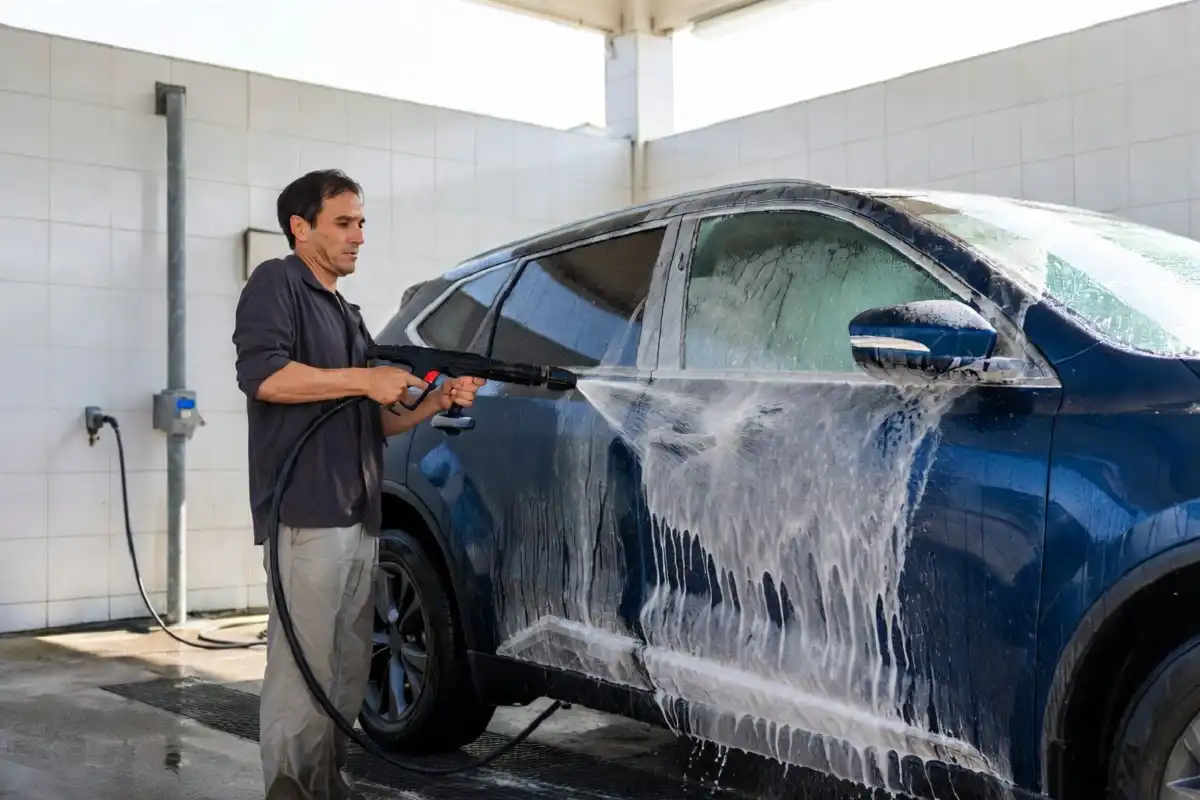
- You want high-pressure equipment without the investment
- You need a quick but thorough rinse in between full washes
No matter which option you choose, the core steps for how to wash a car properly remain the same — rinse first, clean methodically, dry immediately.
If you’re looking for a self-service option nearby, this guide on how to find a self-service car wash near you walks you through the process step by step.
How to Wash a Car in Winter: Special Considerations
Cold weather car washing requires a few extra steps. Road salt, slush, and freezing temperatures create unique challenges you won’t face in summer. Here’s what to keep in mind when you wash a car in winter months:
- Wash on days when the temperature is above 35°F (2°C) — water can freeze in door seams and locks below this
- Pay extra attention to the undercarriage — this is where road salt accumulates most
- Dry completely and check door seals after washing to prevent freezing
- Apply a protective wax or sealant after each winter wash to shield the paint from salt damage
- Avoid automatic brush washes in winter — frozen bristles can scratch paint
Quick Reference: How to Wash a Car Checklist
✅ Gather all tools and supplies
✅ Park in the shade or covered area
✅ Pre-rinse top to bottom
✅ Clean wheels and tires first
✅ Use two-bucket method
✅ Wash panel by panel in straight lines
✅ Rinse each section before soap dries
✅ Final full rinse from top to bottom
✅ Dry immediately with clean microfiber
✅ Apply wax or sealant for protection
FAQ: How to Wash a Car
1. What is the correct way to wash a car at home?
The best way how to wash a car at home is to use the two-bucket method — one bucket with soapy water, one with clean rinse water. Pre-rinse the car, clean wheels first, wash from top to bottom using a microfiber mitt in straight lines, rinse thoroughly, and dry immediately with a microfiber towel.
2. Can I use dish soap to wash a car?
It’s not recommended. Dish soap strips the protective wax from your paint and can dry out rubber seals. Always use a dedicated car wash soap or a safe homemade alternative.
3. How long does it take to wash a car at home?
A basic hand wash typically takes 30–45 minutes. Add drying, waxing, and interior cleaning, and budget 1.5 to 2 hours for a full detail session.
4. Is it better to wash a car by hand or use an automatic wash?
Hand washing is gentler and more thorough. Automatic brush-based car washes can cause micro-scratches over time. Touchless automatic washes are a safer option when you’re in a hurry.
5. How do I prevent water spots when I wash a car?
Dry the car immediately after rinsing. Wash in the shade and avoid hot sunny days. A final rinse with soft water or a rinse aid additive also helps reduce mineral deposits significantly.
6. Can I make my own car wash soap at home?
Absolutely. There are several safe DIY recipes using baby shampoo, baking soda, and even vinegar. For tested formulas, check out this complete guide to homemade car wash soap.
Conclusion
Now you know exactly how to wash a car the right way — from gathering the right tools to drying without a single water spot.
The key takeaways: always pre-rinse, use the two-bucket method, work top to bottom, choose the right soap, and never let the car air dry. These simple habits will keep your paint looking showroom-fresh for years to come.
Whether you wash at home or prefer a self-service bay, mastering how to wash a car properly is one of the best investments of your time as a car owner.