Introduction
Tired of spending $20–$40 every time you drive through a commercial car wash? A car wash machine for home puts professional-level cleaning power right in your driveway — and pays for itself faster than you might think.
Whether you’re a weekend detailer or simply someone who wants a clean car without the hassle, choosing the right car wash machine for home use can transform your entire car care routine. In this guide, you’ll learn about the different types available, what features actually matter, how to use them correctly, and which options deliver the best value for your budget. Let’s get into it.
What Is a Car Wash Machine for Home?
A car wash machine for home is any powered cleaning device designed to wash vehicles without a commercial facility. These range from compact electric pressure washers to foam cannons, portable steam cleaners, and automated rolling brush systems — all built for residential driveway use.
Unlike hand-washing with a bucket and sponge, these machines deliver consistent water pressure, better soap distribution, and faster cleaning times. They’re designed to handle everything from a light weekly rinse to a deep monthly detail — right from your own garage or driveway.
Why More Homeowners Are Making the Switch
- Cost savings — one machine pays for itself within 3–6 months of regular use
- Convenience — no queues, no driving, wash on your own schedule
- Better results — consistent pressure and foam coverage beats hand-washing
- Water efficiency — many home pressure washers use less water than a garden hose alone
- Full control — choose your own soap, pressure level, and technique
Types of Car Wash Machines for Home Use
Not all home car wash machines are the same. Understanding the different types helps you pick the right car wash machine for home use based on your needs, budget, and available space.
1. Electric Pressure Washers
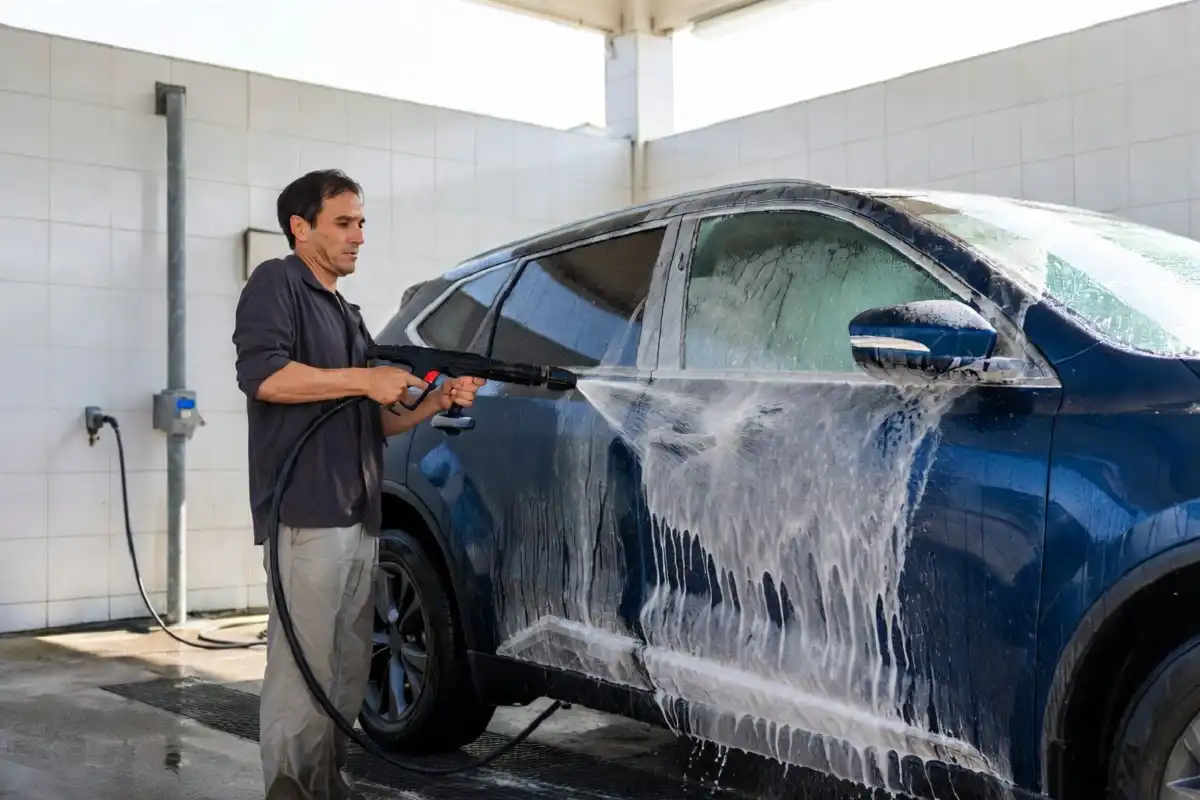
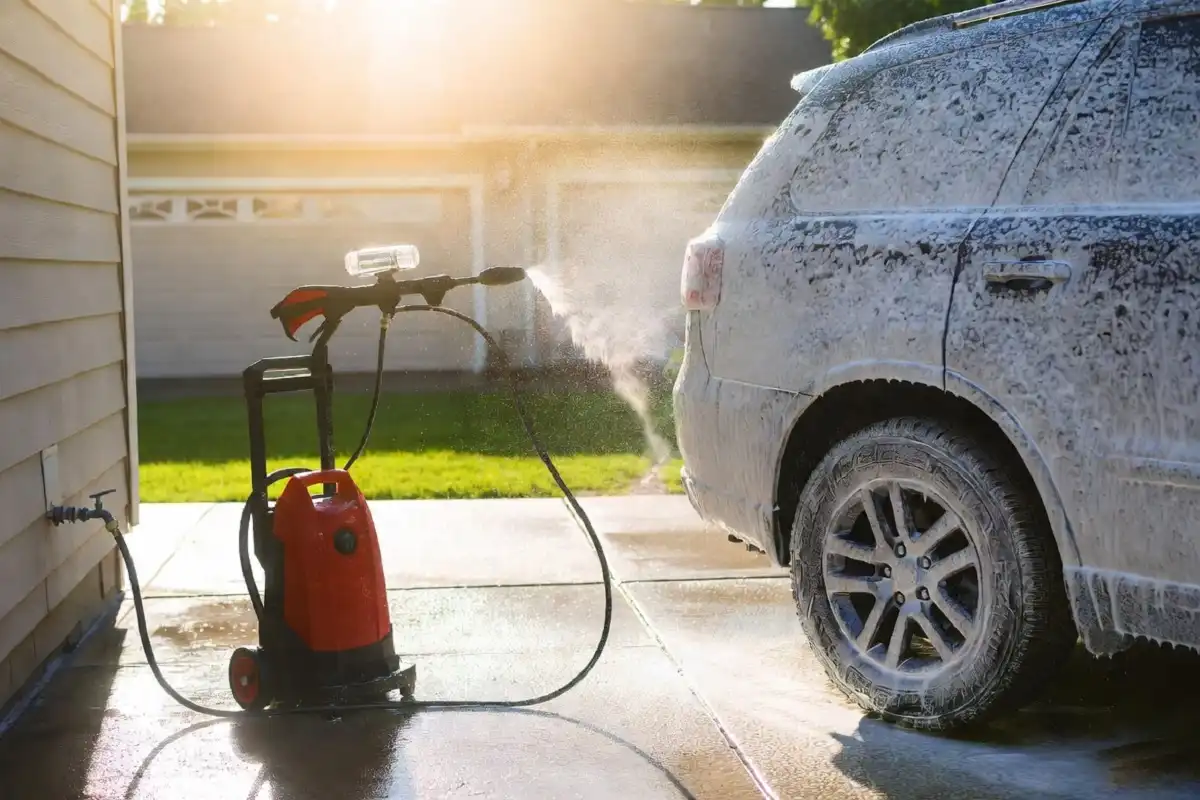
The most popular choice for home car washing. Electric pressure washers plug into a standard outlet and deliver water pressure ranging from 1,300 to 2,000 PSI — powerful enough to blast off mud, road grime, and salt without damaging paint.
Best for: All-round home car washing, driveways, patios, and outdoor furniture. Top pick example: The Greenworks 1700 PSI Electric Pressure Washer is a widely praised entry-level option that delivers reliable performance for car washing.
Pros:
- Easy to set up and use
- Quiet compared to gas models
- Lightweight and portable
- Low maintenance
Cons:
- Limited by extension cord length
- Less power than gas models
2. Gas-Powered Pressure Washers
Gas models deliver 2,000–4,000 PSI and are built for heavy-duty use. For car washing, anything above 2,200 PSI requires a wide-angle nozzle (40°) to avoid stripping paint. These are better suited to driveways, decks, and farm equipment than delicate vehicle finishes.
Best for: Large vehicles, trucks, RVs, and boat cleaning.
Pros:
- Powerful and portable (no cord)
- Handles the toughest grime
Cons:
- Loud and produces exhaust fumes
- Heavier and harder to store
- Overkill for standard passenger cars
3. Foam Cannons and Foam Guns
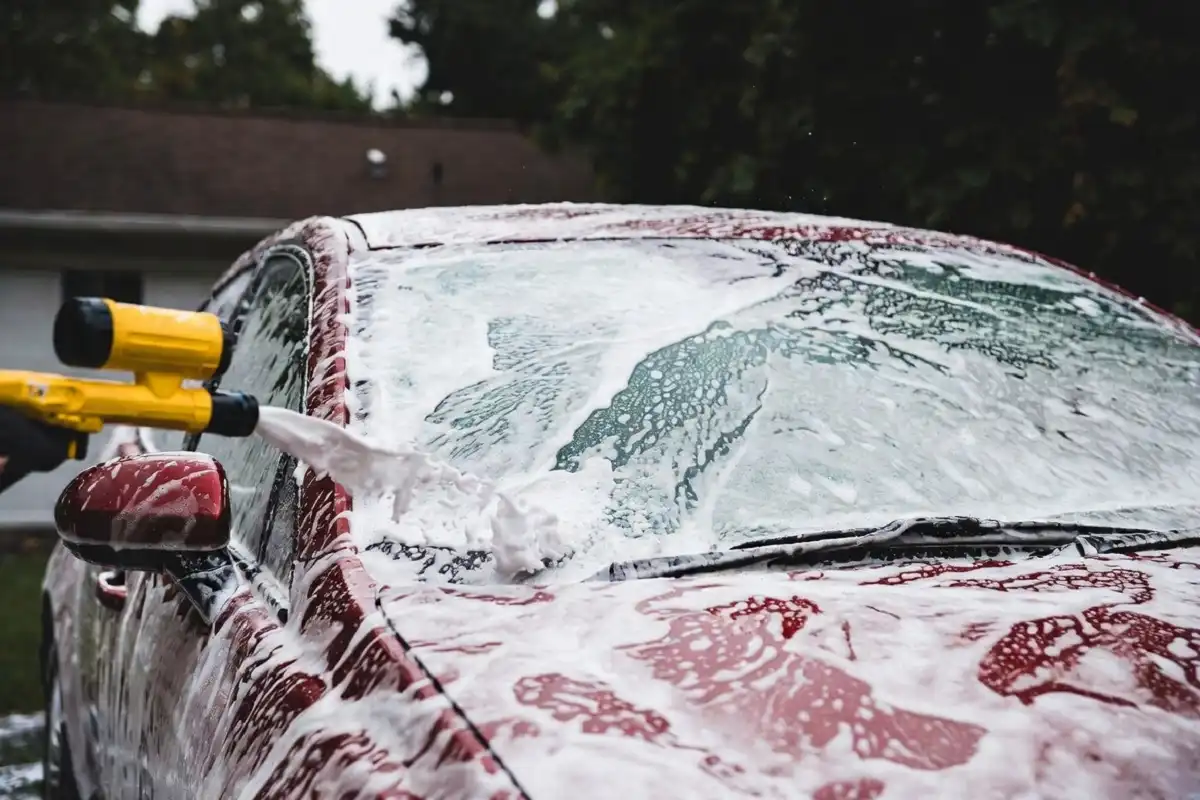
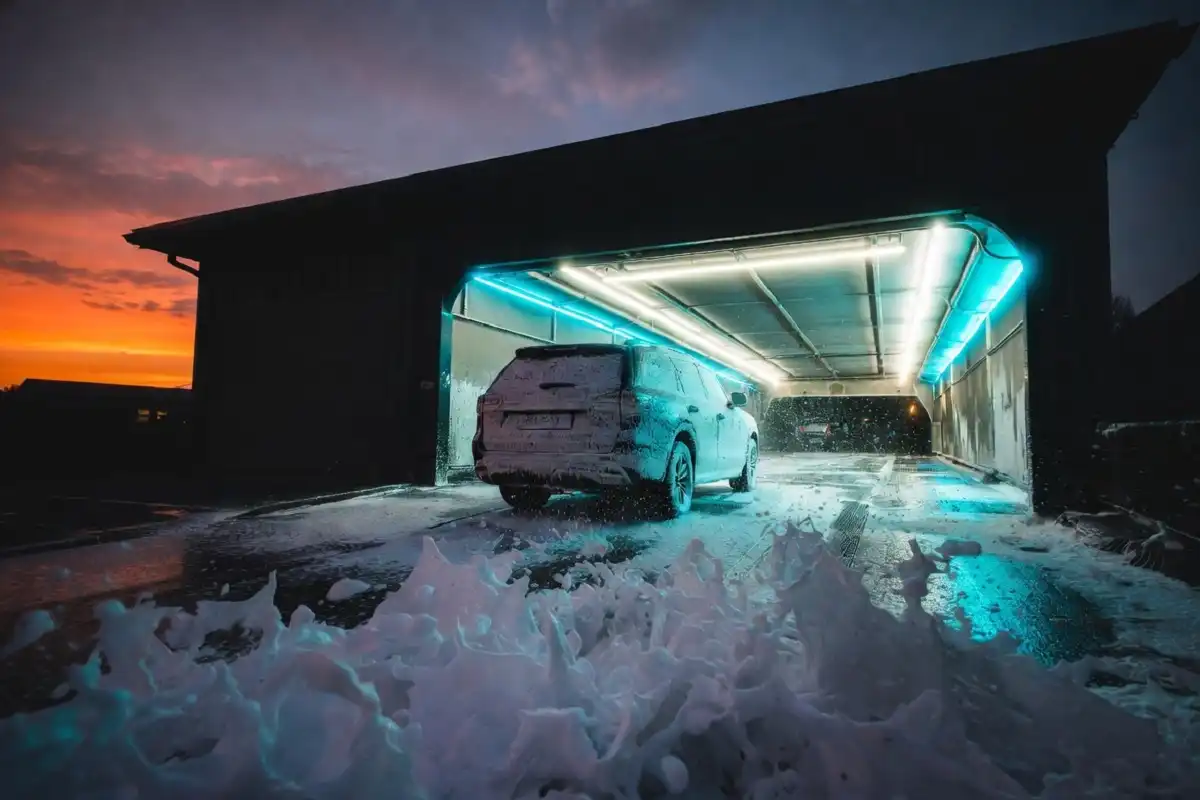
A foam cannon attaches to a pressure washer and turns your car wash soap into a thick, clingy foam layer that dwells on the paint and loosens dirt before you ever touch the surface. A foam gun connects to a standard garden hose for lower pressure foaming.
Best for: Pre-wash soaking, reducing contact scratches, and achieving that professional foam-wash look.
Using a foam cannon as part of your car wash machine for home setup is one of the single best upgrades you can make to your wash process. The thick foam lubricates the surface, dramatically reducing swirl marks and micro-scratches.
4. Portable Steam Car Washers
Steam cleaners use superheated steam to sanitize and clean car surfaces without chemicals. They’re excellent for interior cleaning — seats, dashboard, door panels — and can also be used on engine bays and exterior trim.
Best for: Interior detailing, allergen removal, and chemical-free cleaning.
Pros:
- No chemicals needed
- Kills bacteria and mold
- Safe for most surfaces
Cons:
- Slower than pressure washers
- Not ideal for heavy exterior grime
5. Automatic Rolling Car Wash Machines (Home Garage Units)
These are full-sized automated wash systems designed for home garage installation. They’re rare, expensive ($3,000–$10,000+), and typically purchased by enthusiast collectors or small home detailing businesses. For most homeowners, an electric pressure washer with a foam cannon is the smarter investment.
How to Choose the Right Car Wash Machine for Home
Choosing the best car wash machine for home use comes down to five key factors. Evaluate each one before making a purchase.
Factor 1: PSI (Pressure) and GPM (Flow Rate)
For car washing, the ideal PSI range is 1,200–1,900 PSI. Higher pressure risks stripping paint and clear coat, especially at close range. GPM (gallons per minute) affects how quickly you rinse — look for at least 1.4 GPM for efficient washing.
Factor 2: Power Source
- Electric: Best for most homeowners. Clean, quiet, and convenient.
- Gas: Better for large vehicles and off-road rigs. Requires more storage space and maintenance.
- Battery: Emerging option; great portability but limited run time.
Factor 3: Hose Length and Portability
A machine with a short hose limits your reach. Look for at least 20 feet of hose. Models with wheeled carts are far easier to move around a vehicle than stationary units.
Factor 4: Nozzle Variety
A good car wash machine for home kit should include multiple nozzle tips:
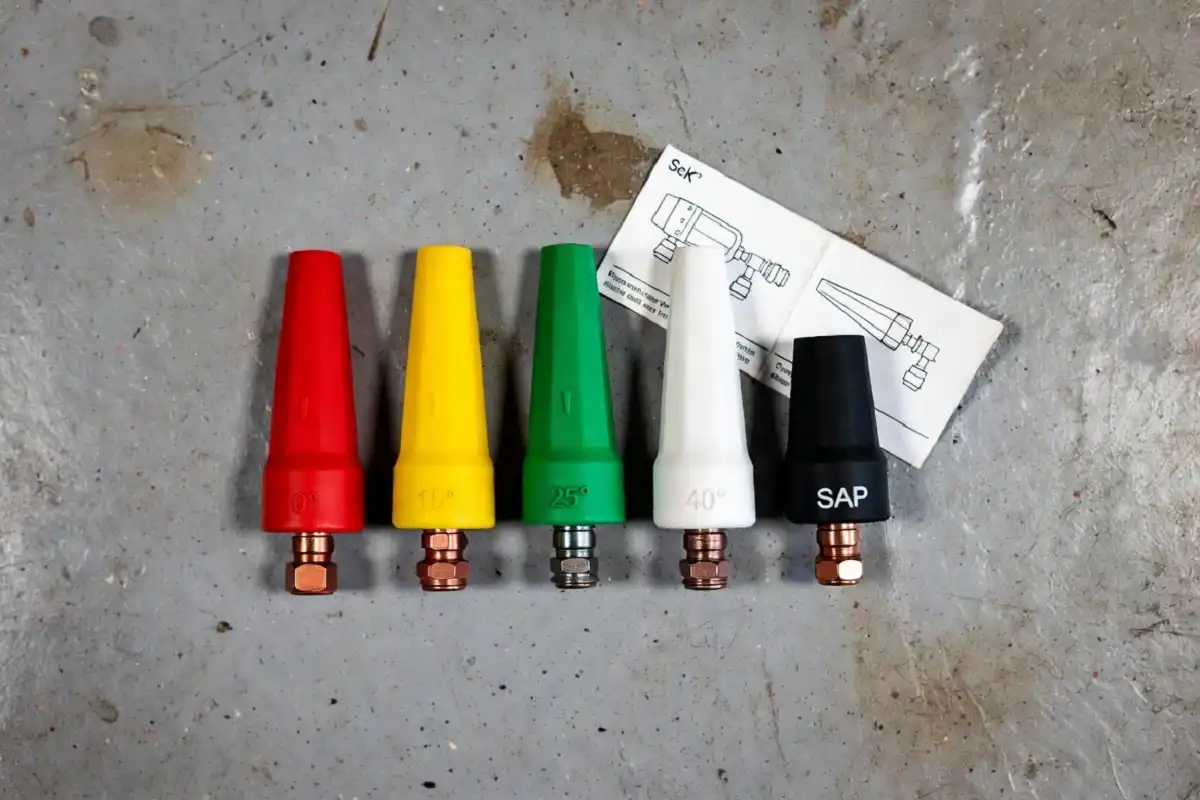
- 0° — Pencil jet for stubborn stains (use carefully, never directly on paint)
- 25° — General surface cleaning
- 40° — Safe for car paint and glass
- Soap nozzle — Low pressure for applying car wash soap
Factor 5: Budget
| Budget Range | What You Get |
|---|---|
| Under $100 | Entry-level electric pressure washer, basic nozzles |
| $100–$250 | Mid-range electric, foam cannon compatible, longer hose |
| $250–$500 | High-performance electric or light-duty gas, complete accessory kit |
| $500+ | Professional-grade gas or commercial-style electric |
Setting Up Your Car Wash Machine for Home Use
Getting the setup right the first time makes every future wash faster and easier. Here’s how to get your car wash machine for home ready to go.
Step 1 — Choose your location A flat, open driveway or garage apron works best. Make sure you have access to an outdoor water spigot with at least ¾-inch thread for full flow.
Step 2 — Connect the water supply Attach the machine’s inlet hose to your garden tap. Turn the water on fully before starting the machine — running the pump dry even briefly can damage it.
Step 3 — Select the right nozzle For car washing, start with the 40° nozzle. Switch to the soap nozzle when applying foam. Never use the 0° nozzle on painted surfaces.
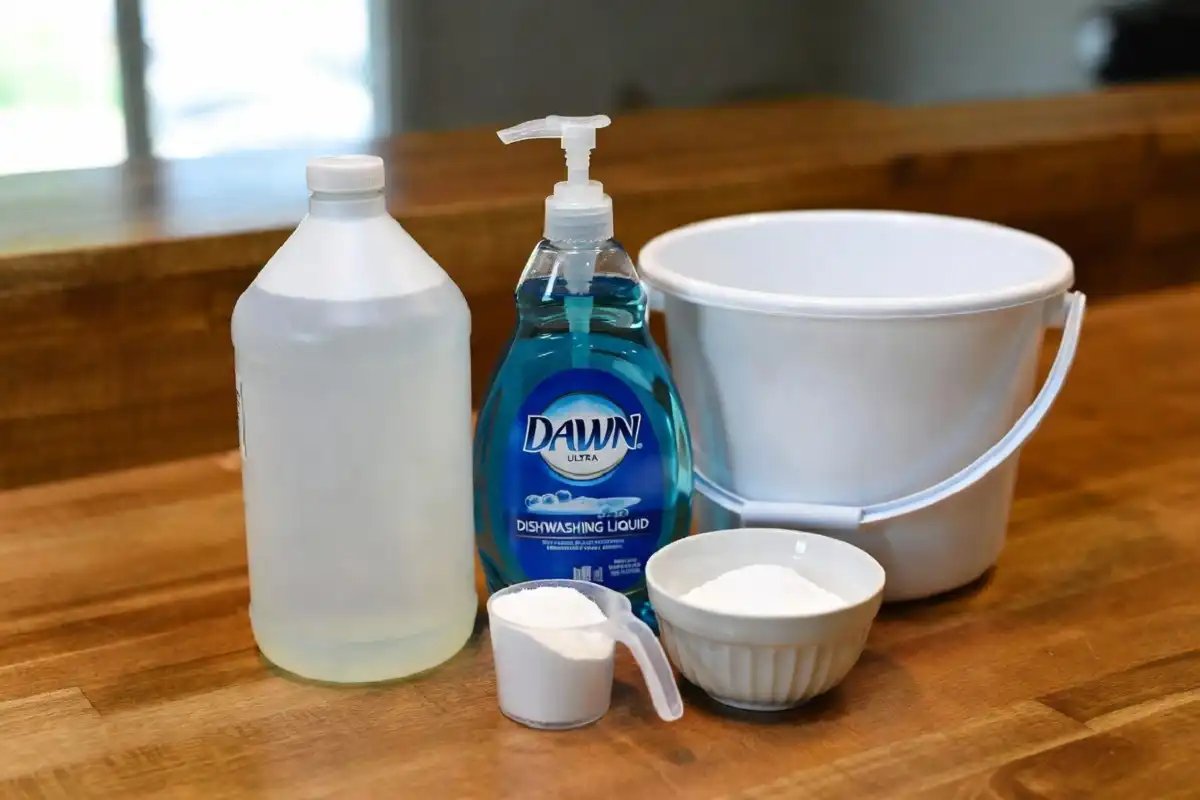
Step 4 — Add your car wash soap Use a dedicated car wash soap — never dish soap directly in a pressure washer’s detergent tank, as it can damage internal seals. If you want a natural formula, explore these homemade car wash soap recipes that work perfectly with foam cannons and pressure washers.
Step 5 — Maintain a safe distance Keep the nozzle at least 12–18 inches from the paint surface at all times. Closer than 6 inches risks paint damage regardless of nozzle type.
Best Practices for Using a Car Wash Machine at Home
Getting the most from your car wash machine for home means following proven techniques — not just turning it on and spraying.
The Two-Stage Wash Method
Stage 1 — Foam pre-soak Apply foam to the entire car using a foam cannon or soap nozzle. Let it dwell for 3–5 minutes. This loosens bonded dirt without any physical contact, dramatically reducing scratch risk.
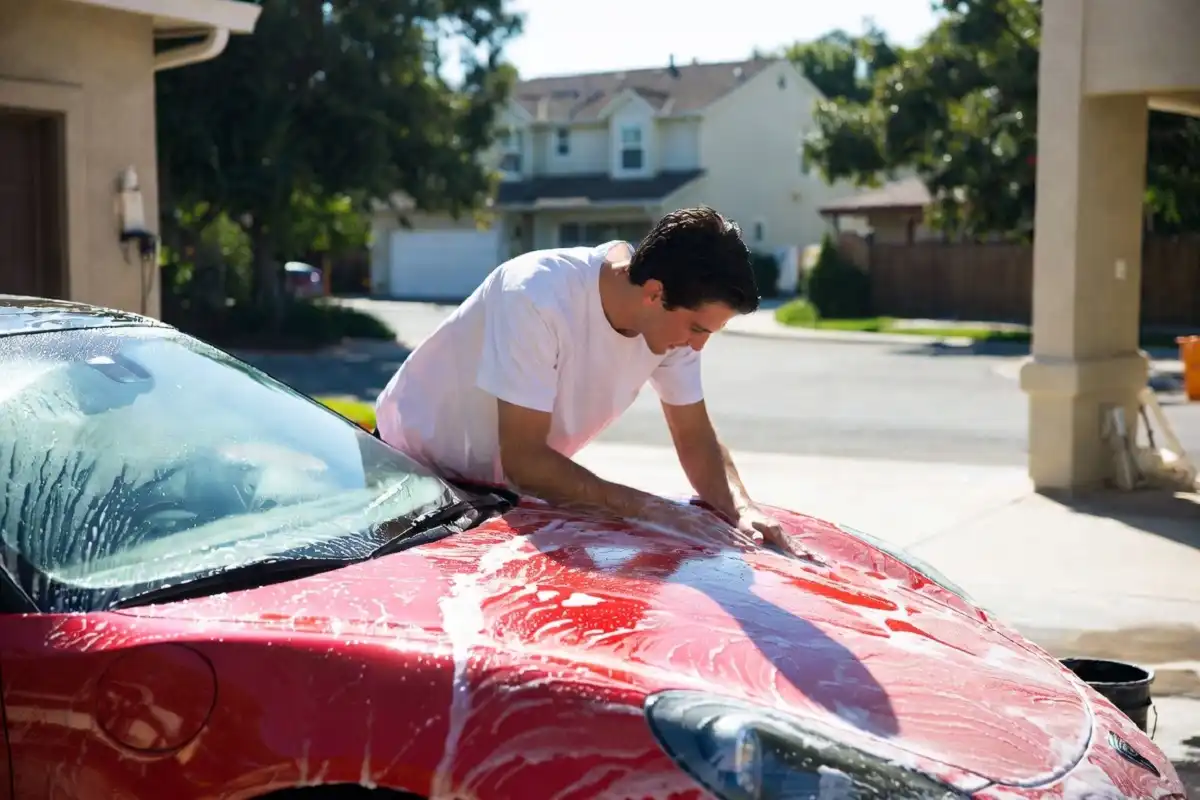
Stage 2 — Rinse and hand wash Rinse the foam off, then complete the wash with a microfiber mitt and fresh soap solution for a scratch-free finish.
Top Tips for Better Results
- Always pre-rinse before applying soap — loose grit scratches paint during washing
- Work top to bottom — roof first, lower panels last, where grime is heaviest
- Use a separate bucket for rinsing your mitt to avoid recontaminating your soap solution
- Dry immediately after rinsing to prevent water spots from forming
- Never pressure wash door jambs at close range — water can penetrate seals and cause interior rust
Choosing the Right Soap for Your Machine
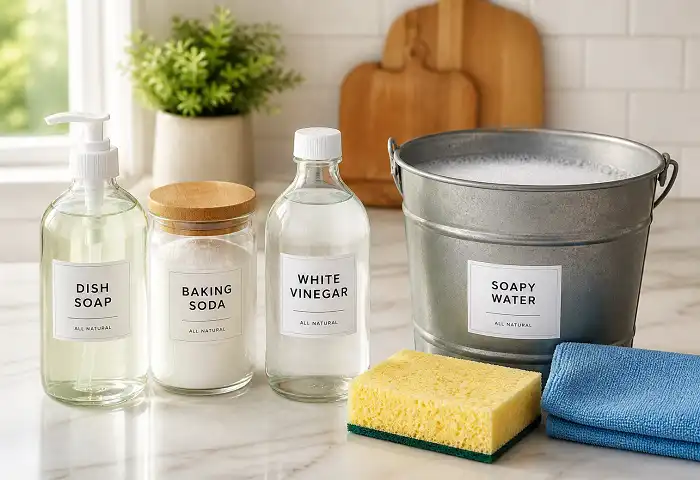
The soap you use matters as much as the machine itself. Commercial car wash soaps are pH-neutral and machine-safe. But if you prefer natural, budget-friendly options, check out these DIY car wash soap formulas — many work beautifully with foam cannons and produce impressive suds. You can also explore safe homemade car wash cleaner recipes that are gentle on paint while still cutting through grime.
For an added boost on stubborn mineral deposits, some DIYers add a splash of vinegar to their wash mix. Learn exactly how that works in this detailed guide on using vinegar in car wash soap.
Car Wash Machine for Home vs. Professional Car Wash
Should you invest in a car wash machine for home or keep using commercial washes? Here’s a clear comparison.
| Factor | Home Car Wash Machine | Professional Car Wash |
|---|---|---|
| Cost per wash | $0.10–$0.50 (water + soap) | $15–$45 per visit |
| Convenience | Wash anytime, no driving | Requires a trip |
| Paint safety | High (controlled technique) | Variable (brush systems risk scratches) |
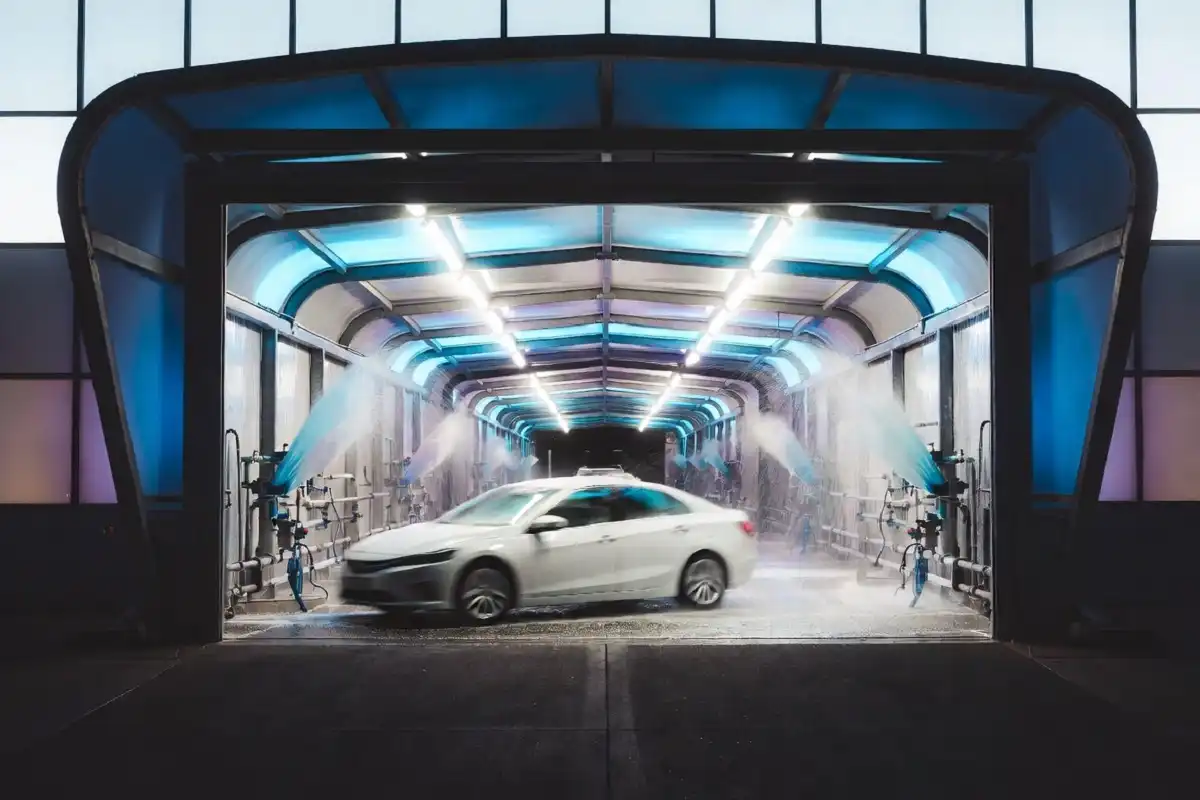
| Water usage | 2–5 gallons (pressure washer) | 15–45 gallons (tunnel wash) |
| Results quality | Excellent with practice | Consistent but generic |
| Upfront cost | $80–$400 (one-time) | $0 upfront |
The math is simple. If you wash your car twice a month at $20 per visit, that’s $480 per year. A quality car wash machine for home pays for itself within the first few months — and gives you far more control over the result.
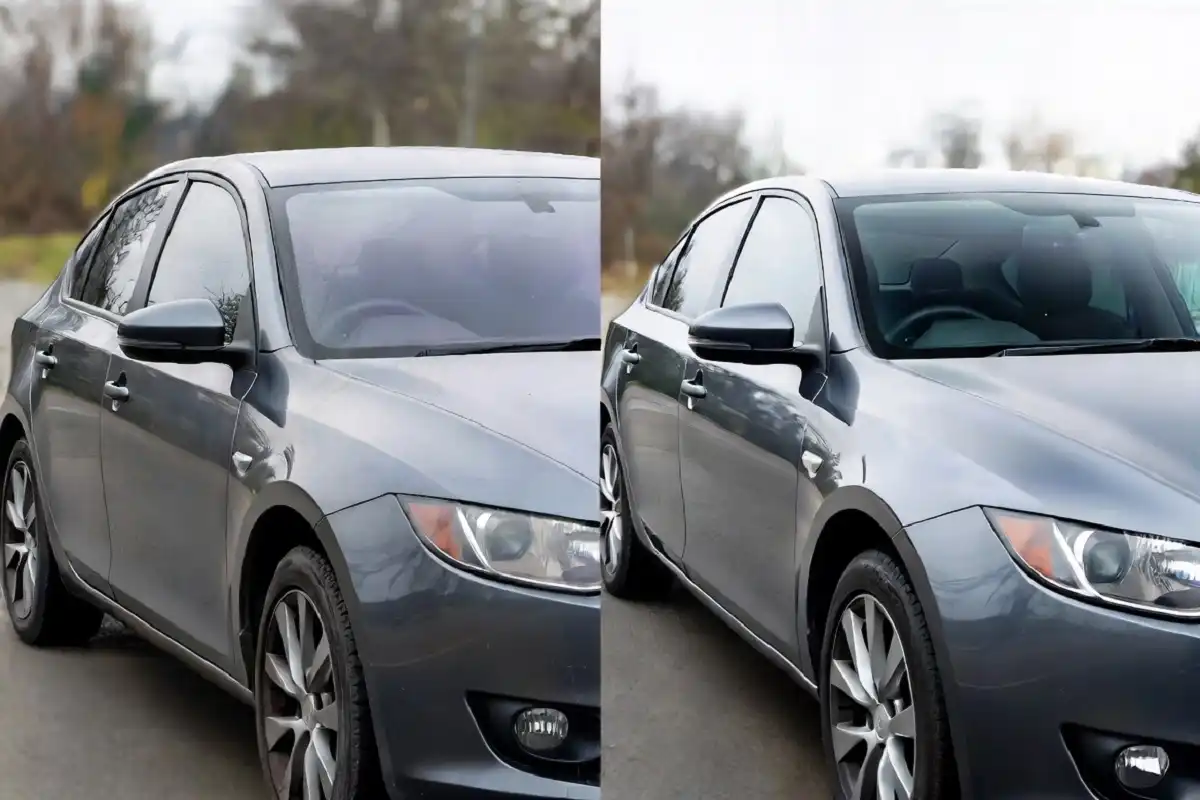
According to Consumer Reports, automated tunnel washes with spinning brushes are among the most common causes of paint swirl marks and micro-scratches — a problem you eliminate entirely when washing at home with the right equipment and technique.
Eco-Friendly Benefits of a Car Wash Machine for Home
Switching to a car wash machine for home isn’t just good for your wallet — it’s better for the environment too.
A standard garden hose left running uses approximately 10 gallons of water per minute. A quality electric pressure washer uses just 1.2–2.0 GPM, meaning a full car wash uses only 5–10 gallons of water total — compared to 80–140 gallons for a loose hose wash.
You also control exactly what chemicals go on your car and into your runoff. Using biodegradable, plant-based soaps keeps harmful phosphates and surfactants out of storm drains and local waterways. For guidance on natural wash formulas, the ultimate DIY car wash guide covers everything from soap selection to rinse-water management.
The U.S. Environmental Protection Agency (EPA) recommends washing vehicles on grass or gravel where possible to allow water to naturally filter through the ground rather than running directly into storm drains — something you can do at home but never at a commercial wash.
Maintenance Tips to Keep Your Home Car Wash Machine Running Perfectly
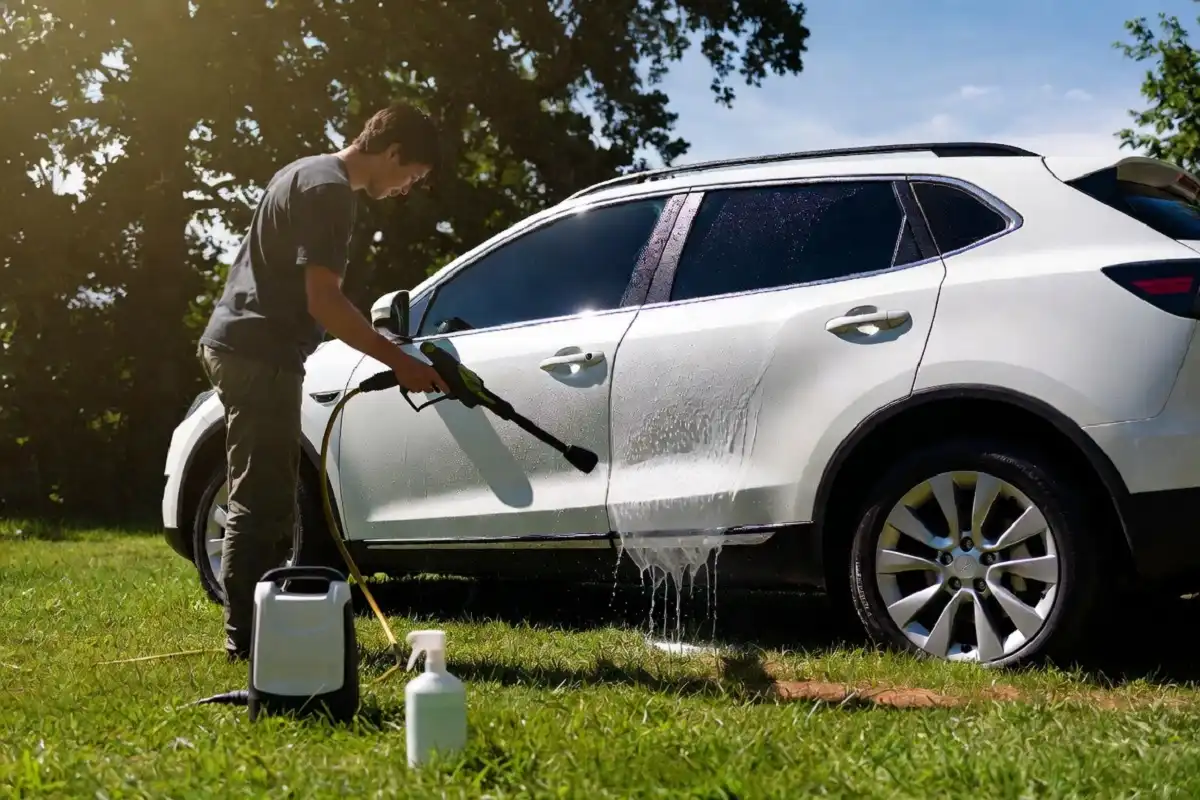
A well-maintained car wash machine for home lasts 5–10 years with minimal issues. Follow these simple habits.
- Flush the system after every use — run clean water through for 30–60 seconds before storing
- Drain completely in winter — trapped water freezes and cracks the pump; use an air compressor to purge lines
- Inspect O-rings every 6 months — worn O-rings cause pressure loss and leaks; replacements cost less than $5
- Store indoors — UV exposure and frost degrade hoses and seals over time
- Never run without water — dry-firing the pump even for a few seconds can cause irreparable damage
- Clean nozzle tips regularly — mineral deposits clog nozzle orifices; soak in white vinegar for 15 minutes to clear blockages
Frequently Asked Questions (FAQ)
What PSI is safe for a car wash machine for home use?
For most passenger cars and SUVs, 1,200–1,900 PSI is the safe range. Use a 40° wide-angle nozzle and keep the tip at least 12 inches from the paint. A car wash machine for home at these settings will clean effectively without risking paint or clear coat damage.
Can I use any soap in my home car wash machine?
No. Use only soaps labeled as pressure-washer safe or car wash soap. Dish soap can degrade internal pump seals over time. For natural alternatives, these 5 safe DIY car soap formulas are compatible with most foam cannon setups.
How long does a home car wash machine last?
With proper maintenance, a quality electric pressure washer lasts 5–10 years. Gas models last longer mechanically but require more frequent servicing. The pump is the most vulnerable component — protect it by never running it dry.
Is a car wash machine for home worth it?
Absolutely. A car wash machine for home pays for itself within 3–6 months for most households that wash their car 2–4 times per month. Beyond the cost savings, you get better results, more control, and the satisfaction of doing it yourself.
What accessories do I need with my home car wash machine?
The essential accessories are: a foam cannon (for pre-wash soaking), a set of nozzle tips, a microfiber wash mitt, a grit guard bucket insert, and quality car wash soap. Optionally, a water-fed brush attachment makes rinse-down faster on larger vehicles.
Can a home car wash machine damage my car’s paint?
Only if used incorrectly. Too-high PSI, wrong nozzle angle, or holding the wand too close are the main risks. Used correctly — 1,200–1,900 PSI, 40° nozzle, 12+ inch distance — a car wash machine for home is safer for your paint than most commercial tunnel washes with rotating brushes.
Conclusion
Investing in a car wash machine for home is one of the best decisions any car owner can make. It saves money, delivers superior results, uses less water than traditional washing, and gives you complete control over what touches your paint.
Start with a quality electric pressure washer in the 1,500–1,800 PSI range, add a foam cannon, and pair it with a good car wash soap. Master the two-stage foam-and-rinse technique, and you’ll produce results that rival professional detailing — every single time, from your own driveway.
Ready to take your car care to the next level?
Explore these resources to build your complete home wash setup:
- 👉 The Ultimate DIY Car Wash Guide
- 👉 Homemade Car Wash Soap — 6 Easy Steps
- 👉 7 Proven Homemade Car Wax Recipes
- 👉 8 Proven DIY Car Shampoo Recipes
Have questions about choosing your first home car wash machine? Drop them in the comments — we’re here to help you get the perfect clean every time!