Introduction
What if the secret to a spot-free, gleaming car was already sitting in your kitchen cabinet? Vinegar in car wash soap is one of the most searched DIY car care hacks on the internet — and once you understand why it works, you’ll never look at your soap bucket the same way again.
Millions of car owners are abandoning expensive commercial cleaners and switching to natural, budget-friendly alternatives. Using vinegar in car wash soap can help you remove hard water spots, cut through road grime, and leave your paint looking like it just rolled out of a detailing shop. In this complete guide, you’ll learn exactly how it works, the best recipes to use, and what mistakes to avoid.
What Is Vinegar in Car Wash Soap and Why Does It Work?
Vinegar — specifically white distilled vinegar — is a mild acetic acid solution with a concentration of about 5–8%. When people talk about using vinegar in car wash soap they’re referring to blending this household acid with a surfactant (soap) to create a powerful, pH-balanced cleaning solution.
The Science Behind the Cleaning Power
The magic happens at a chemical level. Acetic acid reacts with alkaline mineral deposits — calcium, magnesium, and lime — and dissolves them on contact. These mineral deposits are the root cause of hard water spots, white chalky streaks, and dull-looking paint. Standard car soaps are pH-neutral, which means they don’t react with these minerals at all. Adding vinegar in car wash soap gives your solution the mild acidity it needs to break down those deposits naturally.
Here’s what this combo effectively targets:
- Hard water mineral spots — white rings left after water dries on paint
- Bird droppings and tree sap — stubborn organic compounds bonded to clear coat
- Road salt and winter grime — corrosive deposits from treated roads
- Soap scum and product buildup — residue from old wash products
- Cloudy windows and windshields — film that blocks visibility
Top Benefits of Using Vinegar in Car Wash Soap
There are good reasons why vinegar in car wash soap has become a go-to solution for DIY detailers. Let’s break down the real advantages.
1. Eliminates Hard Water Spots Without Harsh Chemicals
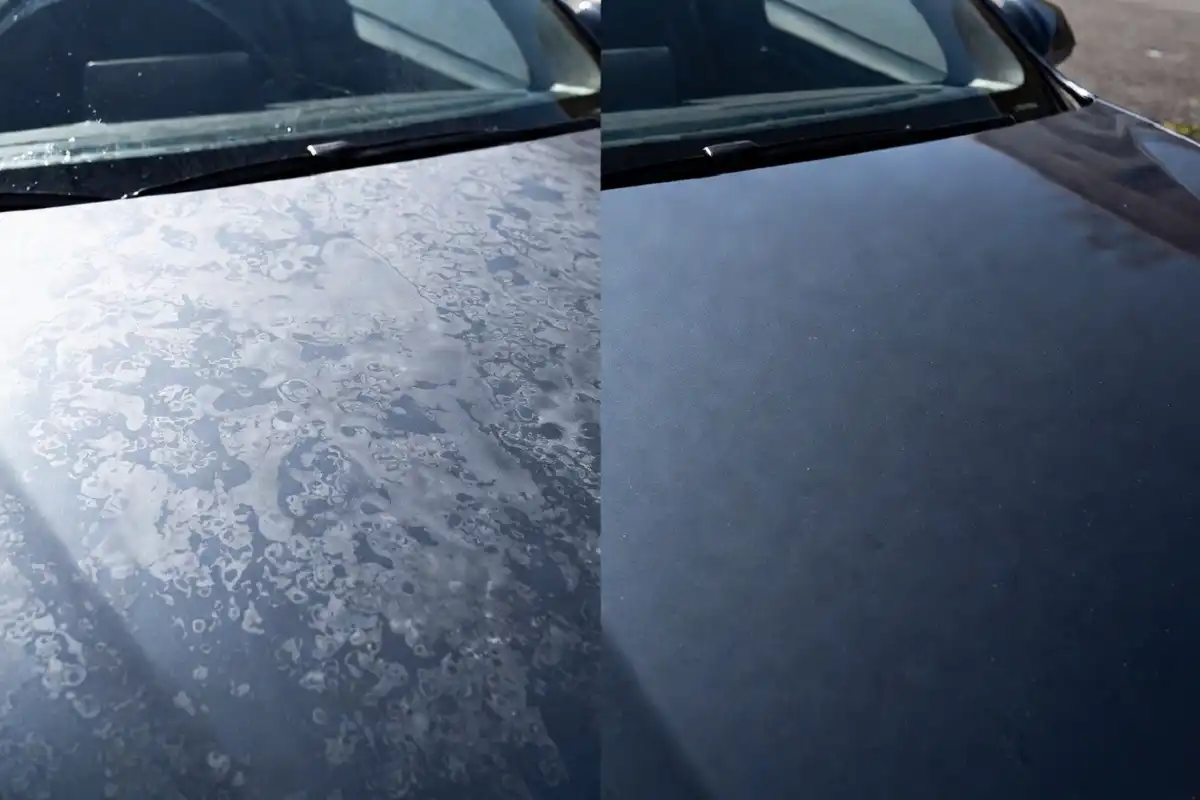
Hard water stains are one of the most frustrating problems any car owner faces. When tap water dries on your paint, it leaves behind concentrated mineral deposits that smear and dull the finish. Vinegar in car wash soap breaks down these deposits naturally, restoring clarity to both glass and painted surfaces without the need for abrasive compounds.
2. 100% Eco-Friendly and Biodegradable
Unlike phosphate-laden commercial soaps that pollute storm drains and harm aquatic life, vinegar is completely biodegradable. If you care about eco-friendly car care practices, adding vinegar to your wash formula is one of the greenest upgrades you can make.
3. Saves You Money Every Single Wash
A gallon of white distilled vinegar costs less than $5 at any grocery store and is enough for dozens of washes. When you blend it with basic dish soap, you get a homemade car wash soap that outperforms many commercial products at a fraction of the price.
4. Paint-Safe When Properly Diluted
Undiluted vinegar is too acidic for direct use on paint. But at a dilution of 1 part vinegar to 10–15 parts water, it falls within a safe pH range for factory paint jobs, glass, and chrome trim. The key is always proper dilution — never skip this step.
5. Cuts Grease and Road Film Effectively
Vinegar in car wash soap acts as a natural degreaser, lifting road film, brake dust residue, and light grease from exterior surfaces without the harsh solvents found in commercial degreasers. It’s especially effective on lower panels and wheel areas where grime builds up fast.
6. Multi-Surface Cleaning Ability
One of the underrated strengths of vinegar in car wash soap is its versatility. The same basic formula works on painted body panels, glass, plastic trim, and rubber — making it a genuinely all-in-one exterior cleaning solution.
How to Make Vinegar in Car Wash Soap: 3 Proven Recipes
Ready to mix your own batch? Here are three field-tested vinegar in car wash soap formulas, each designed for a different cleaning scenario.
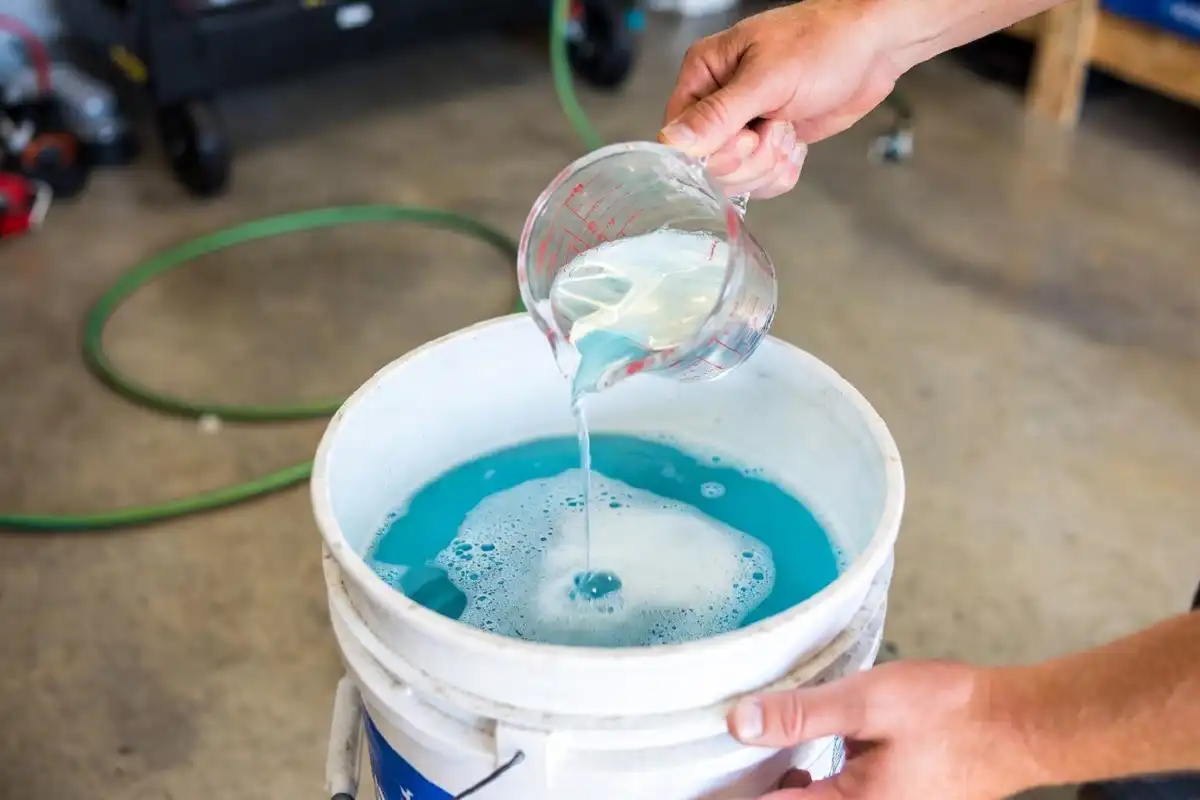
Recipe 1: Basic Everyday Vinegar Car Wash Soap
This is the go-to formula for regular weekly washes. It’s gentle enough for all paint types and produces plenty of lubrication to prevent scratching.
| Ingredient | Amount |
|---|---|
| Warm water | 1 gallon |
| White distilled vinegar | ½ cup |
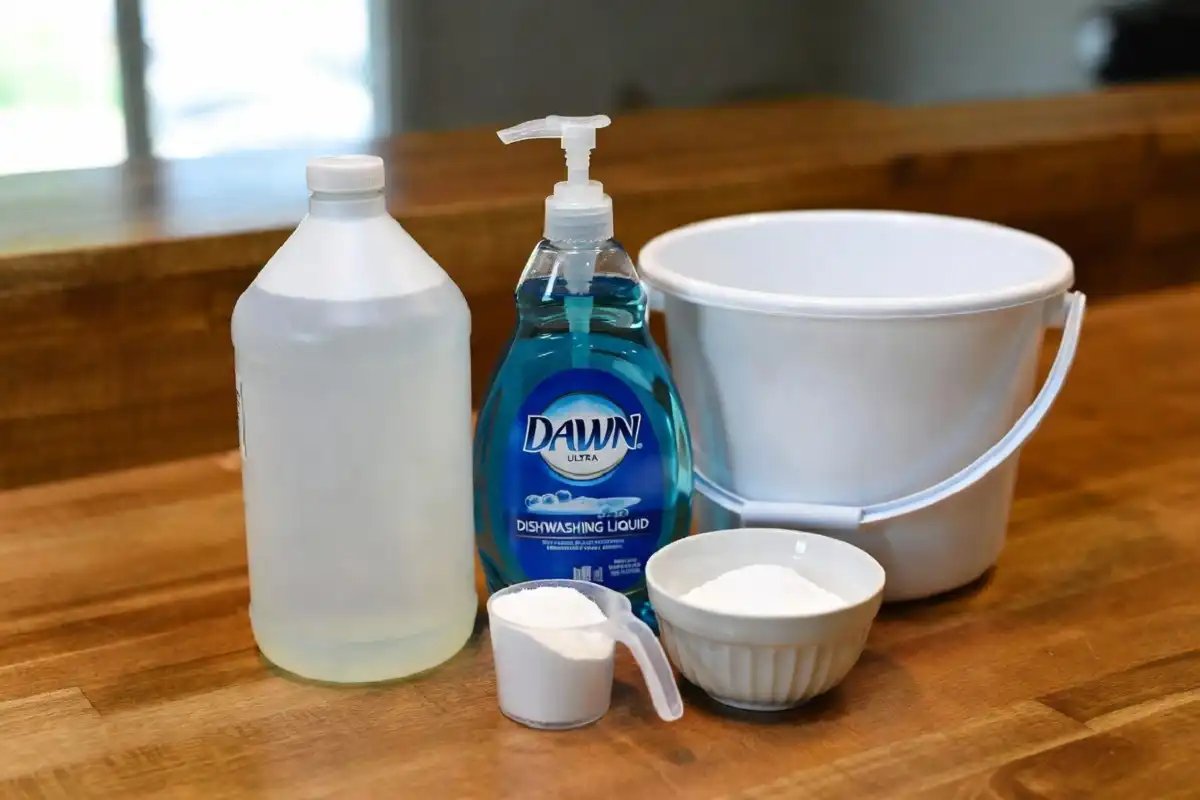
| Liquid dish soap (Dawn recommended) | ¼ cup |
Best for: Light dust, general dirt, and everyday maintenance washing.
Directions: Add the soap to the bucket first, then slowly pour in the warm water, followed by the vinegar. Stir gently to combine without over-foaming.
Recipe 2: Heavy-Duty Degreasing Formula
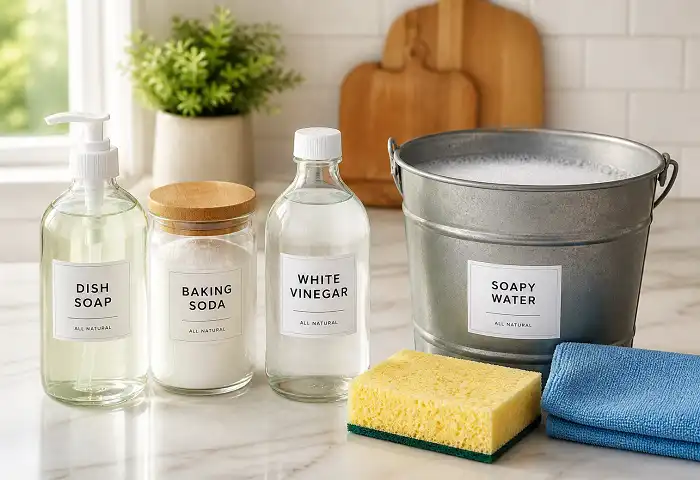
When your car comes back from a muddy weekend or road trip, you need something stronger. This upgraded vinegar in car wash soap formula adds baking soda for extra degreasing action.
| Ingredient | Amount |
|---|---|
| Warm water | 1 gallon |
| White distilled vinegar | ¾ cup |
| Dish soap | ¼ cup |
| Baking soda | 2 tablespoons |
⚠️ Important: Add baking soda slowly and last to prevent excessive fizzing. The reaction is harmless but messy if rushed.
Best for: Heavily soiled lower panels, wheel wells, undercarriage splash zones, and post-road-trip cleaning.
Recipe 3: Streak-Free Glass and Windshield Spray
Windows need a different approach. This vinegar in car wash soap variation is specially balanced for glass surfaces, leaving zero streaks behind.
| Ingredient | Amount |
|---|---|
| Distilled water | 1 cup |
| White distilled vinegar | 1 cup |
| Rubbing alcohol (70%) | 2 tablespoons |
Best for: Windshields, side windows, mirrors, and rear glass. The alcohol speeds up drying and prevents streaks even in humid conditions.
For even more creative variations, explore this complete guide to homemade car wash soap with vinegar which covers specialty formulas for different paint types and climates.
Step-by-Step Guide: How to Wash Your Car with Vinegar Soap
Knowing how to use vinegar in car wash soap properly is just as important as having the right recipe. Follow these steps for professional-level results every time.
Step 1 — Pre-Rinse Spray the entire car with clean water to loosen and remove loose dirt, dust, and debris. Never skip this step — washing a dry car with any soap formula risks dragging abrasive particles across the paint.
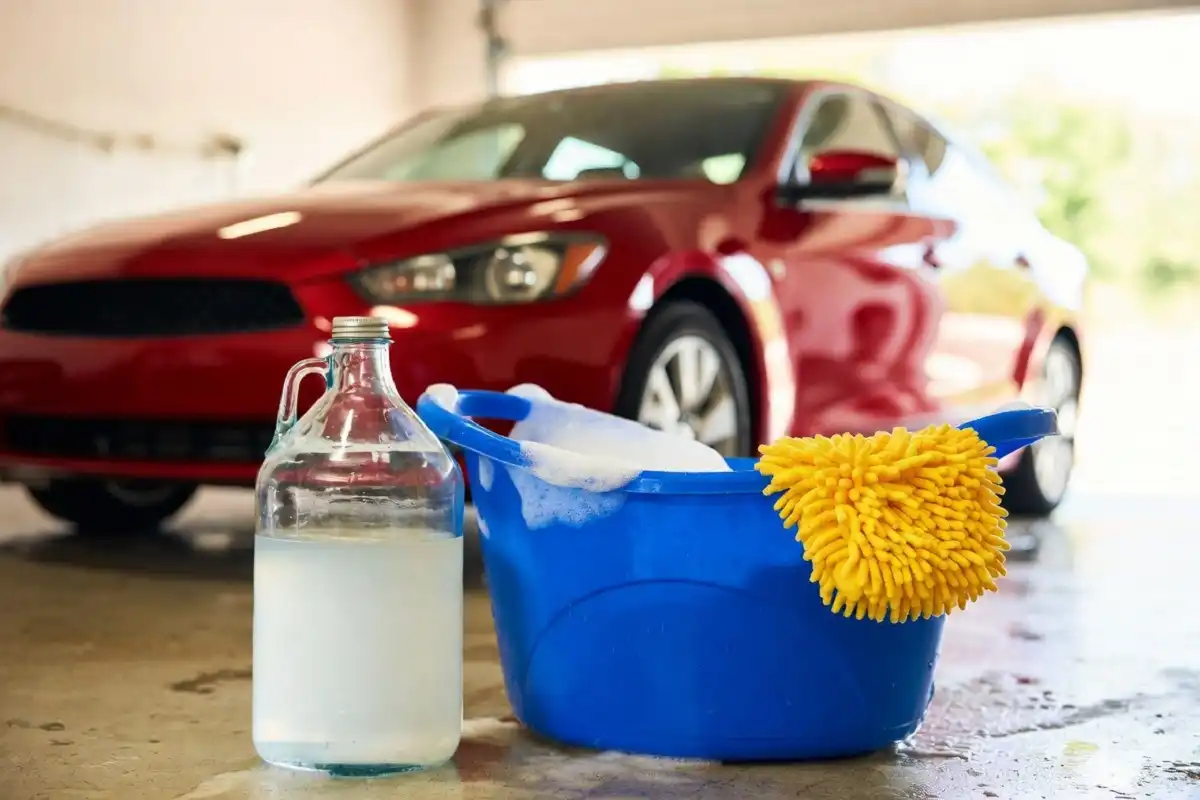
Step 2 — Mix Your Vinegar Wash Formula Prepare your chosen vinegar in car wash soap recipe in a clean 5-gallon bucket. Keep a second bucket filled with plain water for rinsing your wash mitt between panels.
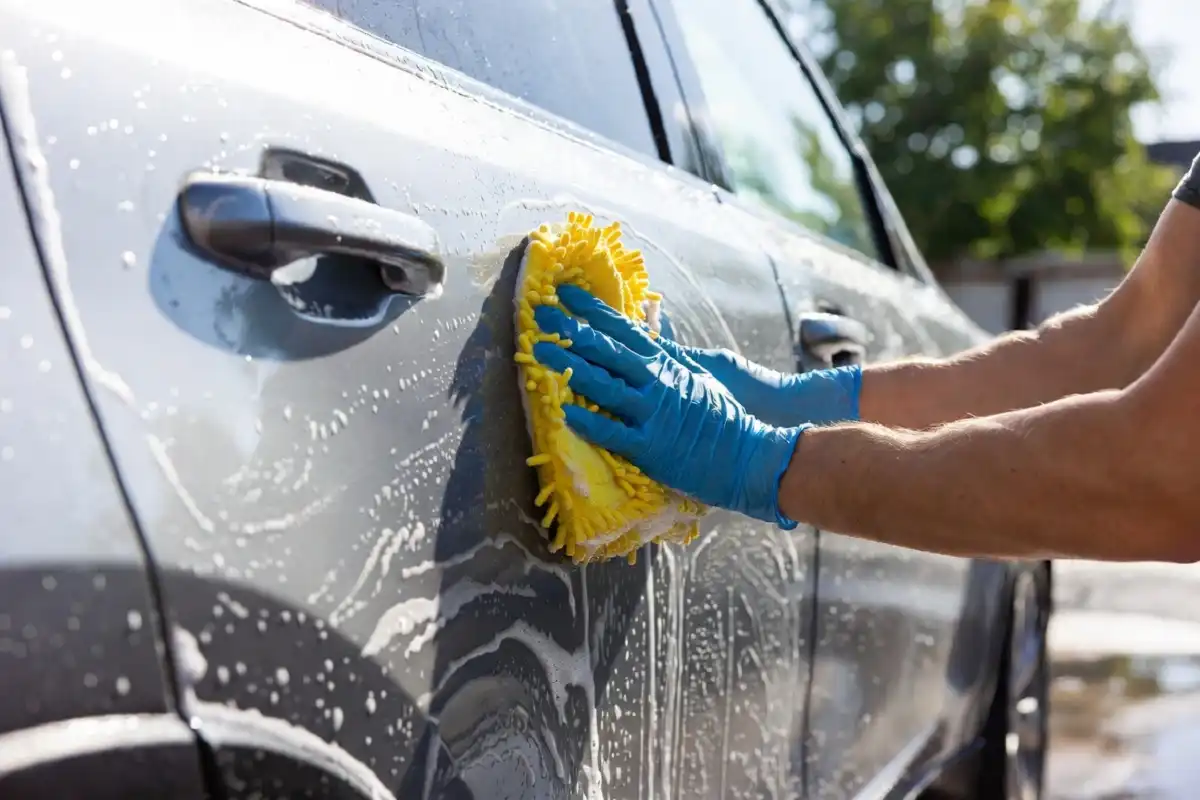
Step 3 — Wash Top to Bottom Dip your microfiber mitt into the solution and wash the car from the roof downward. Always use straight, overlapping strokes — never circular scrubbing, which creates swirl marks. Rinse your mitt in the plain water bucket before re-dipping.
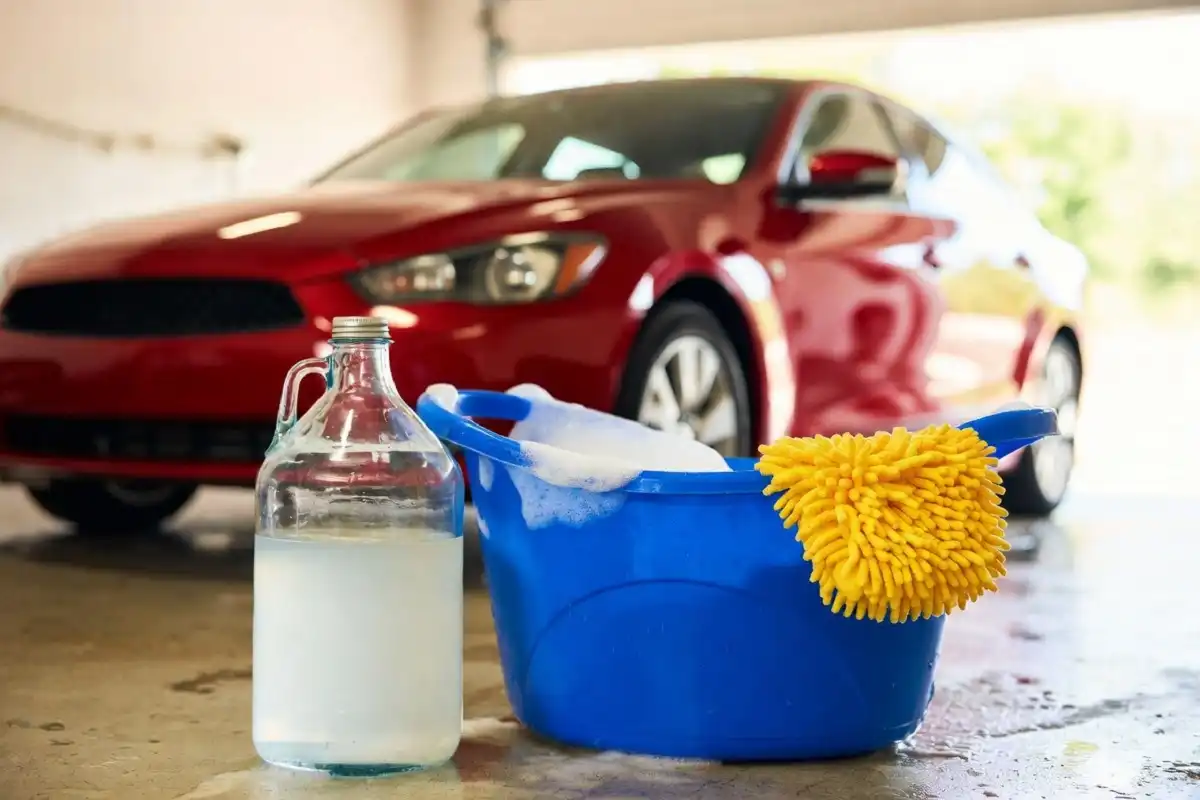
Step 4 — Target Problem Areas For stubborn hard water spots or mineral streaks, spray undiluted vinegar in car wash soap solution directly on the affected area. Let it sit for 60–90 seconds, then gently wipe with a damp microfiber cloth.
Step 5 — Rinse Thoroughly Rinse the car completely from top to bottom with clean water. Pay extra attention to door jambs, trim edges, and rubber seals — these areas trap soap and vinegar residue.
Step 6 — Dry Immediately Use a plush microfiber drying towel to dry the car before water spots have a chance to form. This final step is critical to preserving the clean, streak-free result your vinegar in car wash soap formula delivered.
When NOT to Use Vinegar in Car Wash Soap
As effective as vinegar in car wash soap is, there are specific situations where you should avoid it — or use it with extra caution.
Surfaces and Situations to Avoid
- Freshly applied wax or sealant — vinegar will break down wax faster than normal; wait at least 2 weeks after waxing before using a vinegar wash
- Matte and satin paint finishes — acidic cleaners can alter the texture and sheen of these specialty finishes
- Bare or rusted metal — acetic acid can accelerate surface corrosion on exposed metal areas
- Ceramic coatings — wait a minimum of 3–4 weeks after ceramic application; vinegar can compromise the coating during the curing phase
- Leather and suede interiors — vinegar dries out natural leather and can crack suede-like materials
Signs You’ve Used Too Strong a Mix
- Paint appears slightly duller after washing
- Rubber trim feels dry or looks whitish
- Windows show streaking despite a full rinse
If you have a delicate finish or aging paint, switch to one of these safe DIY car wash cleaner formulas designed specifically for sensitive surfaces.
Vinegar in Car Wash Soap vs. Commercial Car Wash Soap
How does vinegar in car wash soap stack up against the commercial products lining store shelves? Here’s an honest comparison.
| Factor | Vinegar Car Wash Soap | Commercial Car Wash Soap |
|---|---|---|
| Cost per wash | $0.50–$1.50 | $3–$12 |
| Hard water stain removal | Excellent | Usually poor |
| Eco-friendliness | High — biodegradable | Varies by brand |
| Paint safety (diluted) | Very good | Usually excellent |
| Wax stripping risk | Moderate | Low (pH-neutral) |
| Availability | Instant — kitchen shelf | Requires purchase |
| Scent | Mild vinegar (fades fast) | Fragranced |
| DIY customizable | Yes | No |
The verdict: vinegar in car wash soap wins on cost, eco-friendliness, and hard water performance. Commercial soaps edge ahead on wax safety and consistent scent. The smartest approach is combining both — use a commercial shampoo as your base and add vinegar as a booster for problem areas.
For more DIY blend ideas, check out these 7 proven DIY car wash soap recipes and these 8 homemade car shampoo formulas that combine the best of both worlds.
Is Vinegar in Car Wash Soap Safe for All Paint Types?
This is the most common concern people have before trying vinegar in car wash soap for the first time. The answer depends on three factors: dilution ratio, paint condition, and contact time.
Modern factory paint (clear coat over base coat): At a 1:10–1:15 dilution, vinegar in car wash soap is safe. Modern clear coats are chemically resistant to mild acids at these concentrations.
Older or single-stage paint: Use with caution. Faded or oxidized paint is more porous and vulnerable. Test on a hidden area first.
Custom or aftermarket paint: Always consult your painter or detailer. Some custom pigments and finishes react unpredictably to acidic cleaners.
According to Wikipedia’s entry on acetic acid, household vinegar contains 4–8% acetic acid — well within the safe range for cleaning applications when properly diluted. And the American Chemical Society confirms that dilute acetic acid is one of the most effective natural descalers available, dissolving calcium and lime deposits at concentrations as low as 5%.
After washing, always protect your paint with a quality sealant. These 7 proven homemade car wax recipes will help you lock in the clean finish your vinegar in car wash soap treatment delivers.
Pro Tips for Getting the Best Results
- Always use white distilled vinegar — apple cider vinegar contains organic sugars that leave a sticky brown residue on paint
- Wash in the shade — direct sunlight causes vinegar soap to evaporate too quickly, leaving streaks
- Two-bucket method — one bucket for your vinegar in car wash soap solution, one for rinsing your mitt; this prevents dirt from scratching your paint
- Reapply wax after every 3–4 vinegar washes — the mild acidity gradually reduces wax thickness over time
- Rinse rubber seals thoroughly — prolonged vinegar contact can dry out door and window seals over time
- Use microfiber exclusively — cotton cloths and sponges trap grit that causes micro-scratches; microfiber lifts and holds particles safely
Frequently Asked Questions (FAQ)
Can I use vinegar in car wash soap on a weekly basis?
Yes. Using vinegar in car wash soap weekly is safe for most standard factory paint finishes, provided you maintain proper dilution (1:10 or lower). If your car has a freshly applied wax coat or ceramic coating, reduce frequency to once per month to extend protection life.
What’s the correct vinegar-to-water ratio for car washing?
For general washing, a ratio of 1 part vinegar to 10–15 parts water is ideal. For glass-only cleaning, a 1:1 ratio with distilled water and a splash of rubbing alcohol delivers the best streak-free results.
Will vinegar in car wash soap damage rubber trim?
At proper dilutions, vinegar in car wash soap is safe for rubber trim during a normal wash. Problems arise when undiluted vinegar sits on rubber for extended periods. Always rinse thoroughly and consider applying a rubber protectant after washing.
Does vinegar in car wash soap remove car wax?
At standard dilutions, it mildly reduces wax over multiple washes rather than stripping it in a single session. To preserve your wax layer, keep dilutions at 1:10 or lower and reapply wax every 3–4 washes.
Can I use vinegar in car wash soap at a self-service car wash?
Technically yes, but self-service bays have their own soap systems. You could apply your own vinegar in car wash soap solution as a pre-soak using a spray bottle before using the bay’s rinse function. Learn how to make the most of these facilities with this guide on finding a self-service car wash near you.
What type of vinegar works best for car washing?
White distilled vinegar is always the correct choice. It’s clear, odorless once dry, and free of sugars, tannins, and colorants that could leave residue. Never use apple cider, balsamic, malt, or wine vinegars on your vehicle.
Conclusion
There’s a reason DIY detailers keep coming back to vinegar in car wash soap — it works. It’s affordable, environmentally responsible, genuinely effective against hard water stains and mineral buildup, and can be mixed in minutes with ingredients you already own.
The most important rules are simple: always dilute properly, test on a hidden area if you’re unsure, avoid use on freshly waxed or ceramic-coated surfaces, and rinse thoroughly after every wash. Get those fundamentals right, and you’ll be amazed at the results.
Ready to start? Mix your first batch using Recipe 1 above, or dive deeper into DIY car care with our full library:
- 👉 7 Easy Homemade Car Wash Soap Recipes
- 👉 5 Safe DIY Car Soap Formulas
- 👉 Find a Do-It-Yourself Car Wash in 5 Steps
Have questions or your own vinegar car wash tip to share? Drop a comment below — the DIY Car Wash Tips community would love to hear from you!